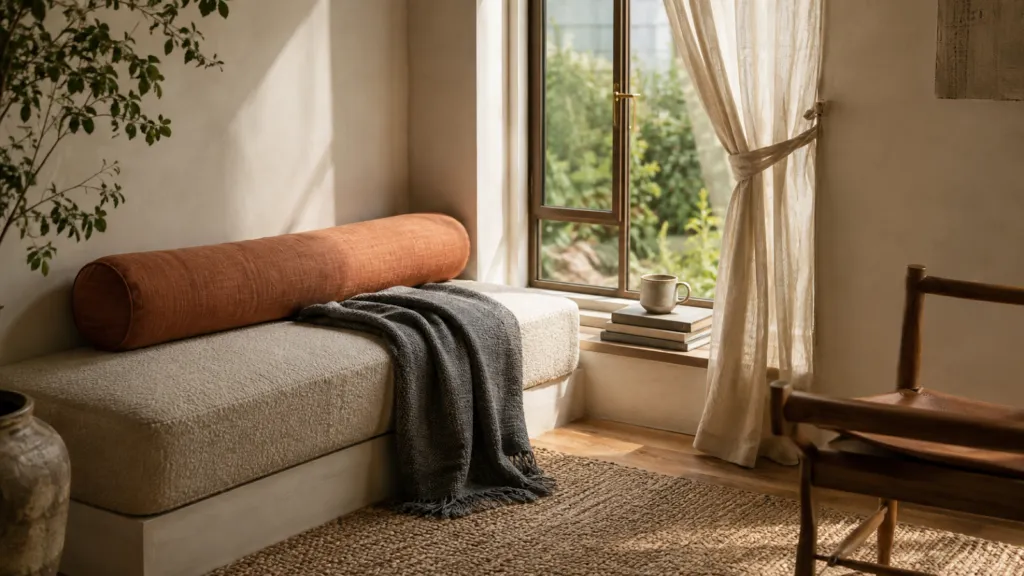
Some rooms feel loud even when nothing is playing. You walk in, you set a mug down, and the sound of it seems to travel further than it should. Your voice comes back at you a little. Nothing is wrong, exactly, but the room never quite lets you settle.
Almost always, it’s the surfaces. Hard floors, bare walls, big windows and slim furniture all bounce sound around instead of catching it. The good news is that softening a room is mostly free, mostly rearranging, and it makes a space feel warmer to look at while it’s at it.
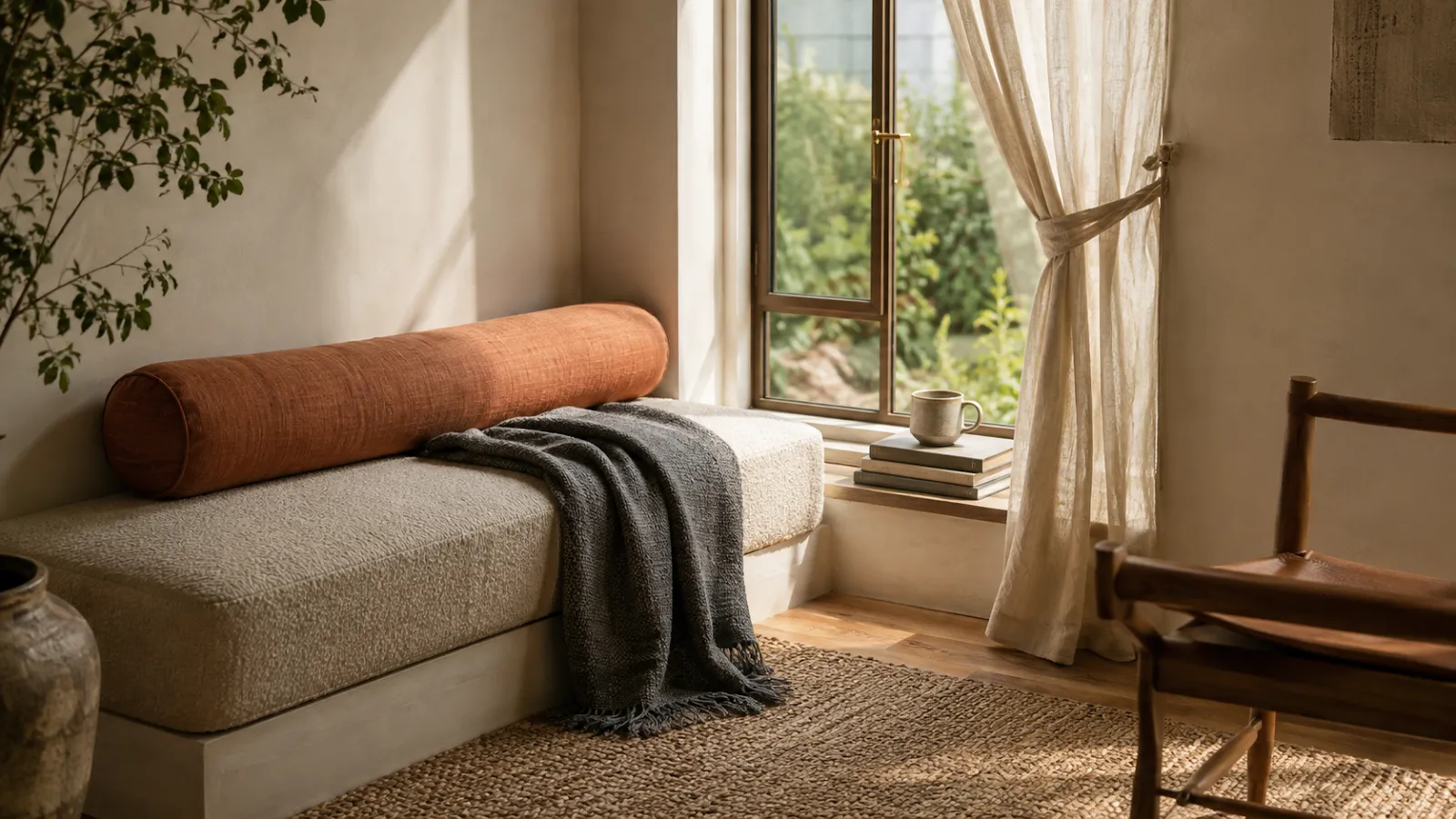
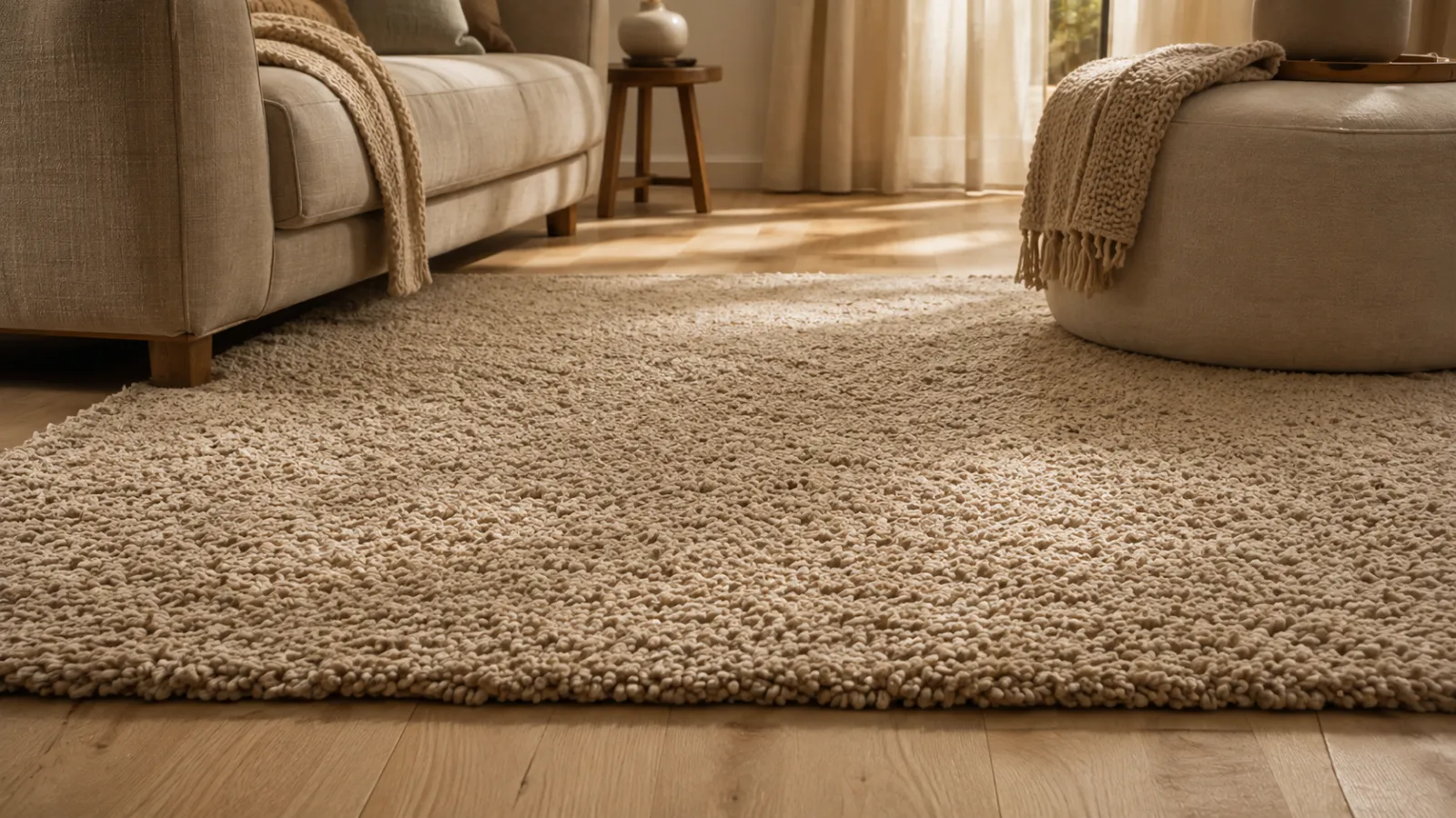
1. How to Make a Room Quieter Starts at the Floor
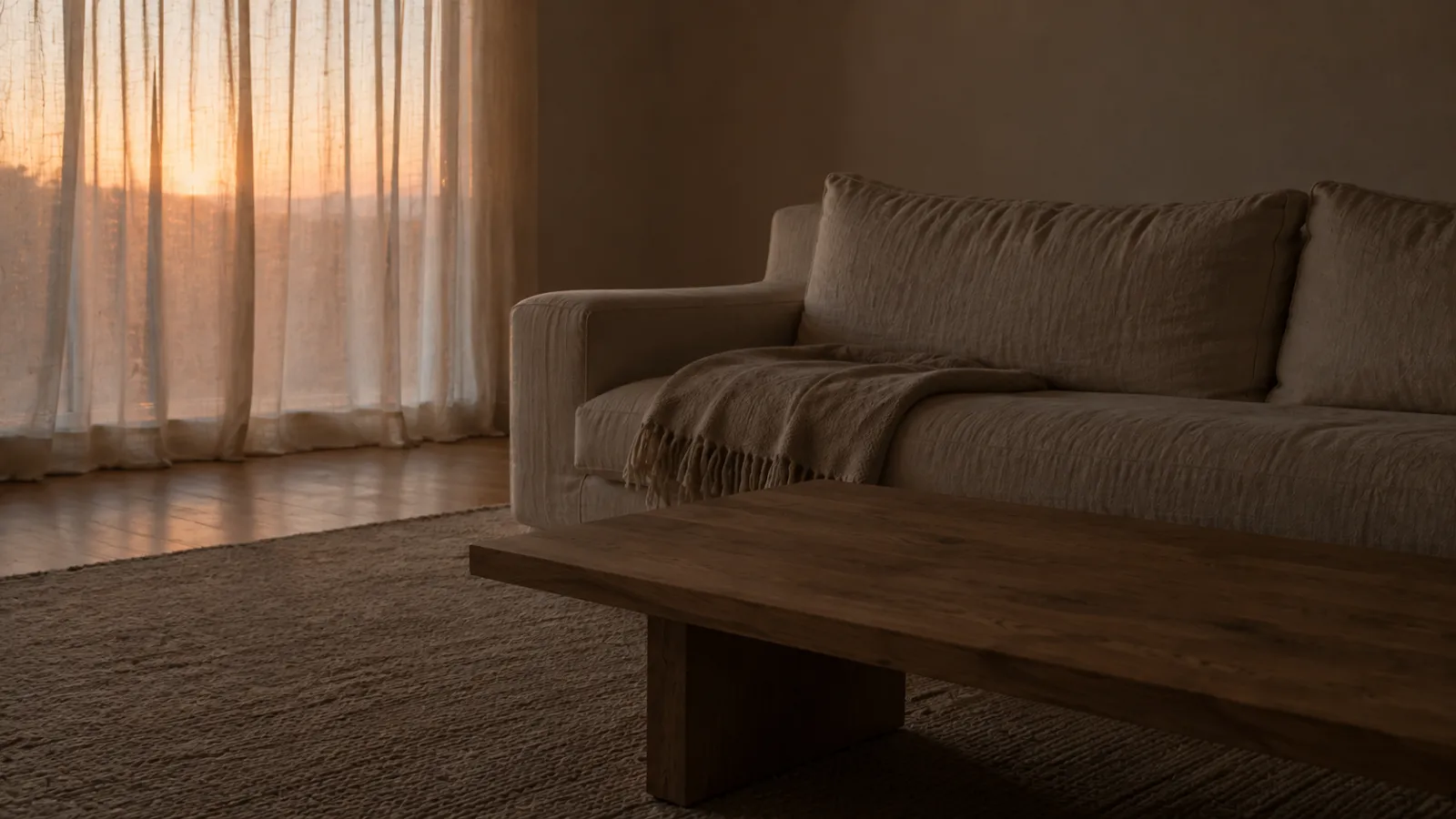
The floor is the biggest uninterrupted surface in almost every room, so it’s the biggest lever you have. A rug does more for how a room sounds than any other single thing you can add.
Go bigger than feels necessary. A small rug floating in the middle of a large floor barely registers. Aim for something that reaches under the front legs of your seating, so the soft area covers the part of the room you actually walk and sit in. Thicker pile catches more than flatweave, and a rug pad underneath adds another quiet layer nobody sees.
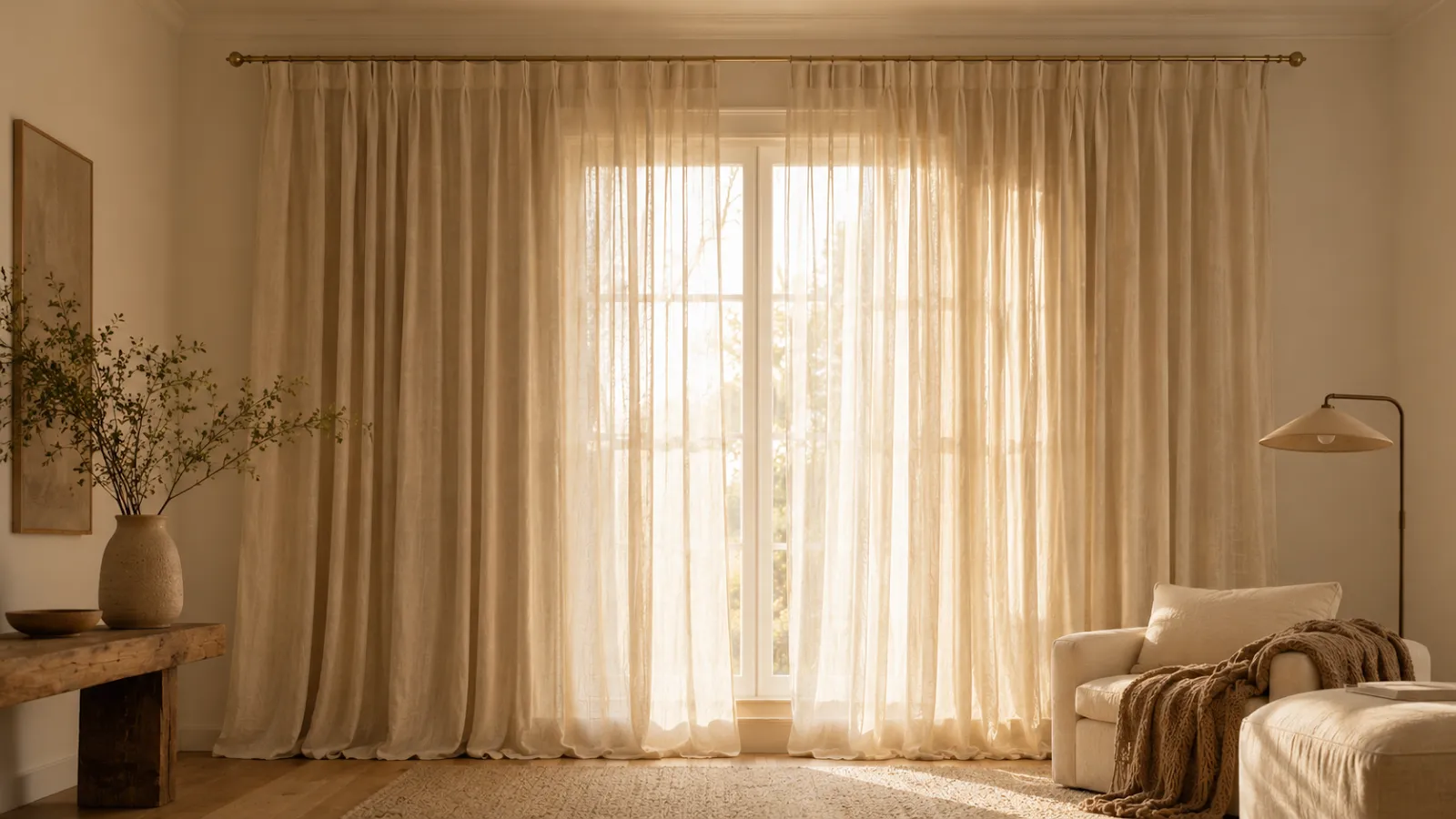
2. Hang Curtains Wider and Longer Than the Window
Glass is the hardest surface in the room. Fabric in front of it is the easiest fix.
Mount the rod several inches past the window frame on each side, and let the panels hang from near the ceiling all the way to the floor. You get more fabric in the room, the window looks taller, and the space sounds softer the moment you close them at night. Fuller panels help more than flat ones, so if you’re choosing between two, pick the one with more gather in it.
3. Stop Leaving Corners Completely Empty
Bare corners are where sound collects and bounces. They’re also where a room looks unfinished, which is why filling one tends to fix two problems at once.
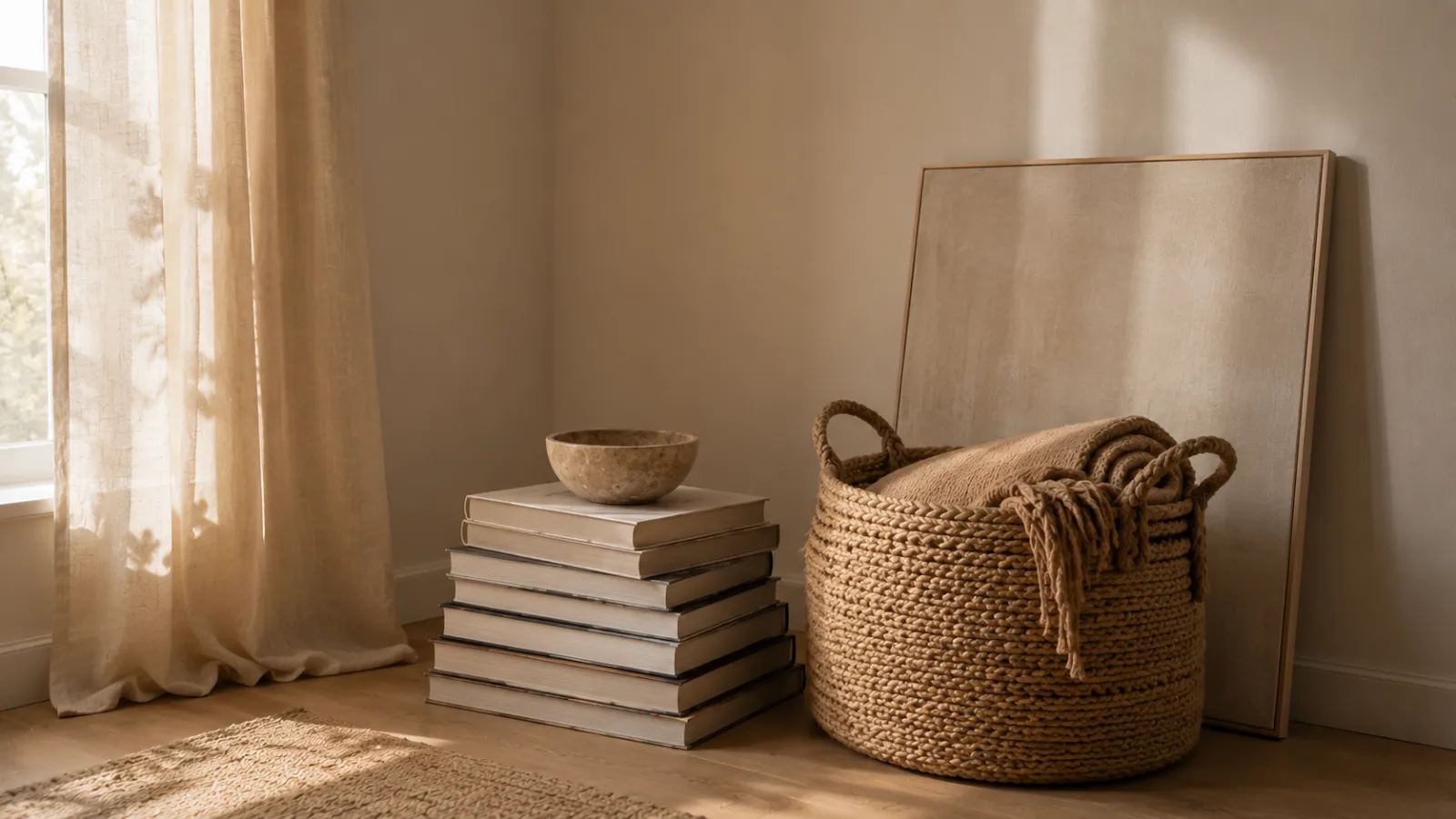
You don’t need furniture there. A tall plant, a floor basket with a rolled blanket in it, a leaning piece of art, a slim upholstered chair nobody really sits in. Anything with mass and a bit of texture breaks up the corner. One filled corner per room is usually enough to notice.
4. Let the Bookshelf Do Some Quiet Work
A wall of books is one of the best soft surfaces in a house, and it’s doing that job whether you meant it to or not. All those uneven paper edges catch sound instead of sending it straight back.
The trick is not to style the shelves into emptiness. A shelf that’s 80 percent books and 20 percent objects works better, both for sound and for how lived-in the room reads. If you’ve been pulling books off to make things look sparse, you’ve been quietly making the room harsher.

5. Choose the Upholstered Version When You Get the Choice
This one’s slow, and it only applies when something’s already being replaced. But it compounds.
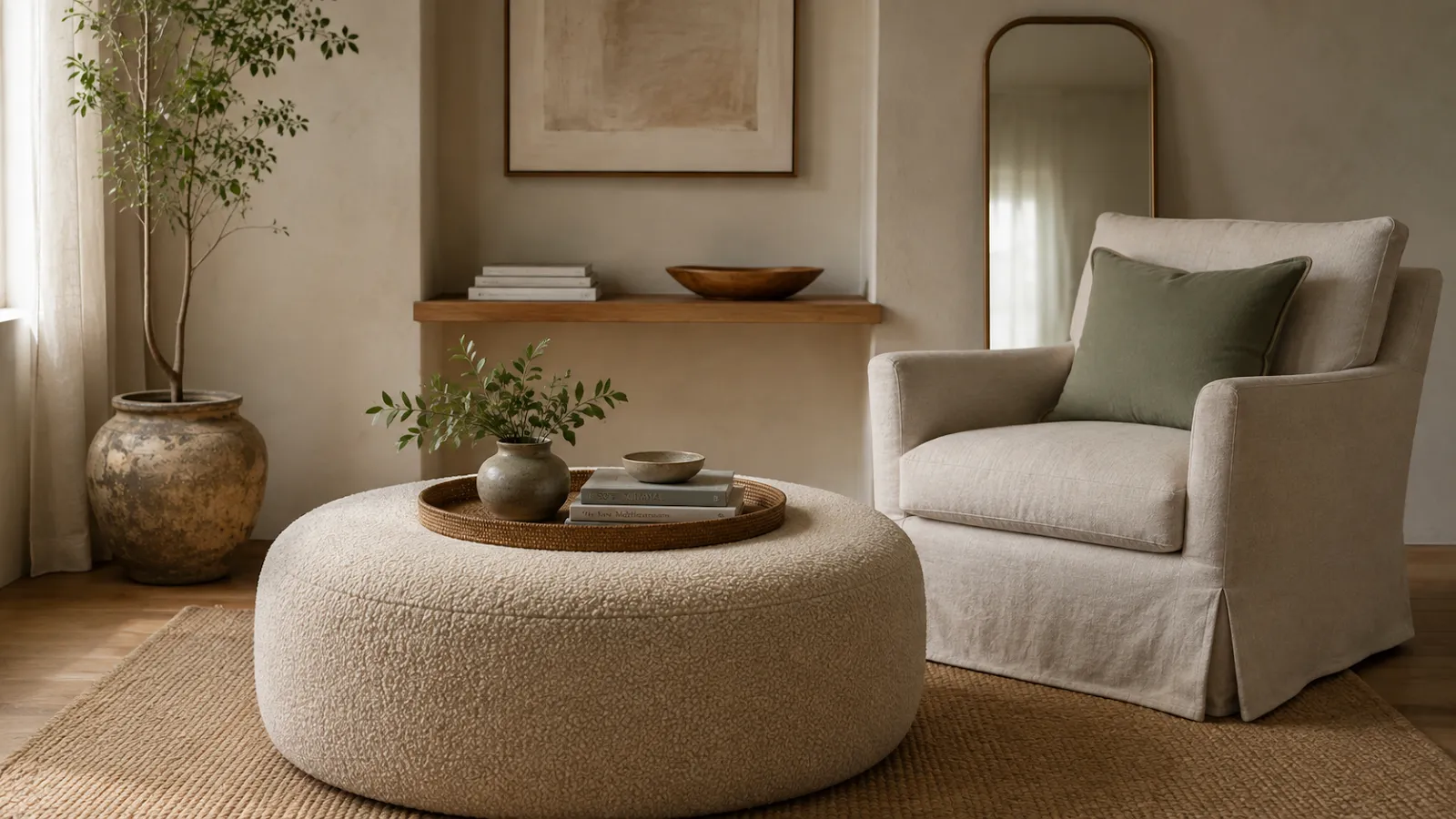
An upholstered ottoman instead of a wooden coffee table. A fabric headboard instead of a metal frame. A skirted chair instead of a bare-legged one. Each swap trades a hard, reflective plane for a soft one, and over a couple of years a room quietly becomes gentler without a single renovation.
6. Layer Textiles at Seat Height, Not Just on the Floor
Most of the sound in a room is happening around chest and head height, which is exactly where a lot of homes have nothing soft at all.
A throw over the arm of the sofa, a couple of cushions with real fill in them, a blanket folded on the back of a chair. It’s the layer people think of as decorative, and it’s genuinely functional too. Vary the weave rather than the color: a chunky knit next to a smooth linen next to a nubbly boucle gives you softness and visual interest without adding a single new shade. For more sensory-friendly decor ideas, that post is a good next stop.

7. Give the Walls Something Other Than Flat Paint
A big blank wall behaves like a drum skin. You don’t have to cover it, and you definitely don’t have to install panels. You just have to interrupt it.
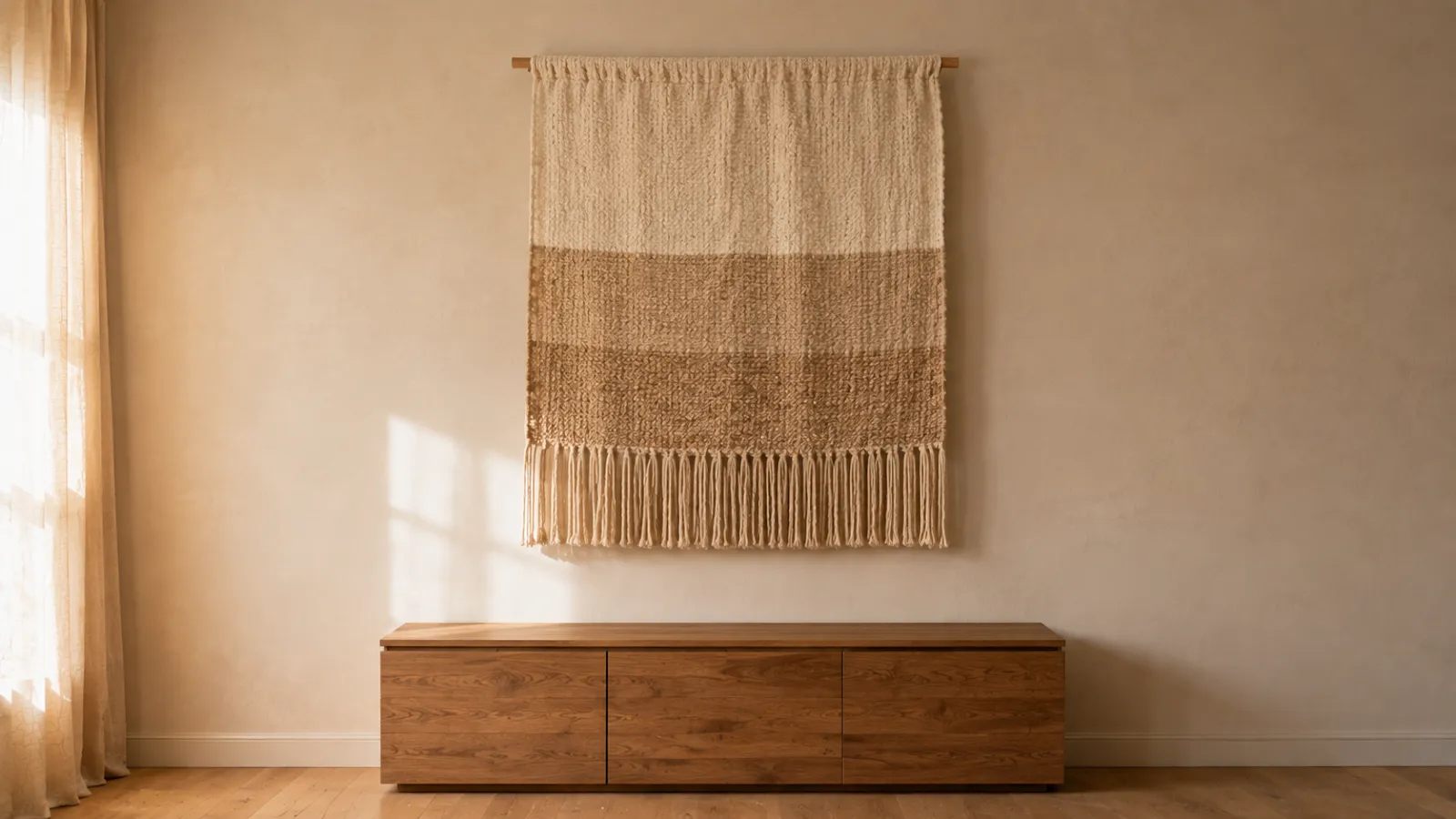
A woven wall hanging, a large canvas rather than a sheet of glass in a frame, a fabric-backed pinboard, or even a tall curtain panel on a wall with no window behind it. One textile element on the largest bare wall changes both how the room sounds and how finished it looks. If everything you own is behind glass, swap one piece for something with a soft face.
8. Deal With the Small Hard Sounds Separately
Not every noise is echo. Some of it is the little clatter of daily life, and it’s usually coming from three or four repeat offenders.
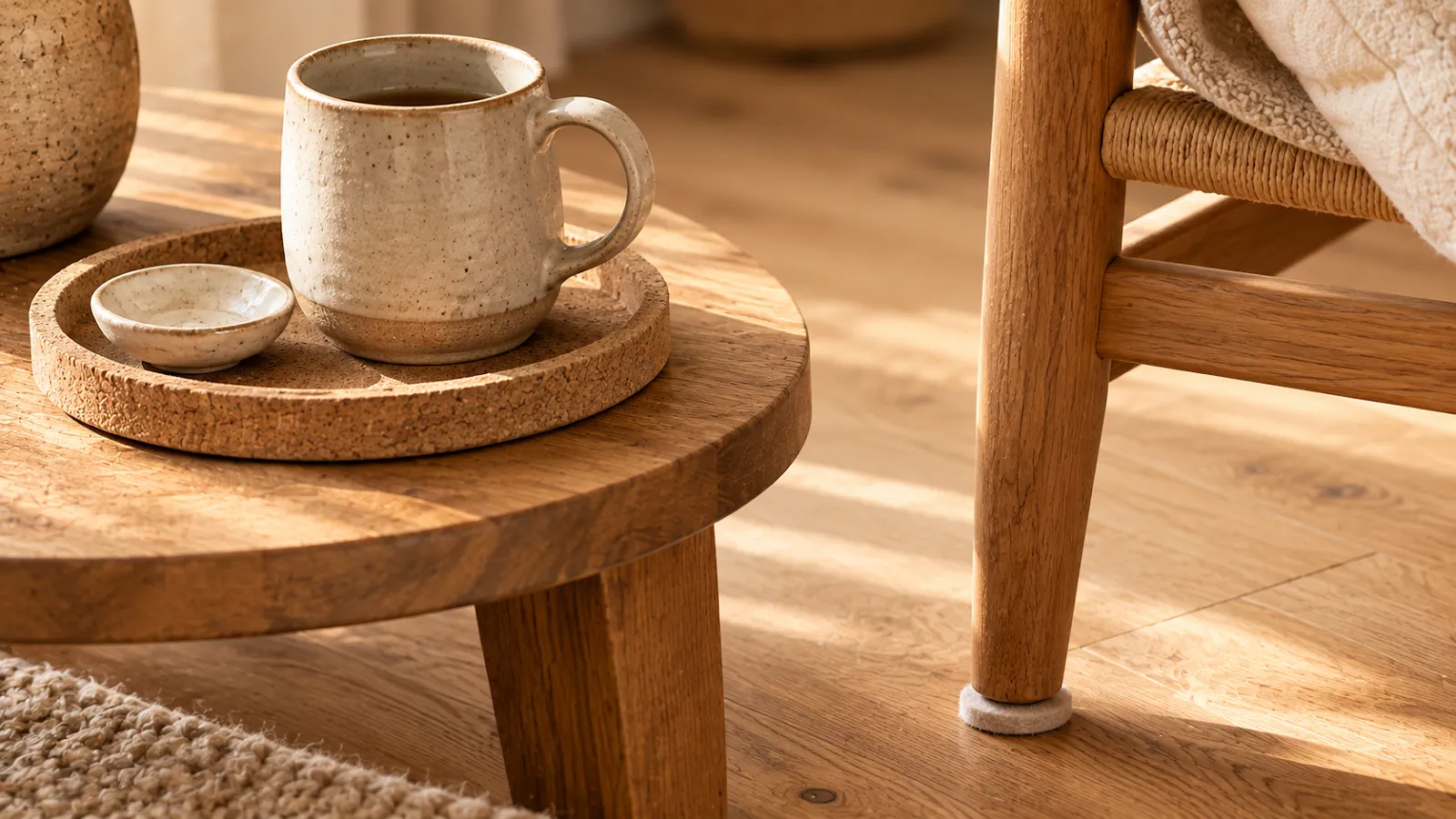
Chair legs dragging on a hard floor. Mugs landing on a stone counter. A cabinet door swinging shut. Felt pads under the furniture legs, a wooden or cork tray in the spot where things always get set down, and a soft bumper inside the cabinet doors take care of most of it. These are five-minute fixes that people notice for years.
9. Find Your Room’s Baseline Hum
Every home has a background layer running under everything, and you stop hearing it after a while. That doesn’t mean it stopped affecting you.
Stand still in the room for a minute in the evening and just listen. A fan, a fridge, a charger, a device on standby, a light with a faint buzz in it. Turn off what you can and leave the room genuinely quiet for a moment. Most people are surprised by how much of the noise floor is optional. Once you know what’s underneath, you can decide what stays.
10. Match the Softness to What the Room Is For
A room doesn’t need to be uniformly soft. It needs to be softest where you’re most still.
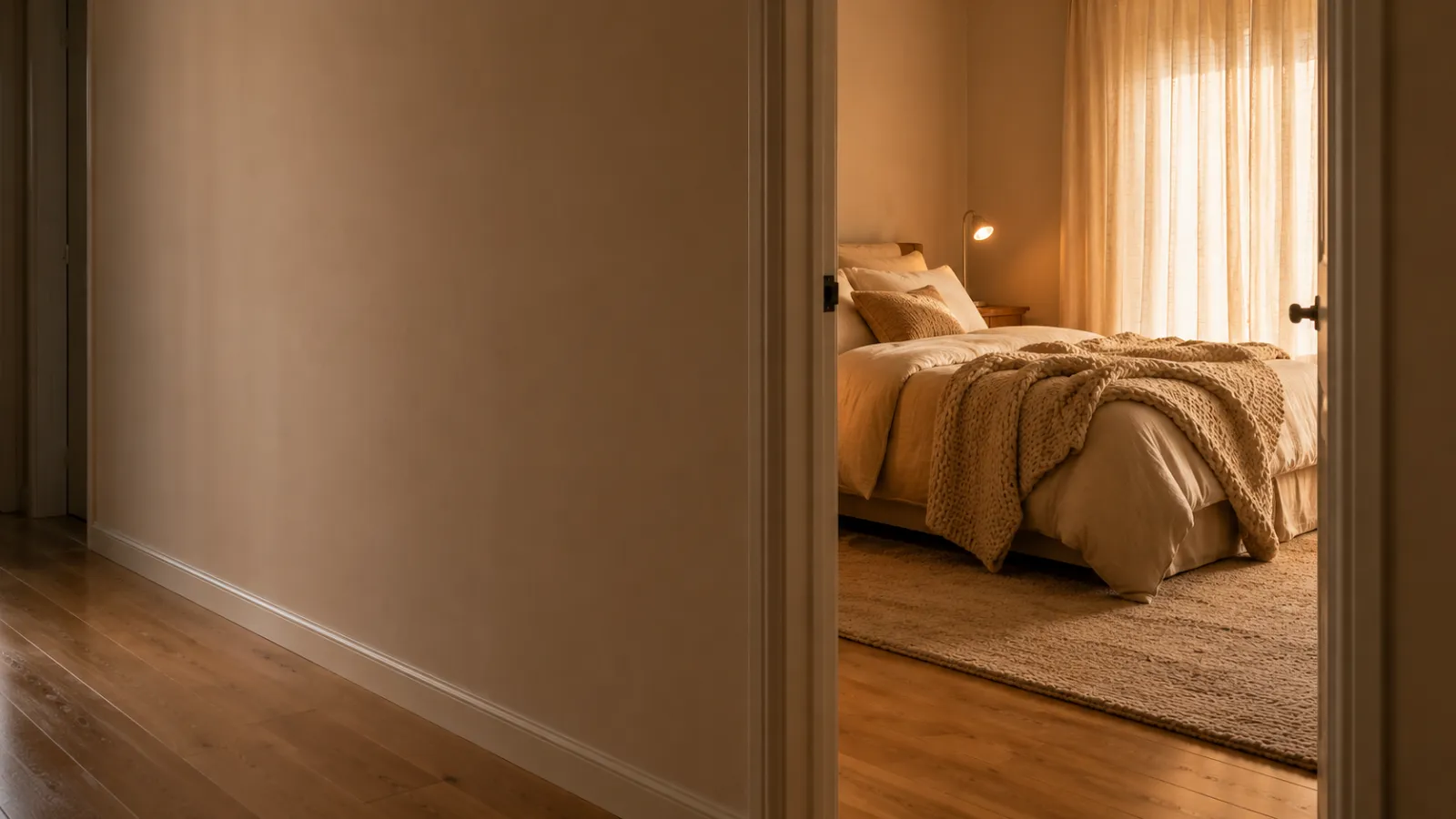
The bedroom and the reading corner get the heaviest treatment: the thick rug, the lined curtains, the layered textiles. An entryway or a hallway can stay comparatively bare, because you’re moving through it. Kitchens sit in the middle, since they’re always going to have hard surfaces and that’s fine. Deciding room by room keeps you from over-softening a whole home into something muffled and flat.
Frequently Asked Questions
Do I need acoustic panels to make a room quieter?
For a normal home, no. Acoustic panels are built for studios and offices with specific requirements. In a living room or bedroom, ordinary soft furnishings, a rug, curtains, upholstery and textiles do the same kind of work and look like part of the room instead of equipment on the wall.
Which single change makes the biggest difference?
A large rug, in almost every case. It covers more surface area than anything else you can add in one afternoon, and it’s the change people notice fastest.
Can I do this in a rental?
Yes, and most of the list is rental-friendly. Rugs, curtains on a tension or bracket rod, floor baskets, throws, cushions, felt pads and a filled corner all come with you when you leave. Nothing here requires drilling into anything structural.
Will softening a room make it feel dark or heavy?
It doesn’t have to. Keep the palette light and warm, cream, oat, soft tan, warm wood, and vary the texture rather than the color. You get the softness without the room closing in, which is exactly what makes a neutral space feel layered instead of flat.
Final Thoughts
A calm room isn’t only a matter of what it looks like. It’s how it lands when you walk in, and sound is a bigger part of that than most decorating advice admits. The nice thing is that every fix here overlaps with looking good anyway. Rugs, curtains, books, textiles, a corner that isn’t bare. It’s the same list either way.
Start with the floor, then the windows, then whatever wall is emptiest. Give it a week and listen to the room again. You’ll hear the difference before you can name it. For more calm living room styling ideas, that’s a natural next read.