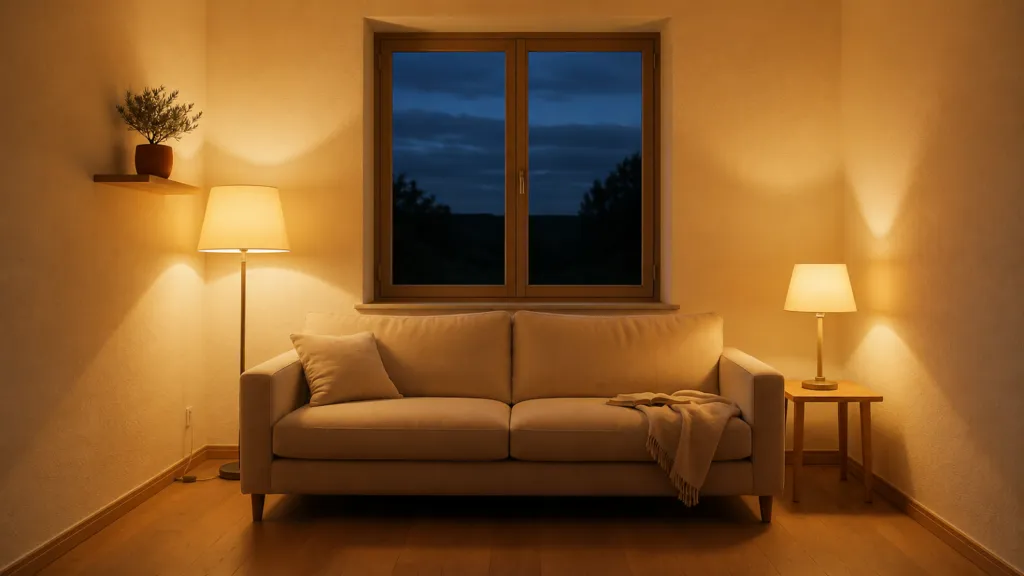
There’s a moment most evenings when a room either softens or it doesn’t. Same sofa, same rug, same everything, but one night it feels like somewhere you want to stay, and the next it feels like an office after hours.
Almost always, the difference is the light. Not how much you have. How it’s arranged.
1. Start by turning the ceiling light off
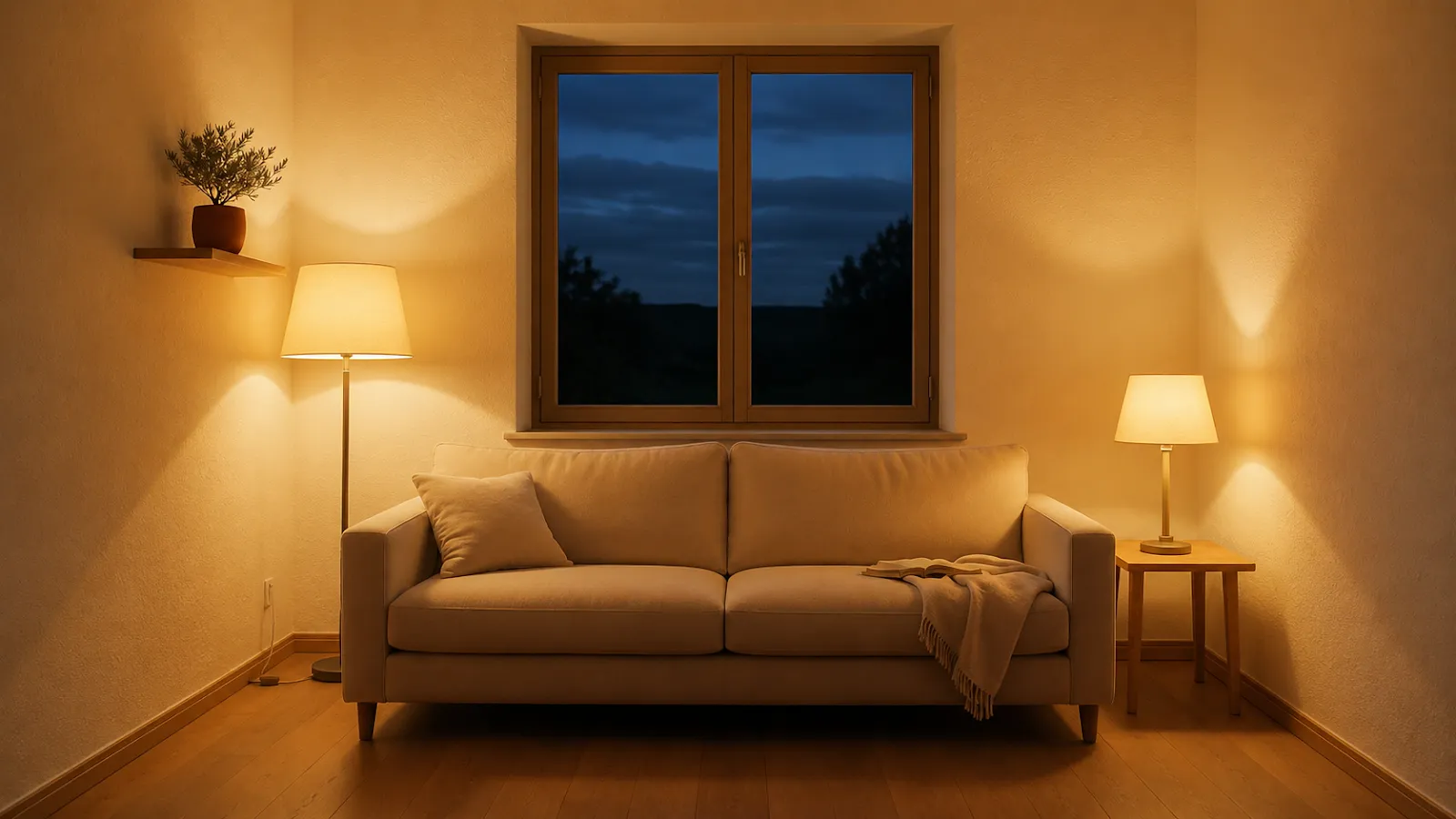
The overhead fixture is the single biggest reason a room feels flat at night. It throws light down from one point, high up, and washes everything evenly, which is useful for finding a dropped earring and terrible for atmosphere.
Try one evening without it. Turn it off at dusk and see what you’re left with. Most people discover they already own enough other light, and simply never reach for it. That one switch is the whole principle in miniature.
2. Think in three layers, not in fixtures
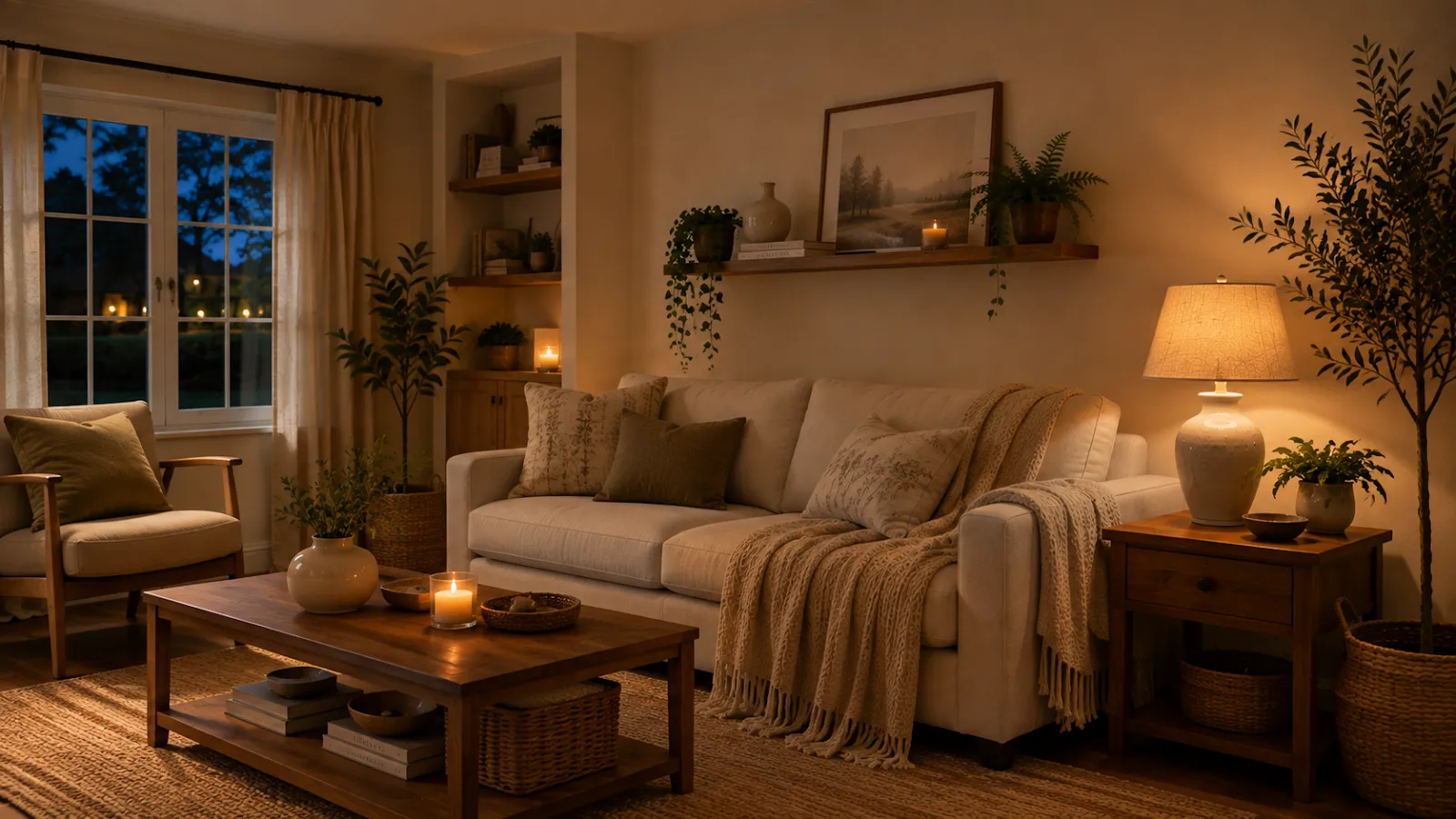
Designers don’t count lamps. They count layers. Ambient light fills the room gently. Task light lands where you actually do something: read, cook, work. Accent light picks out a texture, a plant, a corner.
A room with all three feels considered. A room with only one feels either glaring or gloomy, depending on which one you kept. When a space feels off, name the missing layer before buying anything.
3. Aim for three light sources at eye level or below
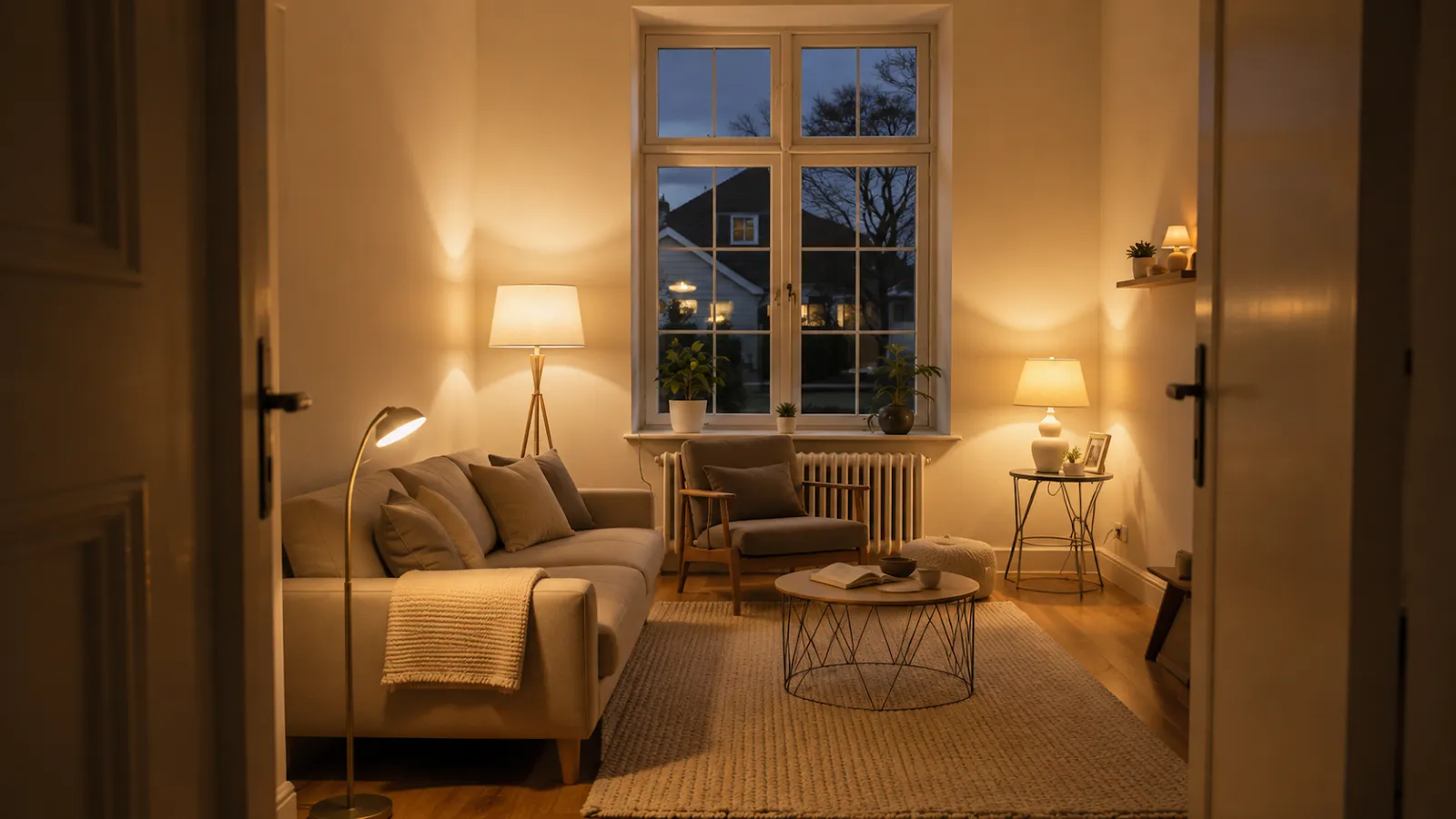
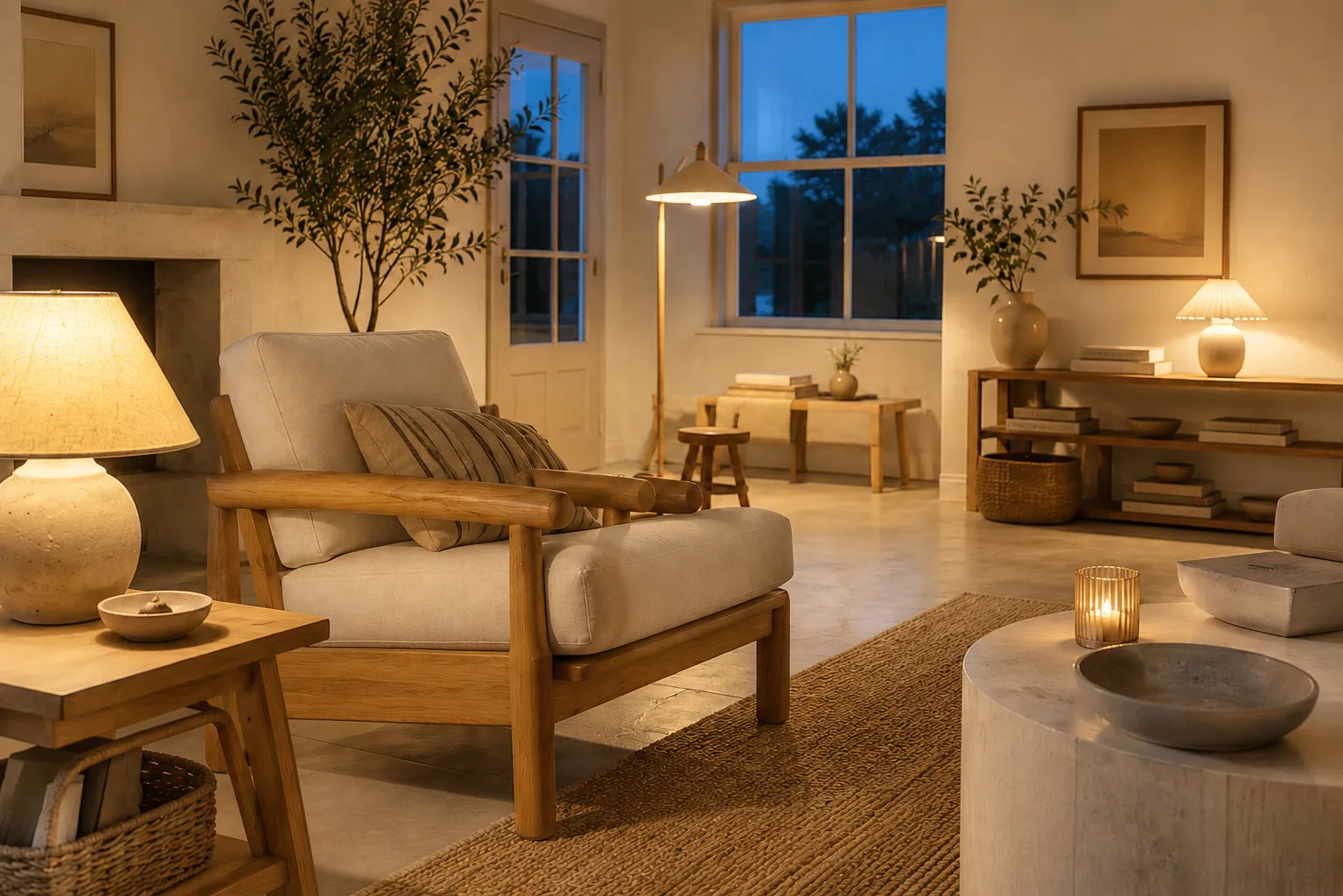
This is the easiest rule to apply tonight. Count the light sources in your living room that sit at seated-eye height or lower: table lamps, floor lamps, a shaded lamp on a shelf, candles. If the answer is one, that’s your answer.
Three is the number where a room stops looking spotlit and starts looking softly filled. They don’t need to match, and they shouldn’t all be on at once. They just need to exist as options.
4. Warm the color temperature before you change anything else
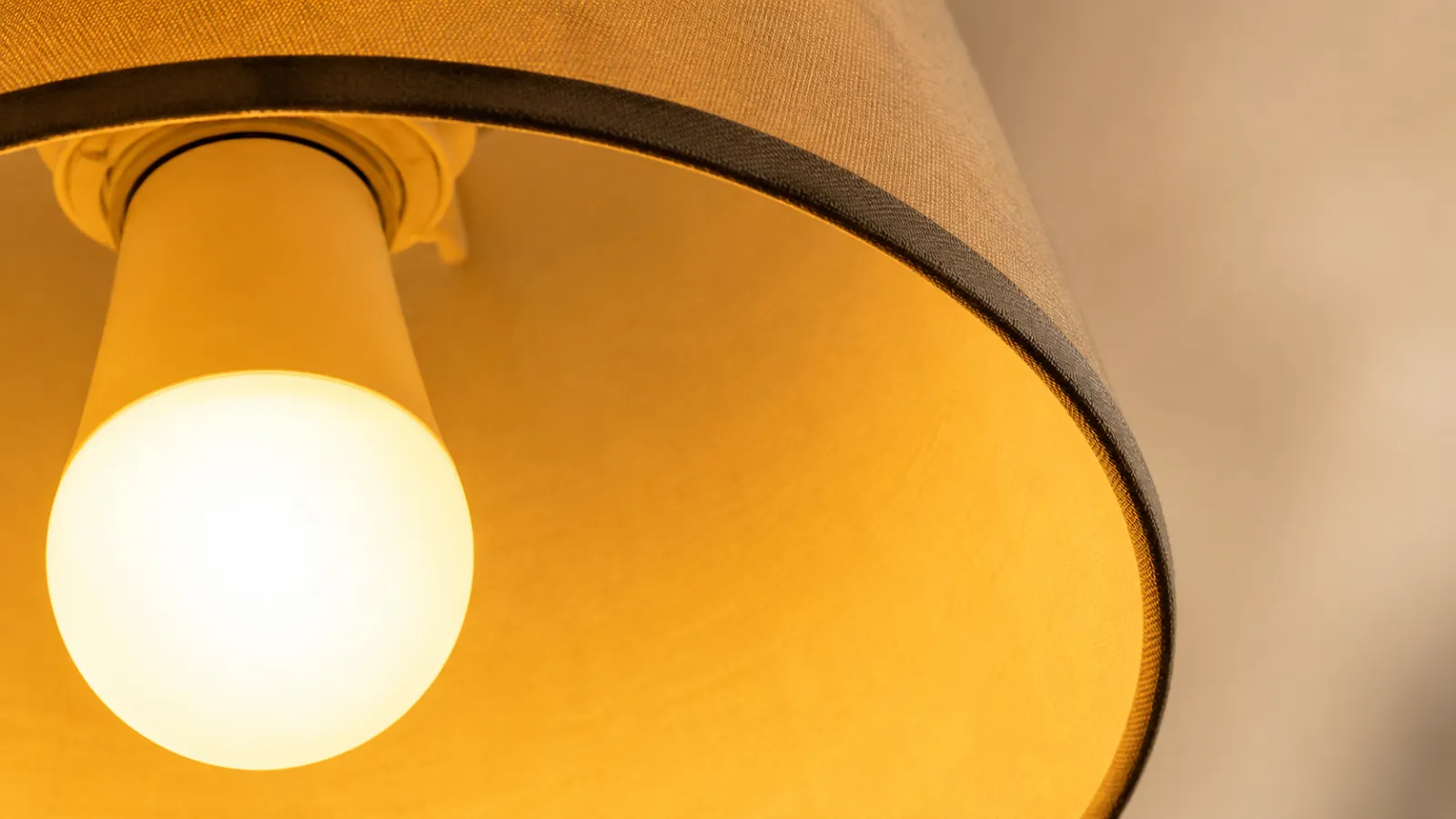
Bulb color is measured in Kelvin, and it’s printed on nearly every box. Lower numbers are warmer and more amber. Higher numbers are whiter and more clinical.
For a living room in the evening, look for 2700K or below. Some warm-dim bulbs drop toward 2200K as you lower them, which mimics the way firelight and sunset behave. Swapping bulbs is the cheapest change on this entire list, and it’s usually the one people feel most.
5. Put the light where you actually sit
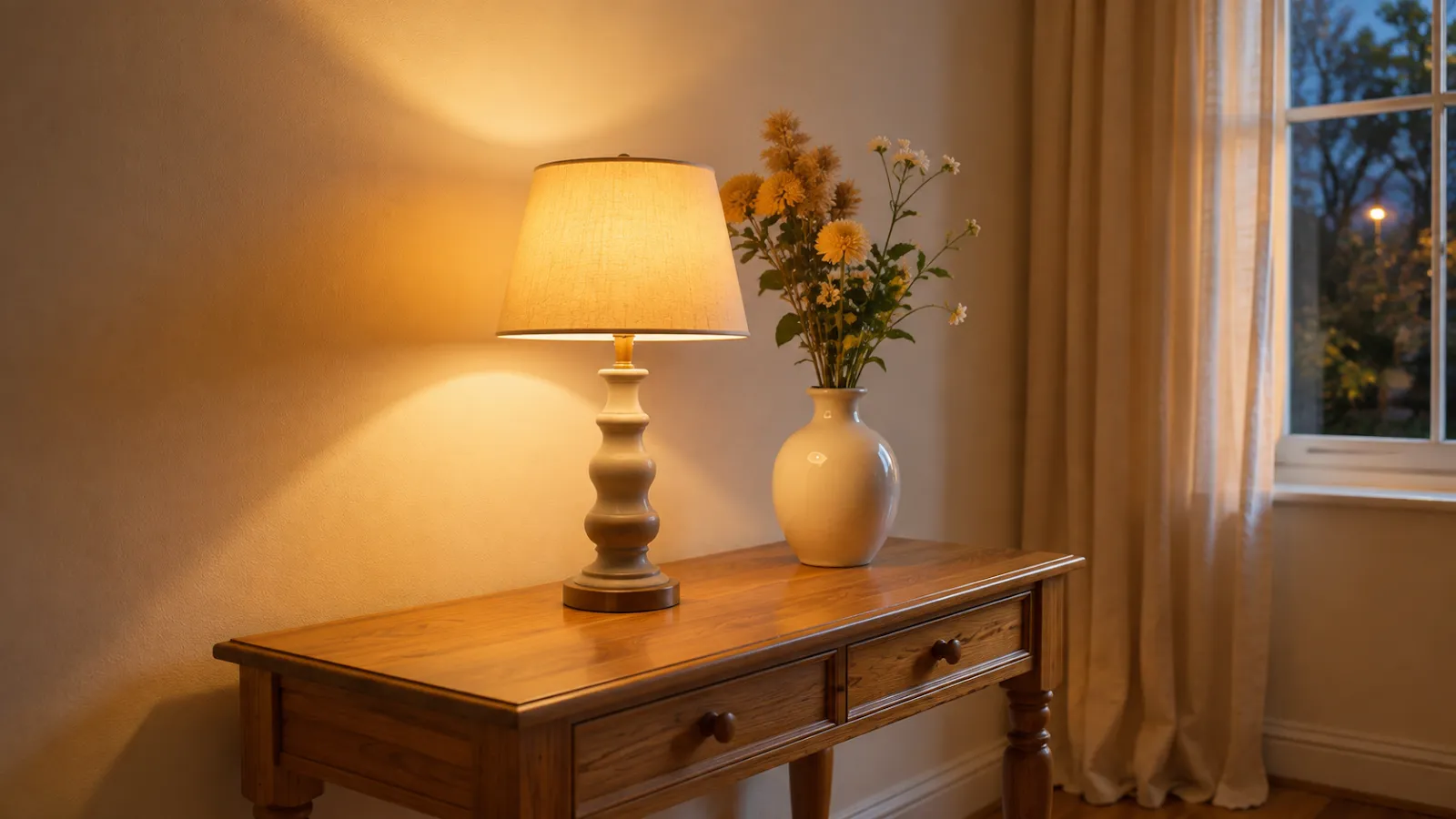
Rooms are usually lit for their floor plan rather than their habits. The lamp goes in the corner because the corner looked empty, not because anyone sits there.
Walk the room and notice where you really land: the end of the sofa, the chair by the window, the spot on the rug. Move a lamp to each of those. Light that follows your habits makes a room feel like it was arranged around you, because it was.
6. Never look straight at a bare bulb
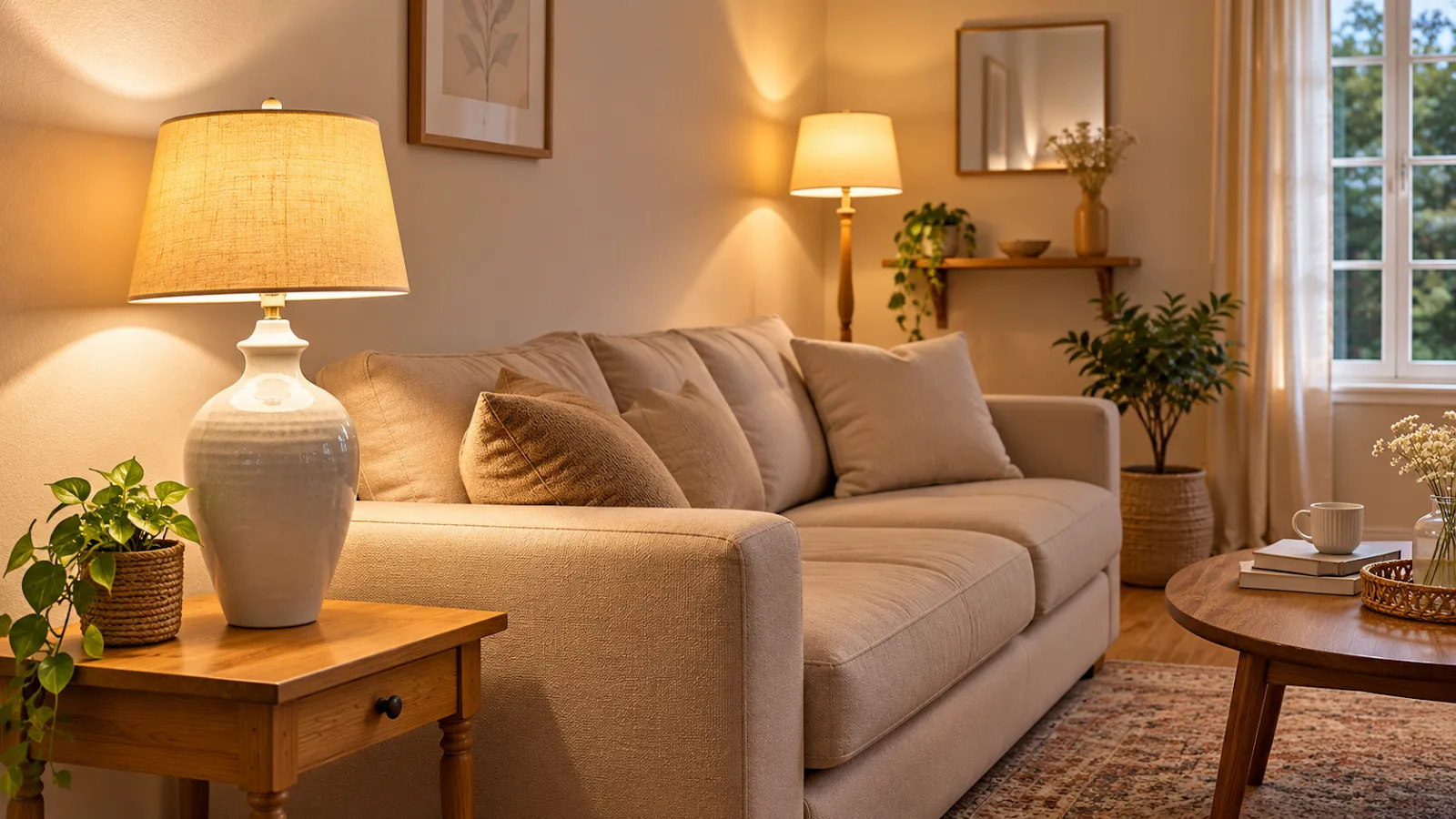
Glare is what makes a room feel harsh, and glare is mostly a question of whether the source is visible. A bare bulb in your sightline will make an otherwise beautiful room feel restless.
Shades, frosted glass, paper lanterns and pleated fabric all do the same job: they turn a point of light into a soft glowing surface. If you can see the filament from where you sit, either shade it or turn it away from the seat.
7. Dim whatever you can
Brightness should be a dial, not a switch. A room needs different amounts of light at 4 p.m. and at 10 p.m., and a fixed output can only ever be right at one of them.
Plug-in dimmers, dimmable bulbs and smart bulbs all get you there without touching the wiring. Even dimming a single main lamp gives you two versions of the same room: the useful one and the restful one.
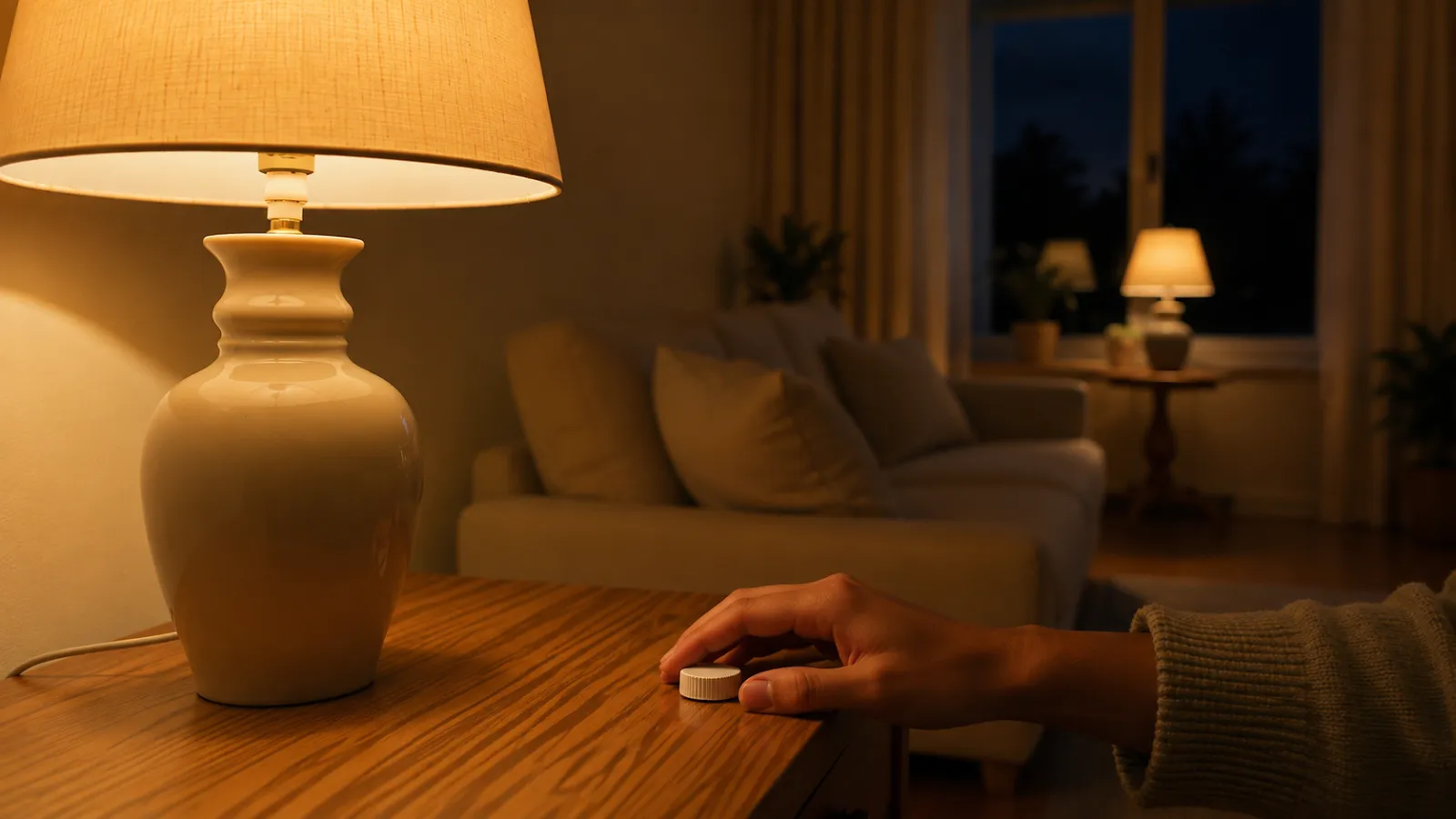
8. Let the light bounce off something warm
Light takes on the color of whatever it hits. The same lamp reads golden against oak and linen, and slightly cold against white gloss and gray tile.
This is why warm neutral rooms photograph so well in lamplight: wood, cream walls, clay pottery and undyed textiles all return the light rather than absorbing or chilling it. Aim a lamp toward a wall or a wooden surface and let the room do half the work.

9. Light the corners, not just the center
A room lit only in the middle feels smaller than it is, because the edges disappear into shadow and your eye stops there. A little light in the far corners quietly expands the space.
You don’t need a fixture for every corner. One small lamp, an uplight behind a plant, or a shaded bulb on a low shelf is enough to tell the eye that the room continues.
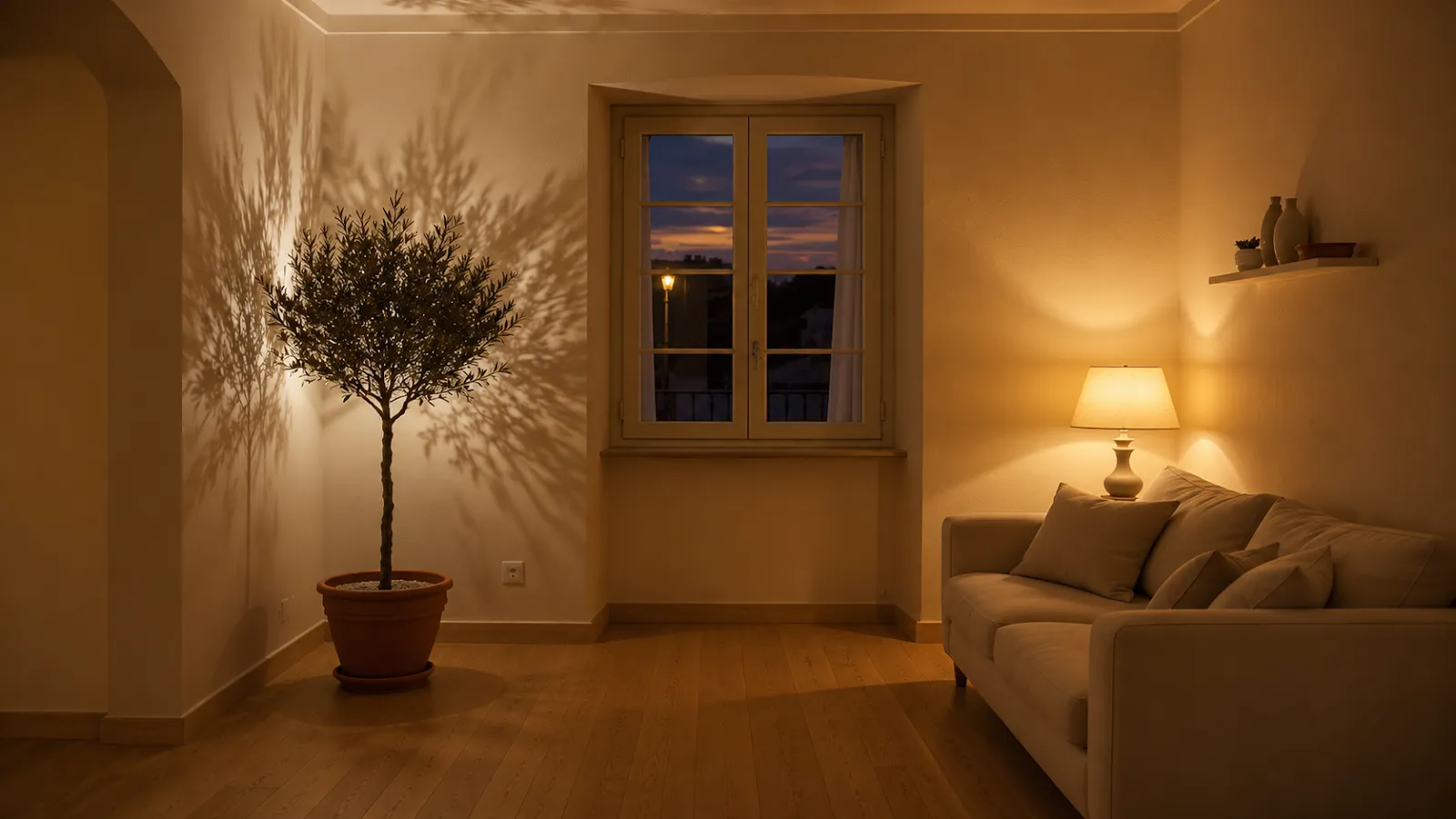
10. Let the light change with the hour
The most restful rooms aren’t lit one way all evening. They step down. Bright and useful while you’re cooking or tidying. Half of that once you sit. Two lamps and a candle by the end of the night.
You can do this manually (it takes about ten seconds) or set two or three smart bulbs to shift on a schedule. Either way, a room that gets gradually softer as the evening goes on feels like it’s keeping pace with you.
Frequently Asked Questions
How many lamps does a living room actually need?
Three light sources at or below eye level is a good working target for an average-sized room, plus whatever overhead fixture you keep for practical tasks. Larger or more open rooms usually want four or five so the far corners aren’t left dark.
What bulb color temperature is best for a cozy room?
2700K or lower reads warm and amber, which is what most people mean by cozy. Anything at 3500K and above starts to feel more like a workspace. The number is printed on the bulb packaging, usually near the wattage.
Can I do this in a rental without new fixtures?
Yes, nearly everything here is plug-in or screw-in. Swapping bulbs to a warmer temperature, adding a plug-in dimmer, and moving existing lamps to where you actually sit covers most of the effect with no drilling and nothing permanent.
Is layered lighting more expensive to run?
Usually less, not more. Several low-wattage LED lamps typically draw less power than one bright overhead fixture, and dimming them lowers it further. The look costs attention rather than money.
Final Thoughts
Lighting is the one part of a room you can change tonight, for almost nothing, and feel immediately. No new furniture, no repainting, no waiting on a delivery. Just a switch left off and a lamp moved three feet.
Start with the ceiling light. Turn it off, sit down, and notice what the room does. Everything else on this list is a refinement of that first small decision.