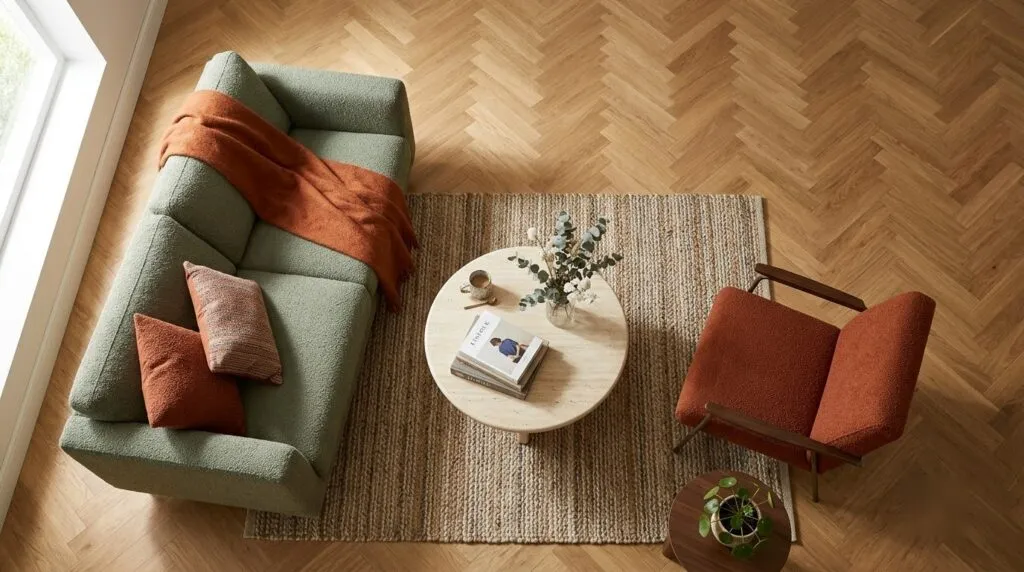
You can own beautiful things and still walk into a room that feels a little off. Nothing is wrong, exactly. The light is fine, the colors are soft, and yet you never quite settle in there.
Nine times out of ten it isn’t the furniture. It’s where the furniture is standing. A calm living room layout is mostly a set of small decisions about distance, path, and sight line, and almost none of them cost anything. Here are ten of them.
1. Start with where you actually sit
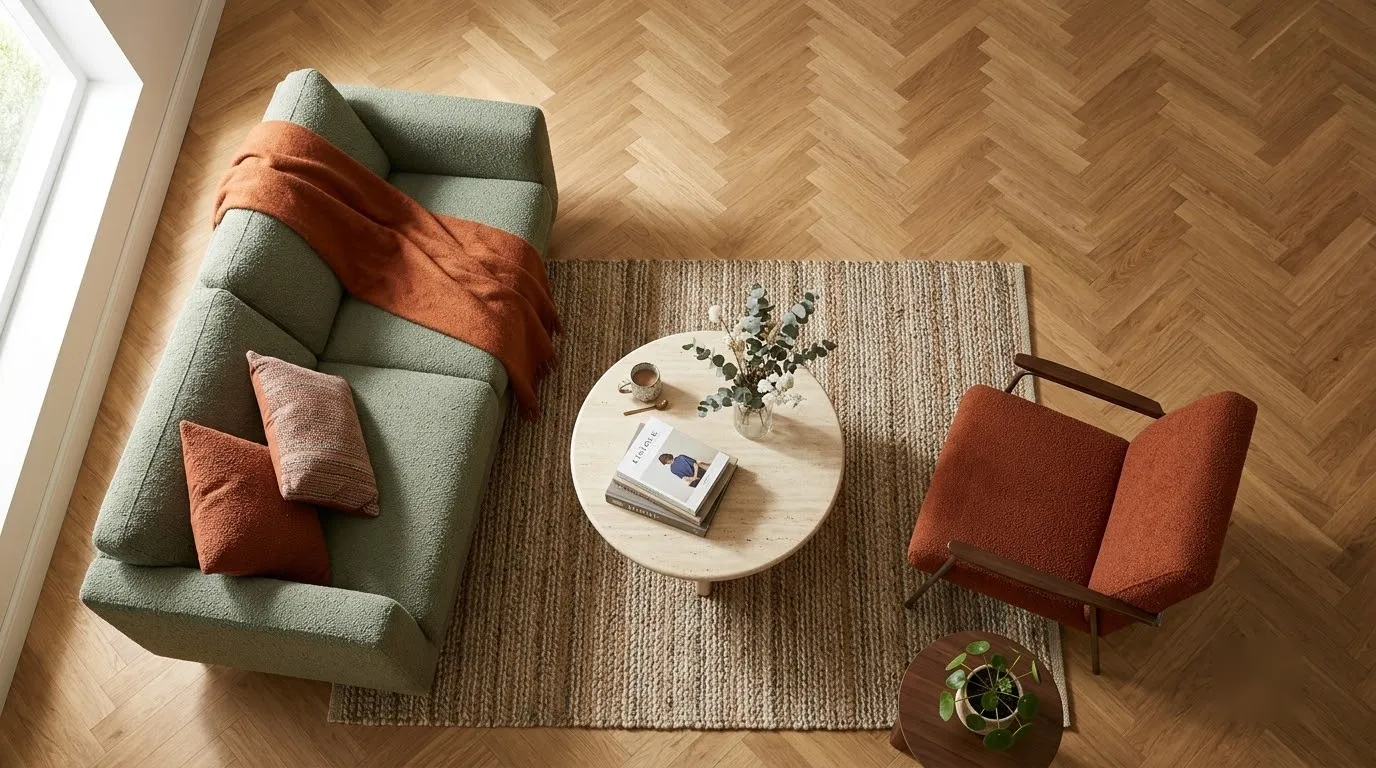
Most of us arrange a room around whatever the builder made important: the fireplace, the TV wall, the biggest window. Then we sit somewhere else entirely.
Spend a few days noticing where you land when you’re tired. That chair, that end of the sofa, that spot by the lamp is the real anchor of the room. Build the layout outward from there and the space stops fighting you.
It sounds obvious written down. In practice most living rooms are arranged for an imaginary version of the household, the one that entertains twelve people on a Sunday, rather than the two of you who are there every night.
2. Pull the seating off the walls
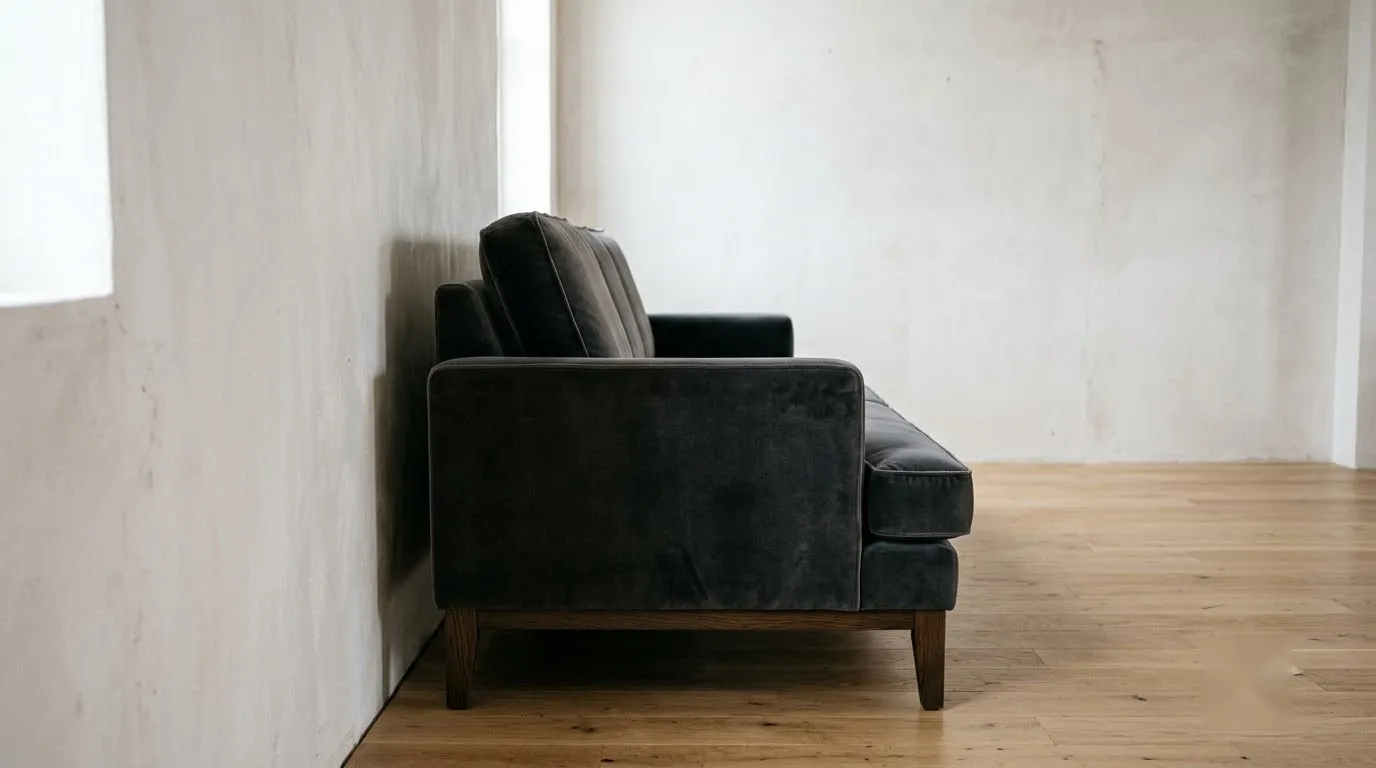
Pushing every piece flat against the perimeter feels like it’s creating space. It usually does the opposite. The middle of the room goes hollow, and the seating reads like a waiting area.
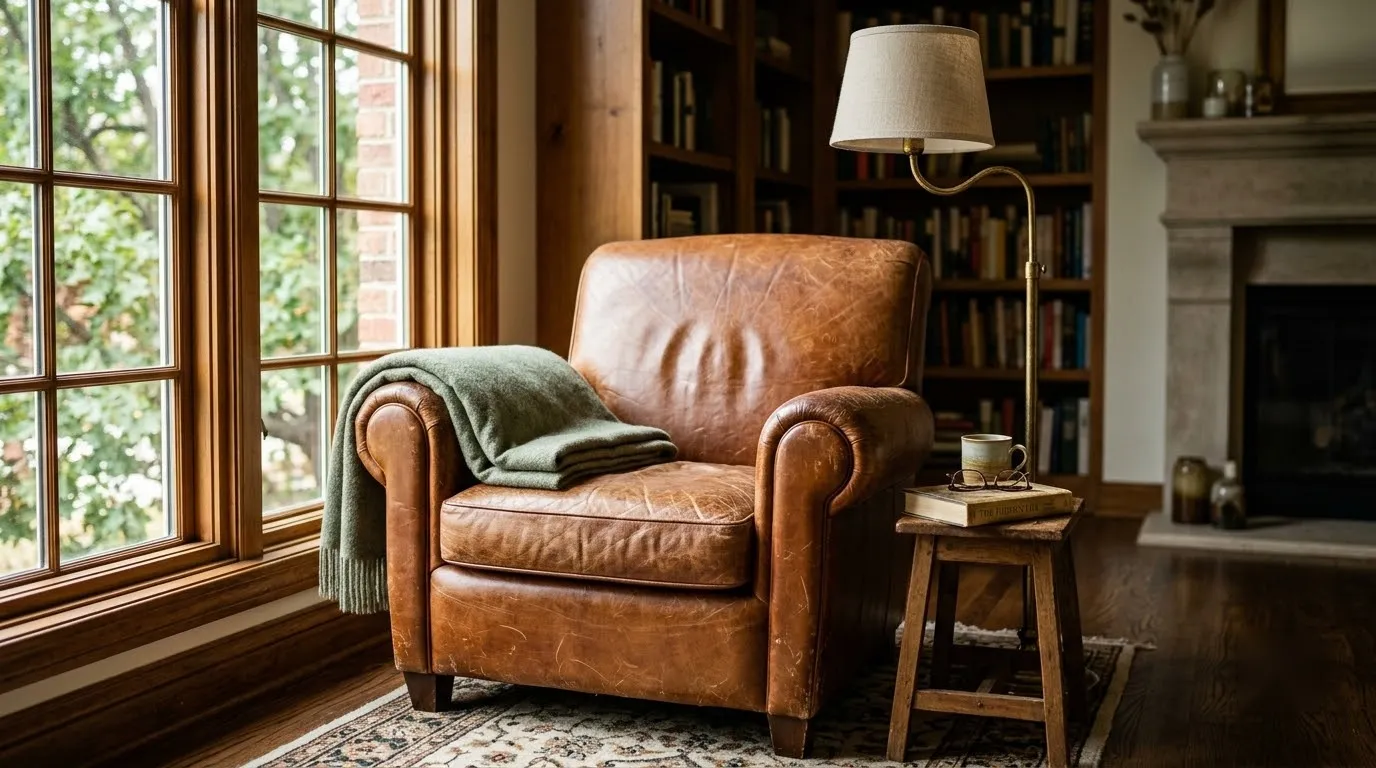
Even three or four inches of air behind the sofa changes it. The room starts to feel arranged rather than lined up. In a small space you may only be able to spare an inch or two, and that’s still worth doing.
The gap also gives a room its shadow line, that soft dark edge behind the back cushions, which is a quiet part of why styled rooms in photographs look settled and ours sometimes don’t.
3. Keep facing seats close enough to talk
A sofa and a chair set too far apart make a room feel formal and slightly cold. You end up raising your voice a little without knowing why.
Roughly seven to eight feet between facing seats tends to feel natural for conversation. If your room is wide, resist the urge to spread furniture out to fill it. Pull the group tighter and let the leftover space become open floor instead.
4. Protect one clear walking path
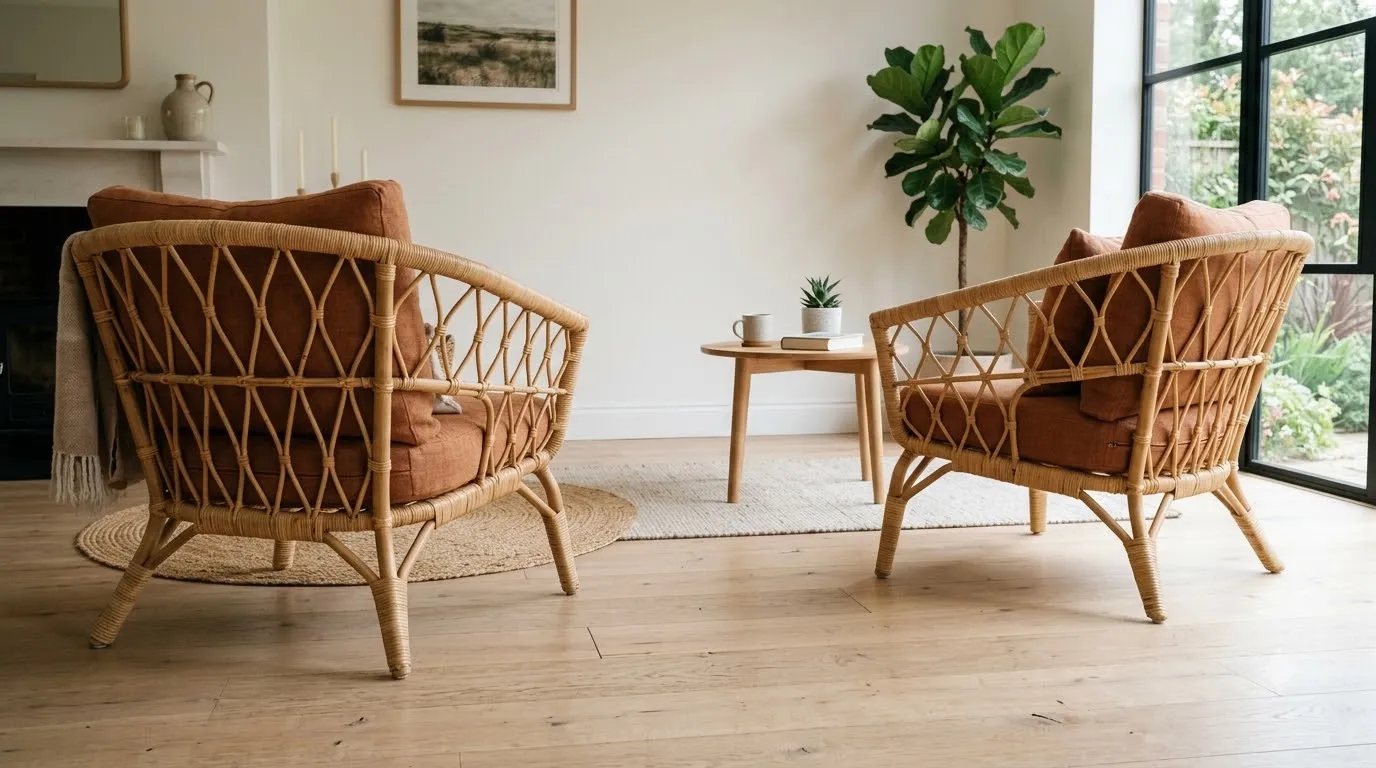
Calm has a lot to do with not having to think. If you’re stepping around an ottoman or turning sideways past a chair every single day, the room is quietly costing you attention.
Pick the route people actually take, usually door to sofa, or door to hallway, and keep it clear and roughly the width of a doorway. Everything else can be cozy and close. One honest path is enough.
Worth checking in the dark, too. The path you can walk at eleven at night without turning a light on is the one your body has already decided is the real route.
5. Give the largest piece the longest wall
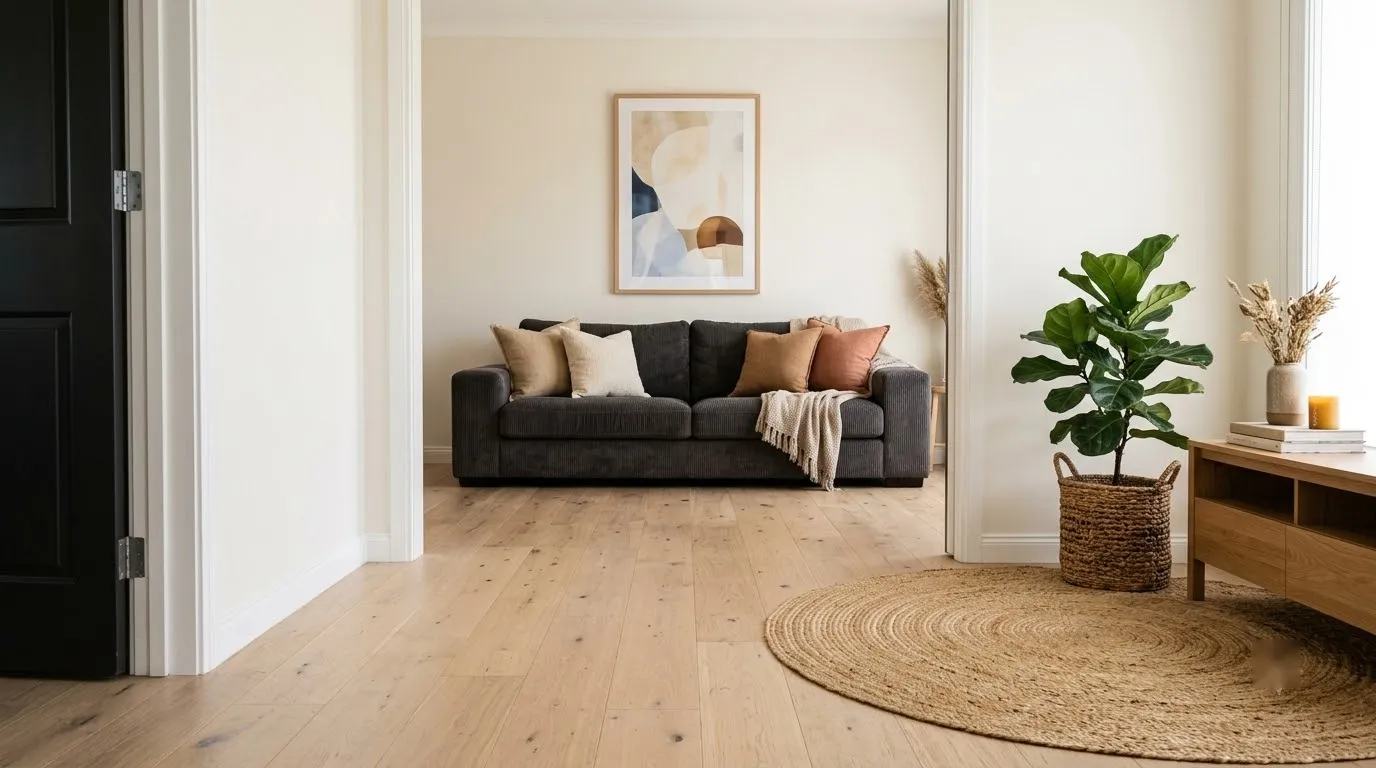
Rooms feel unsettled when the heaviest thing in them is squeezed onto a short wall or floating at an angle for no clear reason. Your eye reads it as unresolved.
Put the sofa, or whatever the biggest piece is, along the longest uninterrupted wall, and let the lighter pieces move around it. This is the one placement decision worth making before anything else finds its spot, because everything else responds to it.
6. Don’t seat anyone with their back to the door
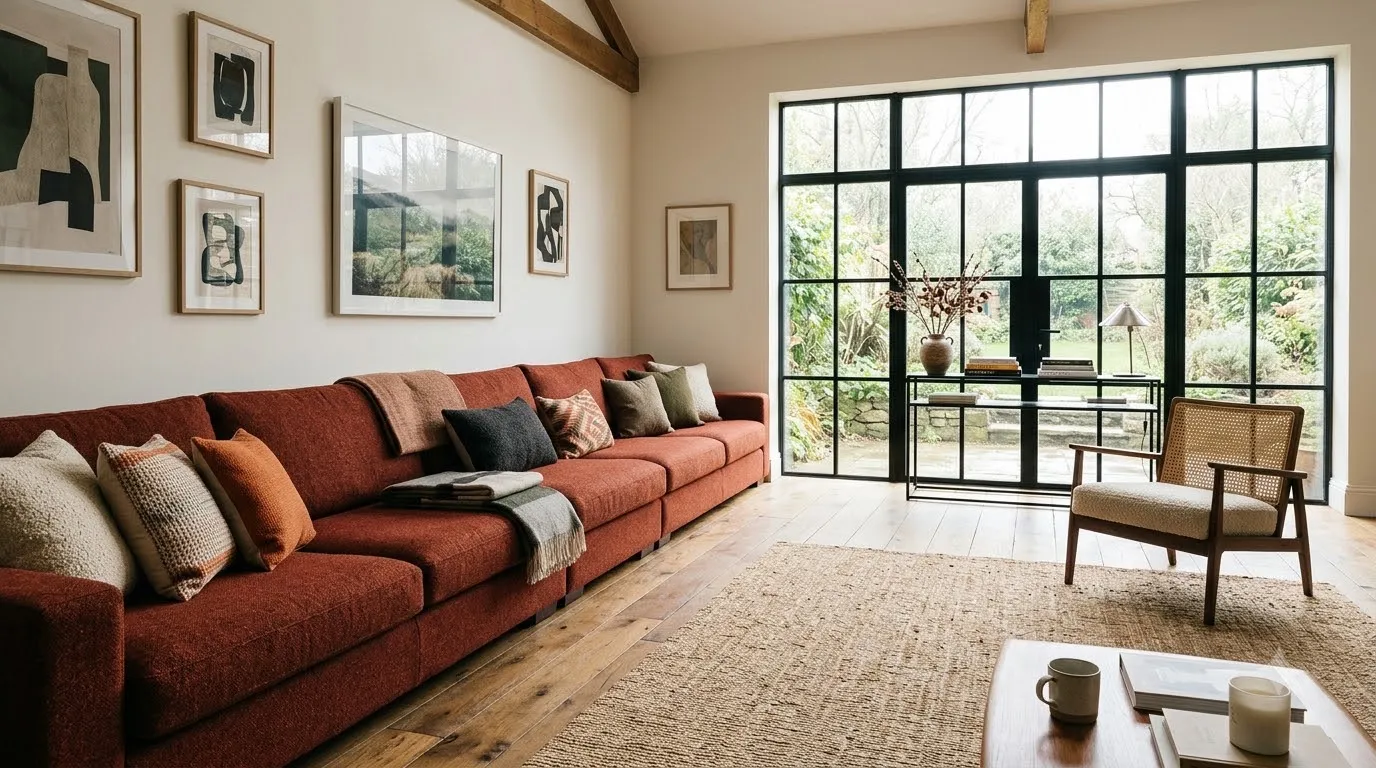
This one is small and people feel it strongly. A seat facing away from the entrance keeps some part of you half alert to the room behind you.
You don’t need every chair facing the doorway. Just make sure the seat you use most has the door somewhere in view, even at an angle. If the layout truly can’t allow it, a mirror placed so it catches the doorway gives you the same easy awareness.
7. Let the rug hold the group together
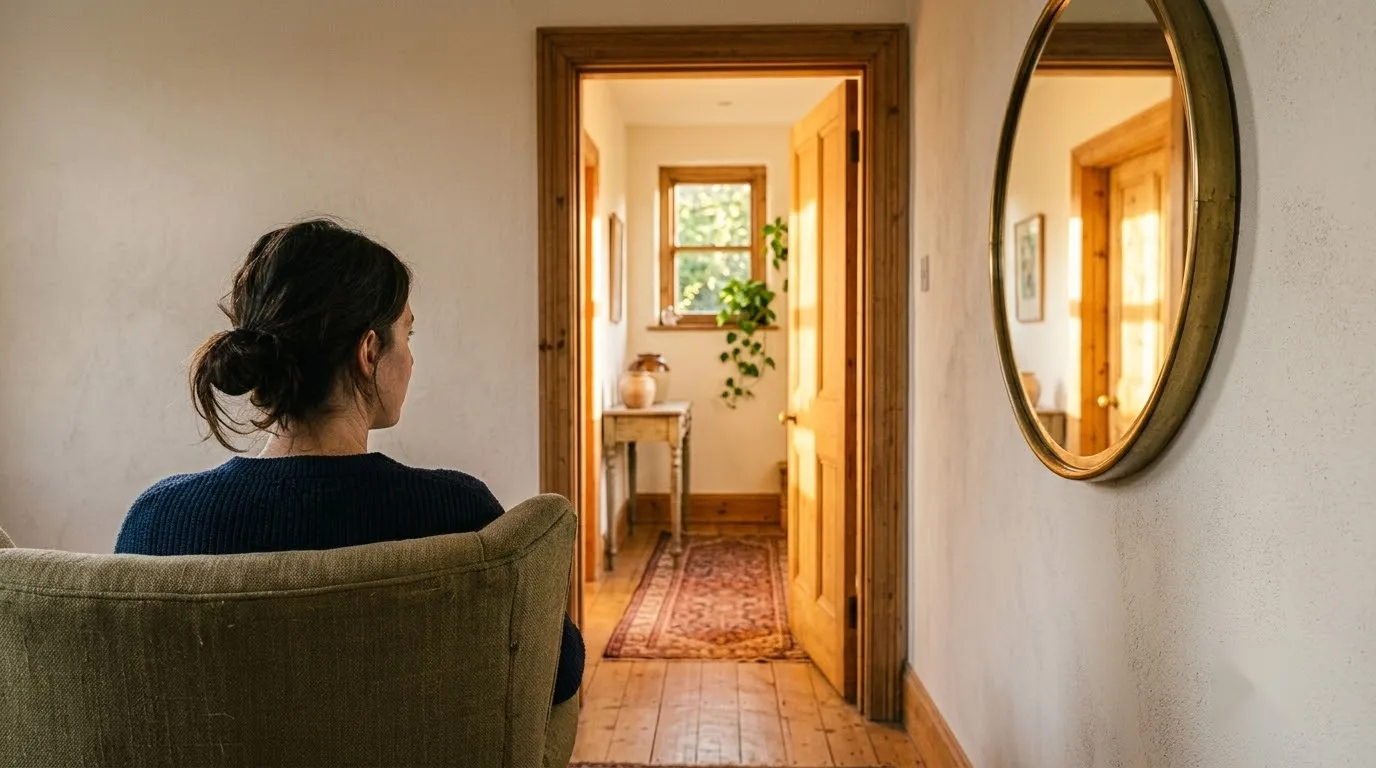
A rug that’s too small makes a seating group look like separate pieces that happened to end up near each other. That scattered look is what reads as busy, more than the objects themselves.
Aim for a rug large enough that at least the front legs of every seat sit on it. That single line around the group tells your eye where the room’s center is, and the whole arrangement settles.
If the rug you own is too small to manage that, try moving the seating in toward it rather than sizing up right away. Sometimes the rug was never the problem.
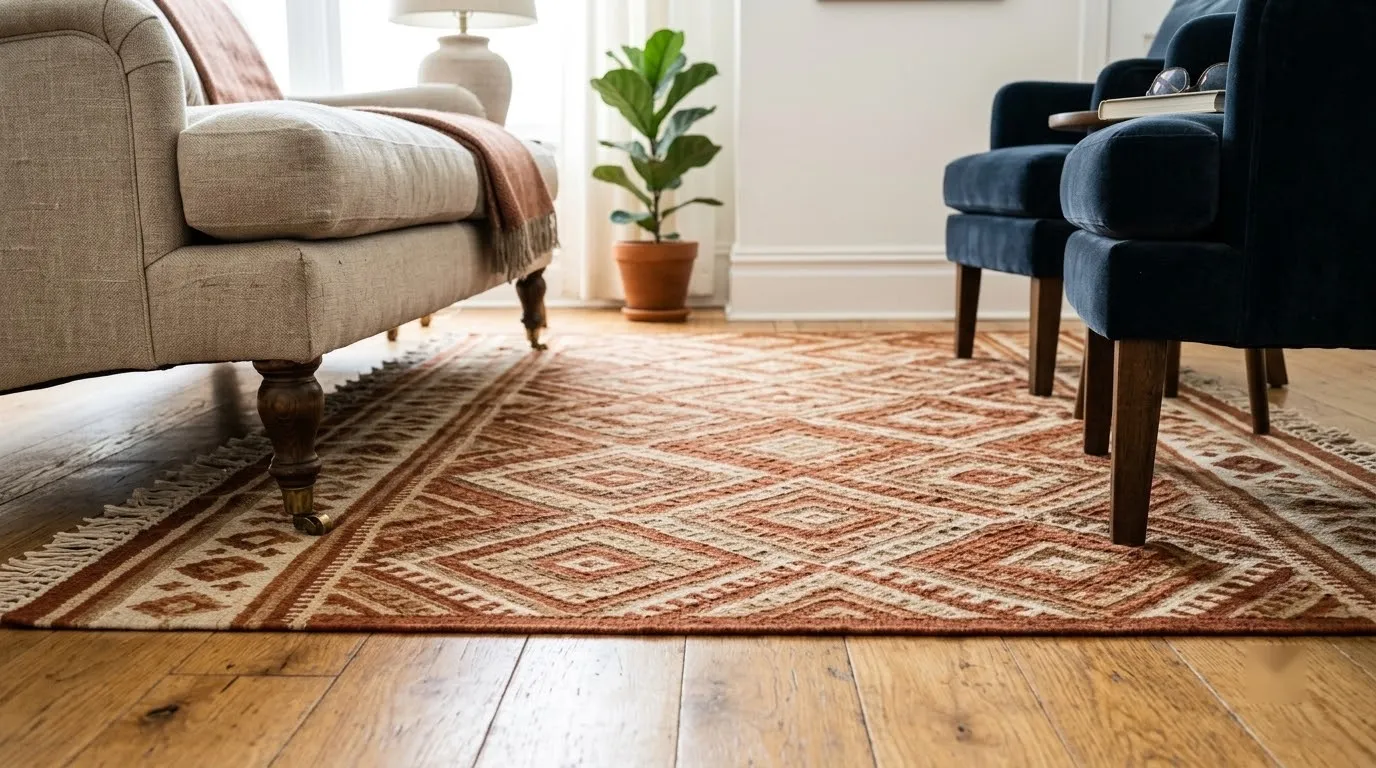
8. Keep the middle of the room low
Look across your living room at seated height. If a tall lamp, a plant on a stand, or a high-backed chair cuts through the middle of that view, the room feels more crowded than its square footage suggests.
Keep the center low: a coffee table around the height of the sofa seat, low trays, nothing tall in the middle of the floor. Save the height for the edges of the room, where it frames the space instead of interrupting it. Low-slung furniture is having a real moment in 2026, and this is the reason it works.
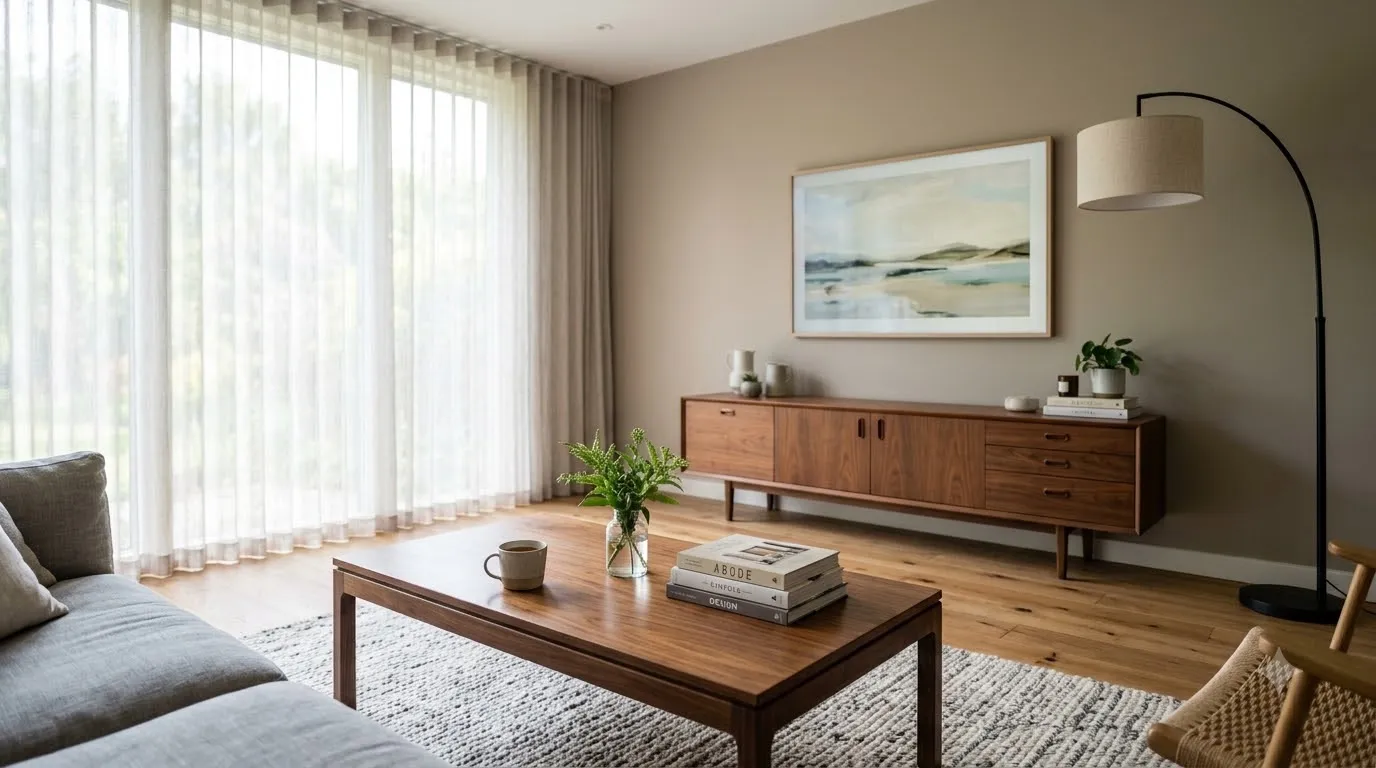
9. Spread the visual weight across the room
Stand in the doorway and look at your room in halves. If the dark, tall, or bulky pieces are clustered on one side, the space tips, and a room that tips never quite relaxes.
Balance doesn’t mean symmetry. A heavy sofa on one side can be answered by a tall plant and a floor lamp on the other. You’re not matching shapes, you’re evening out where the eye lands.
A phone photo helps here more than your own eyes do. Something about seeing the room flattened in a picture makes the lopsided half obvious in a second.
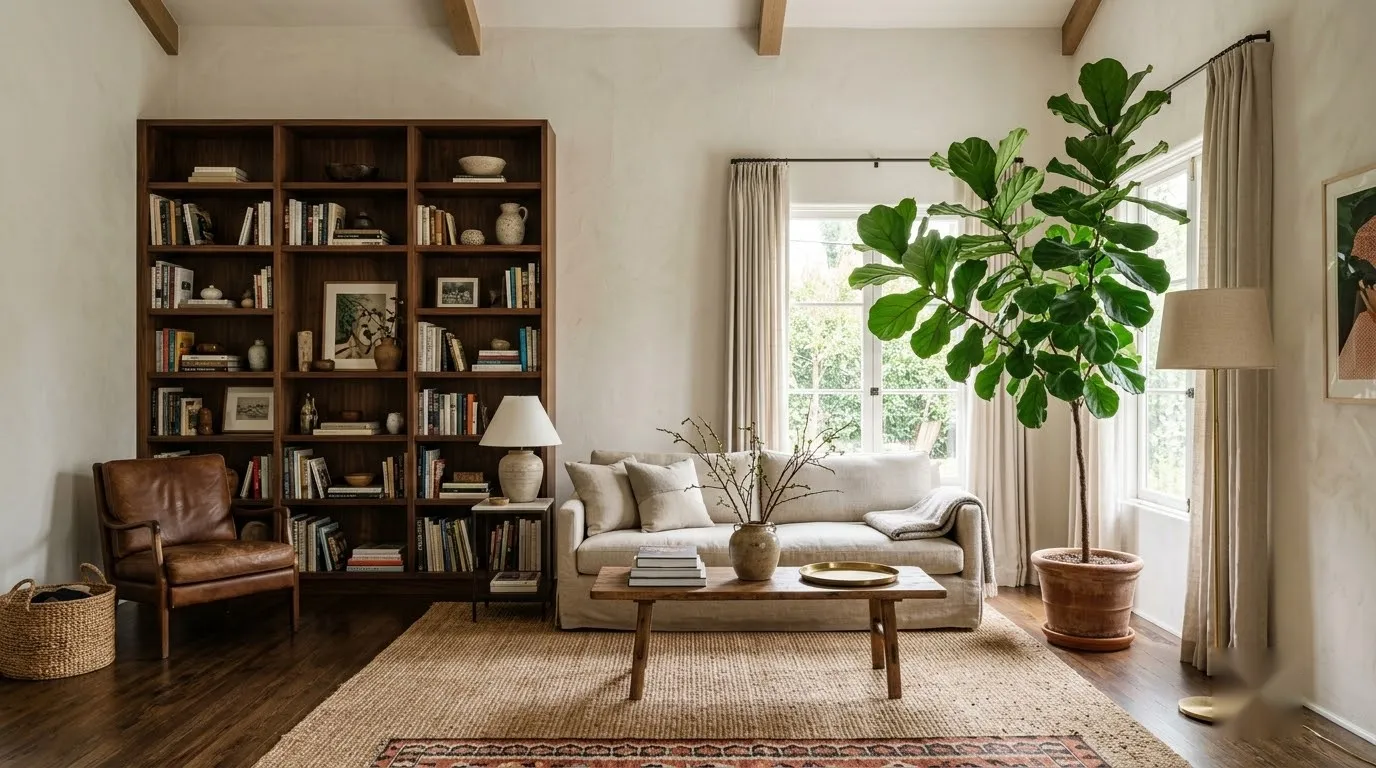
10. Live with it for a week before you commit
A layout that looks right on a Saturday afternoon can be wrong by Wednesday evening, when the light is different and you’re actually tired.
Move the furniture, then leave it alone for a week before you buy a new rug or hang anything on the wall. Notice where you set your cup down, where you keep bumping into something, which seat nobody chooses. The room will tell you. It’s slower than a single afternoon of rearranging, and it’s the part most of us skip.
Frequently Asked Questions
What’s the most common living room layout mistake?
Pushing every piece of furniture against the walls. It feels like the safe choice in a small room, but it hollows out the center and makes the seating feel disconnected. Even a few inches of breathing room behind the sofa helps.
How do I arrange a small living room so it still feels calm?
Choose one clear walking path and protect it, keep the center of the room low, and pull the seating into a tighter group rather than spreading it to the edges. Small rooms feel calmer when the furniture is grouped, not scattered.
Does the sofa have to face the TV?
No. Tip one still applies: build the room around where you genuinely sit and what you genuinely do there. If the TV is on most evenings, it earns a place in the layout. If it isn’t, a seating group facing itself will feel warmer.
How often should I rearrange a living room?
There’s no schedule worth following here. Most rooms only need a rethink when how you use them changes, like a new work-from-home setup or a piece of furniture coming or going. Constant rearranging tends to make a space feel unsettled rather than fresh.
Final Thoughts
None of this requires new furniture. Distance, path, sight line, and balance are all free, and they do more for how a room feels than almost anything you could add to it.
Try one change this week. Pull the sofa off the wall, or clear the one path you keep stepping around, and see whether the room feels different by Friday. If you’re working with a smaller space, our guide to building a calm reading nook in a small space is a good next step, since a well-placed corner often does more than a full rearrange.