Disclosure: This post contains affiliate links, including Amazon Associate links. As an Amazon Associate, I earn from qualifying purchases. If you make a purchase through one of these links, I may earn a small commission at no extra cost to you. Thank you for supporting Calm Home! See our Affiliate Disclosure for details.
Most reading corners don’t fail because they look wrong. They fail because nobody actually sits in them. The chair is beautiful, the blanket is folded just so, and the book stays on the shelf where you left it.
A reading nook only works if it’s easy to fall into, and honestly, that takes less space than Pinterest makes you think. Here are ten small moves that can turn a leftover corner into somewhere you actually want to sit.
1. Start With the Corner You Already Drift Toward
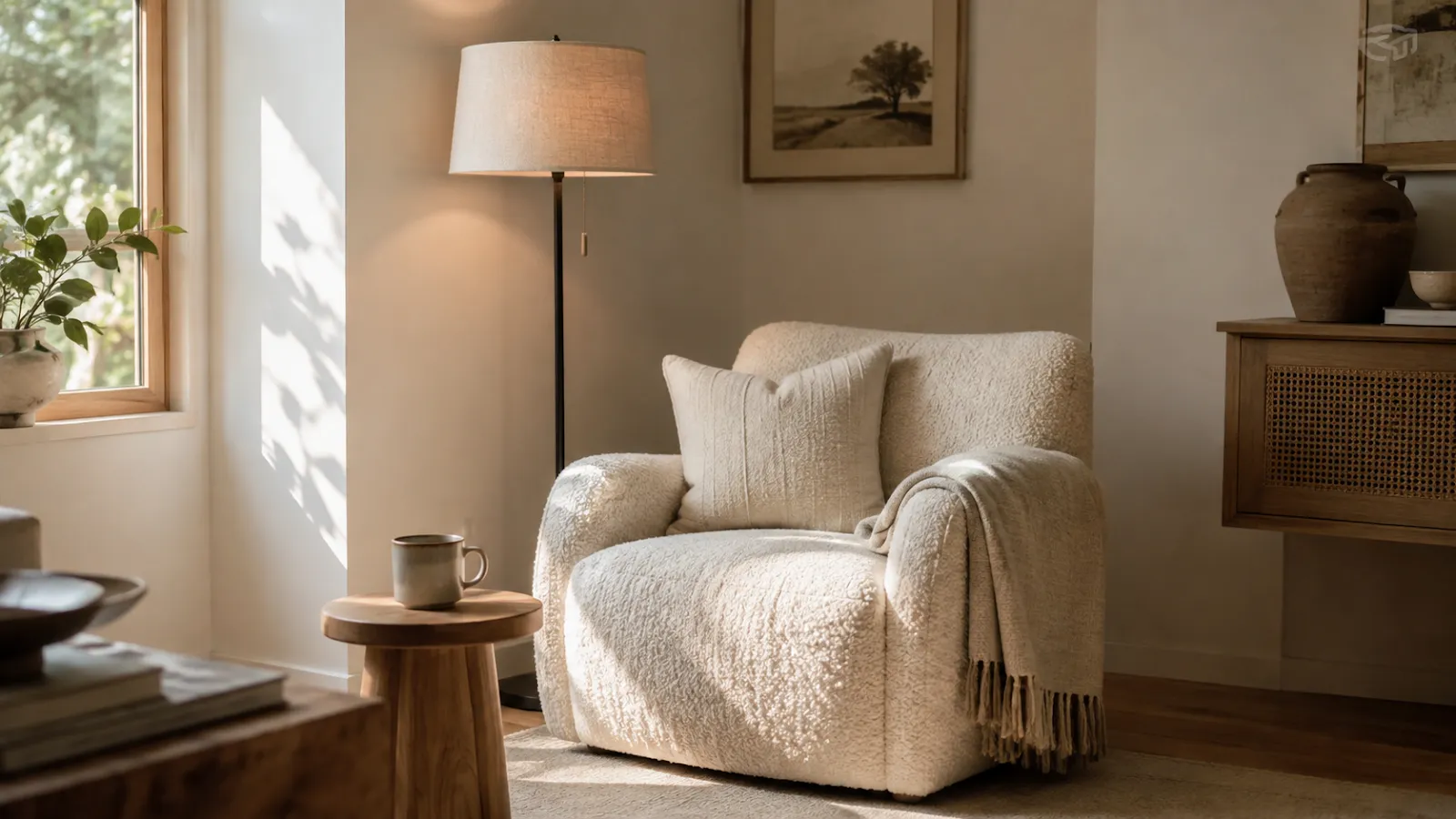
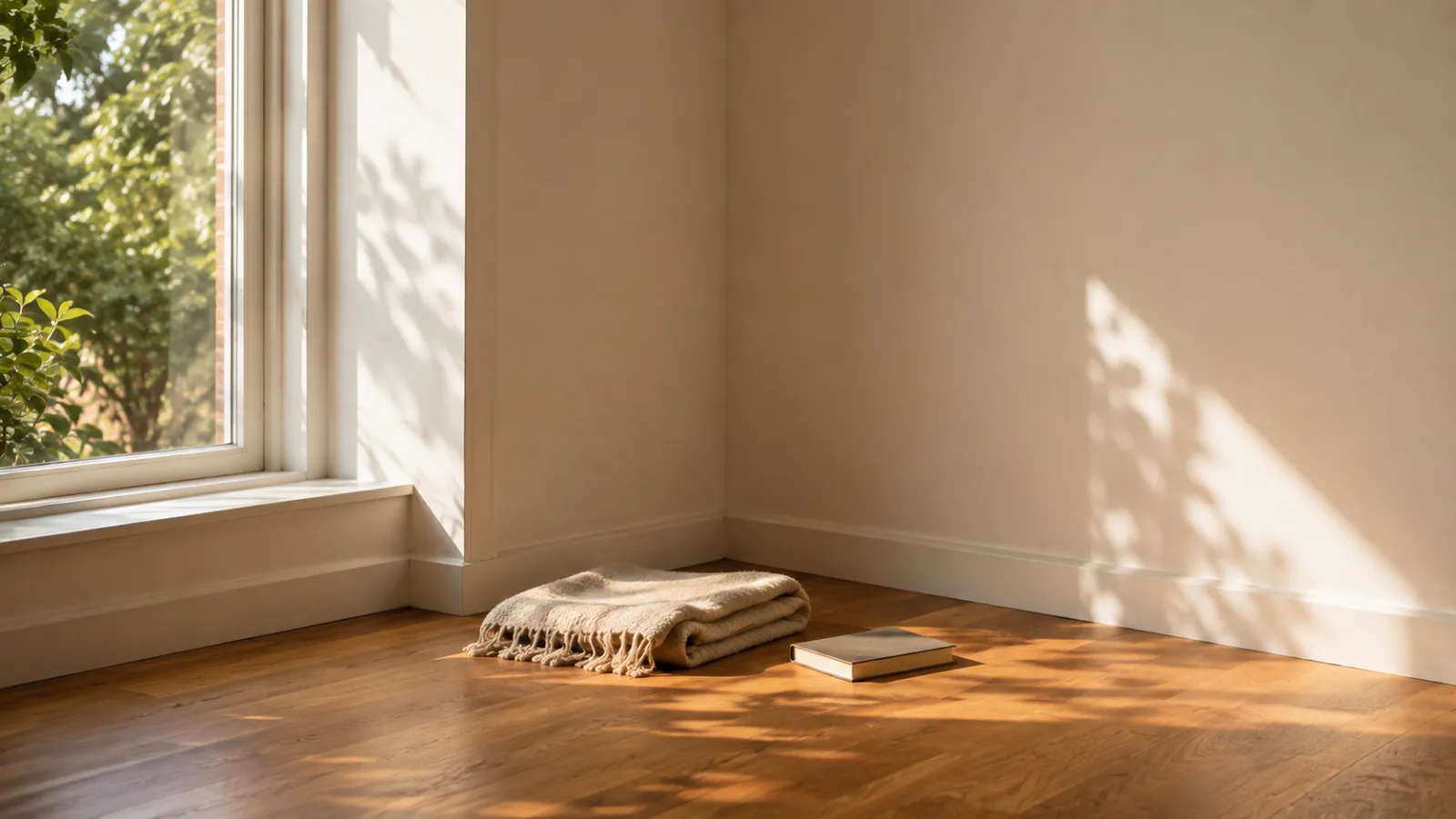
Before you buy a single thing, pay attention to where you already sit. Maybe it’s the end of the sofa near the window. Maybe it’s the floor by the radiator, for no reason you can really explain. Your body has usually already picked the spot, you just haven’t noticed yet.
Building a calm reading nook in a small space is a lot easier when you work with that habit instead of fighting it. A corner you have to walk across the room to reach will stay empty no matter how nice it looks. A corner you already pass ten times a day will get used by Thursday.
Two things to look for: something solid at your back, like a wall or corner, and a light source nearby. Those two alone make almost any spot feel settled.
2. The Chair Comes First, Everything Else Second
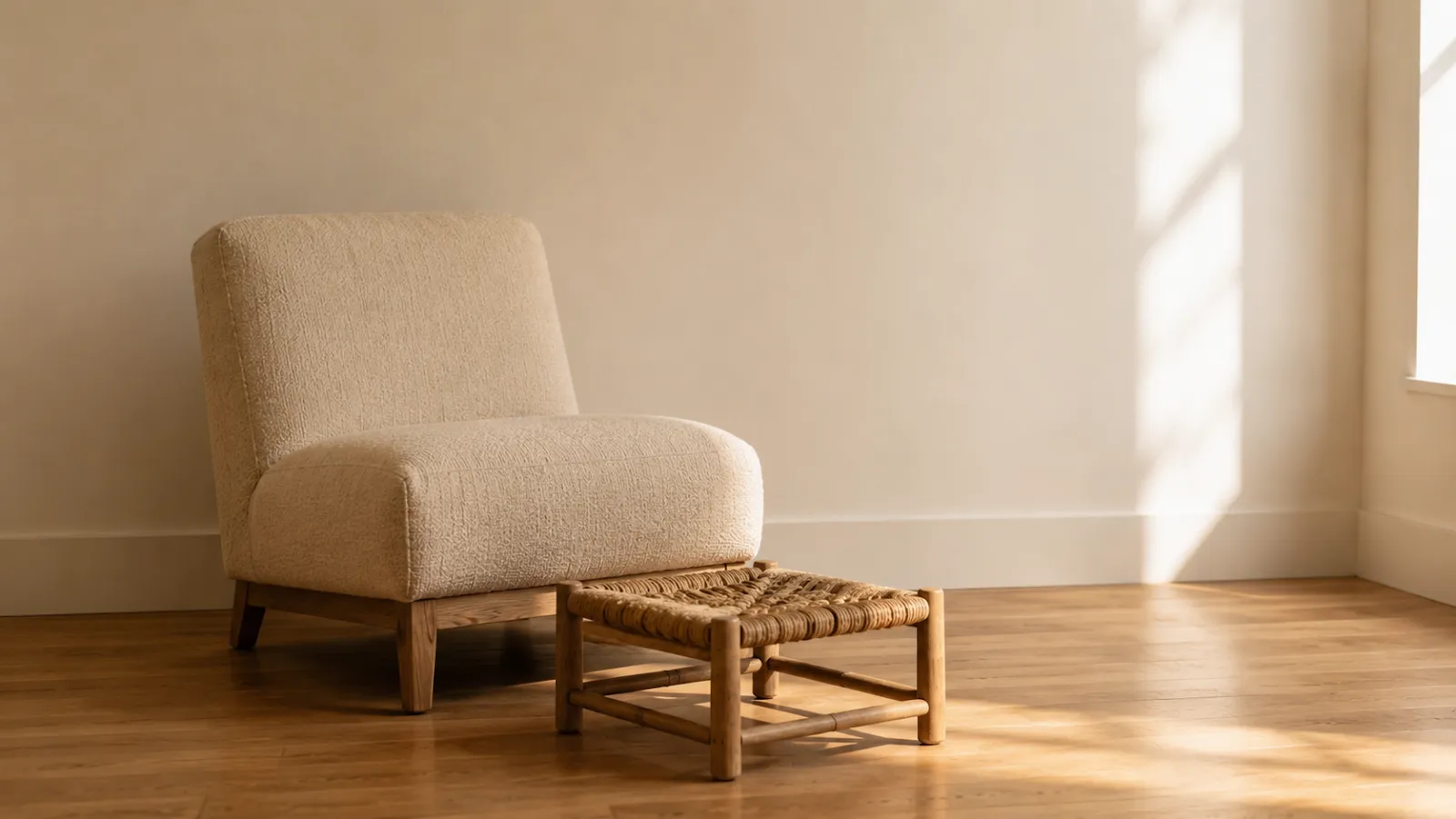
Everything else in a reading corner is optional. The seat isn’t. Get the chair right and the rest is just decoration. Get it wrong, and no amount of styling is going to save it.
You don’t need a full armchair, especially in a small space. A low slipper chair, a wide floor cushion, even a small upholstered stool with something cushioned behind you can all work fine. What actually matters is that your back is supported and your feet reach something solid, the floor, a footstool, even a stack of books in a pinch.
Sit in it before you commit to it. Ten minutes tells you more than any product photo ever will.
3. Put a Surface Within Arm’s Reach
This is the one people skip, and it’s the one that quietly wrecks a nook. If there’s nowhere to set a mug down, you’ll stop bringing one up. If there’s nowhere to rest the book face-down, you’ll stop pausing to just sit and think for a second.
It doesn’t need to be big. A nesting side table, a small wooden stool, even a tray balanced on an ottoman gets the job done. Aim for roughly elbow height when you’re seated, close enough to reach without leaning too far.
Try to keep what lives on it to three things, tops. A lamp, a coaster, maybe a candle. Any more than that and it stops being a surface and starts being a shelf.
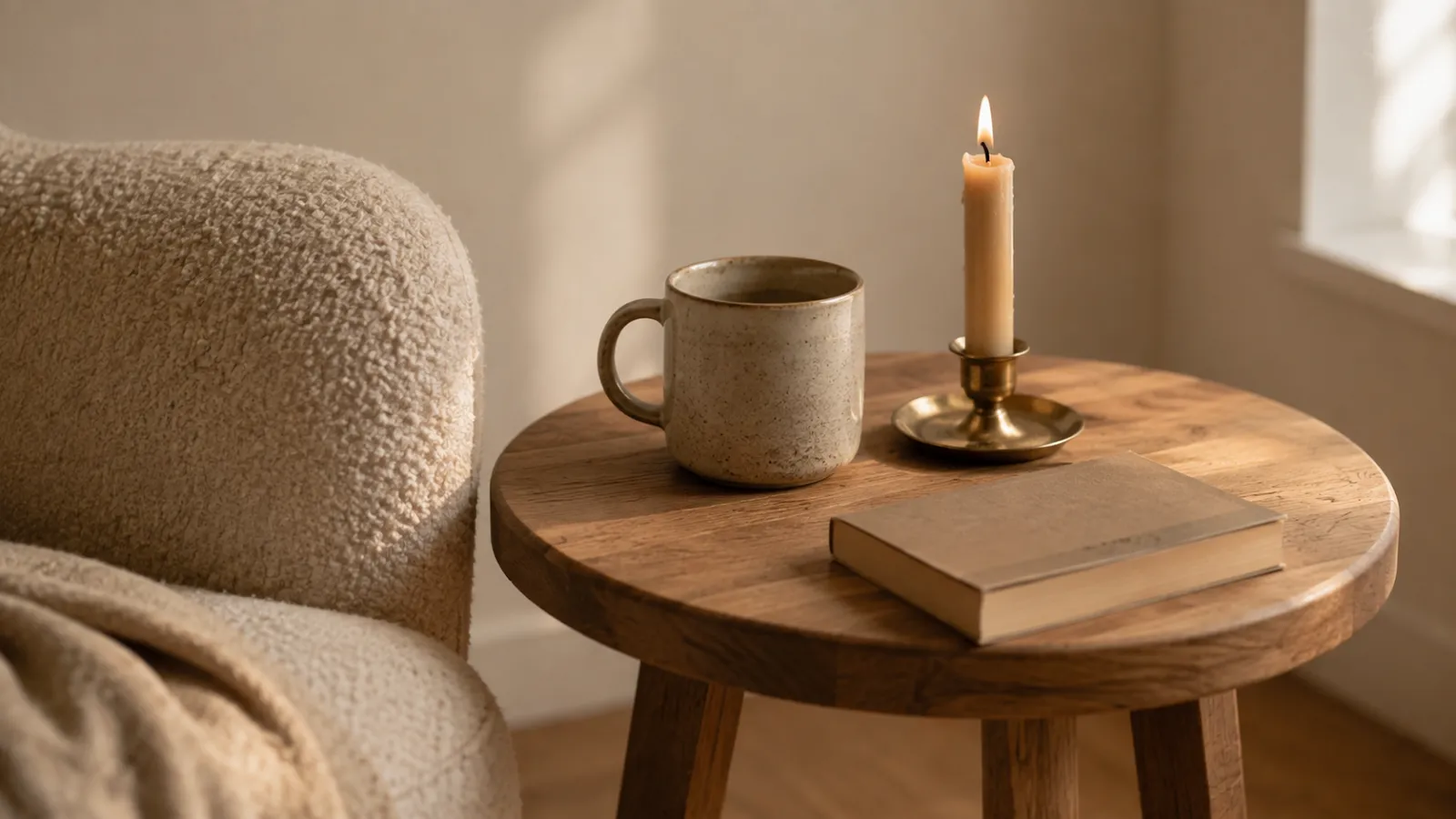
4. Add One Soft Layer, Not Five
Texture is what makes a corner feel warm instead of just furnished, but there’s a point where more stops helping. In a small space, that point comes fast.
Pick one throw and one cushion, and stop there. Choose them for how they feel against bare arms, not just how they photograph, a chunky knit, a brushed cotton, a washed linen. If the throw is scratchy, it’s going to end up folded on a shelf and never touched.
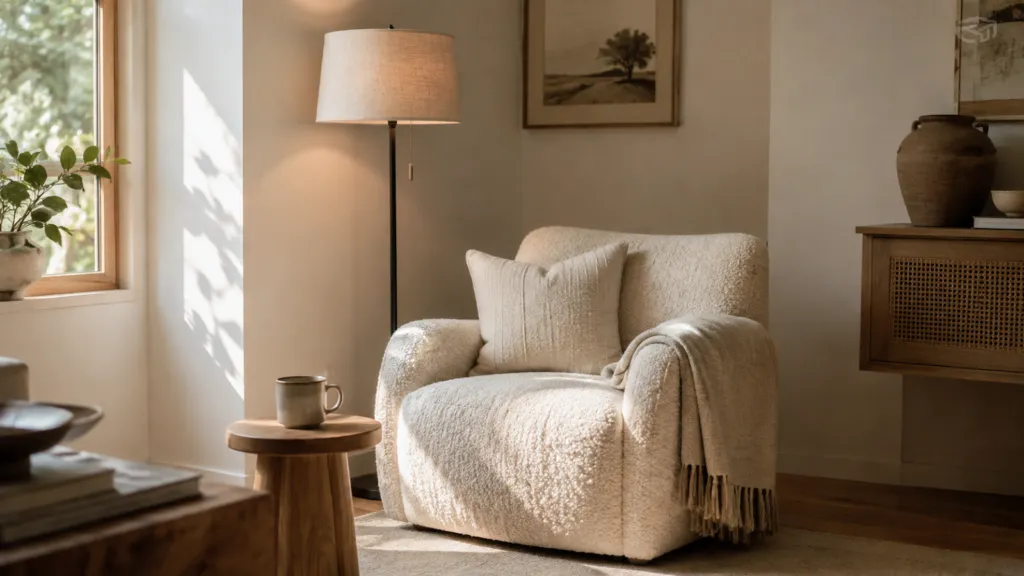
Drape the throw over one arm of the chair instead of folding it neatly. A corner that looks a little used is a corner that actually gets used.
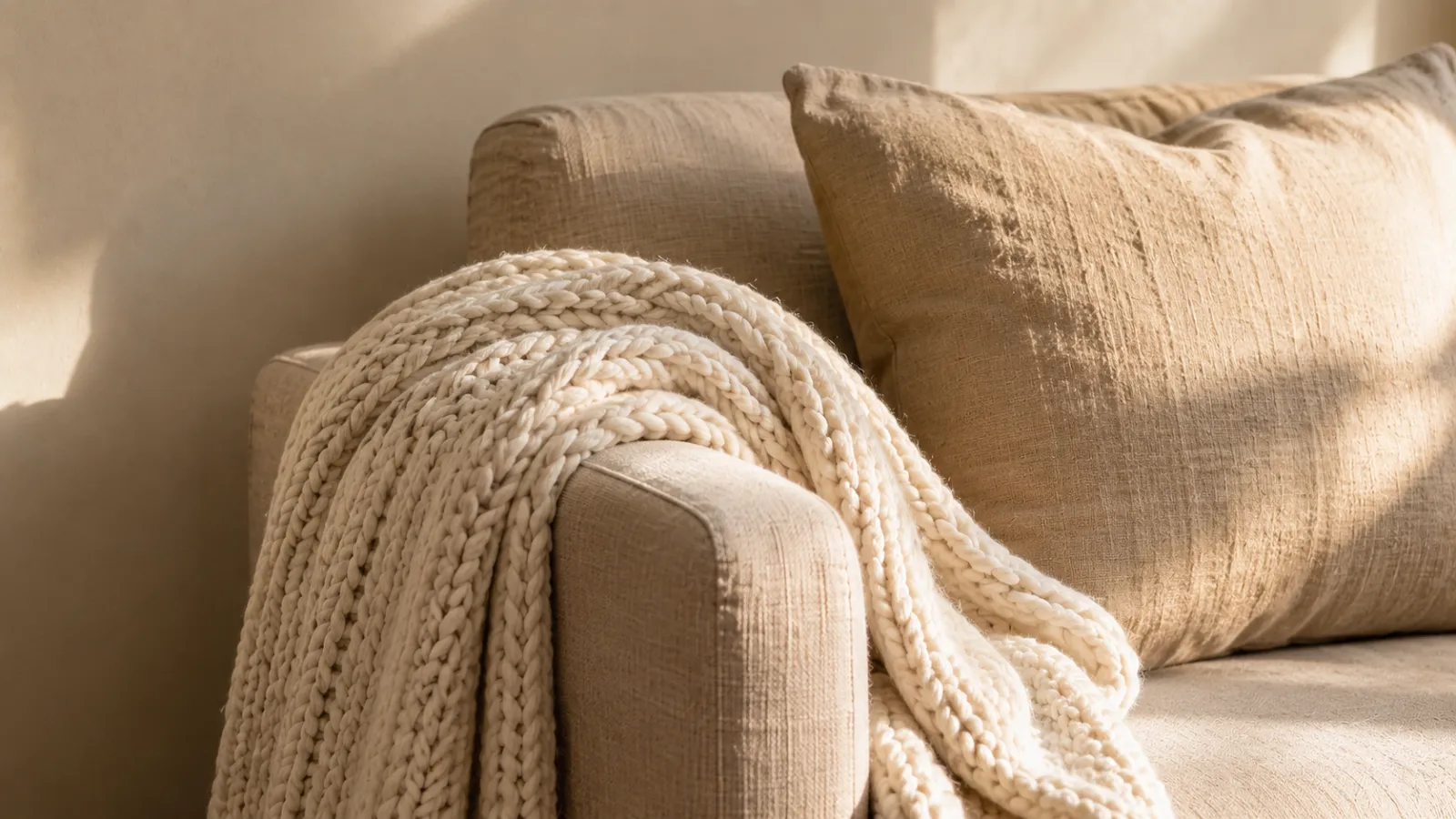
5. Give the Light One Job
Reading light really only has one task: put a soft pool of warmth on the page without glaring into your eyes. It doesn’t need to light the whole room, so don’t ask it to.
A floor lamp standing just behind and to the side of your shoulder does this better than any overhead fixture can. Look for a warm bulb, somewhere around 3000K, and a fabric or linen shade that softens the light instead of throwing a hard edge across the room. If the lamp has a few color settings, keep it on the warmest one after dark and save the brighter options for daytime tasks.
Height ends up mattering more than wattage. The bottom of the shade should sit roughly level with your head when seated, so light falls down onto the page instead of straight into your face.
💡 Product idea: a simple floor lamp with an adjustable linen shade and a warm 3000K setting is probably the easiest way to get this right. The EDISHINE 64.7″ Modern Floor Lamp (affiliate link) on Amazon runs around $36 and has a foot-pedal switch, so you’re not fumbling behind the chair in the dark.
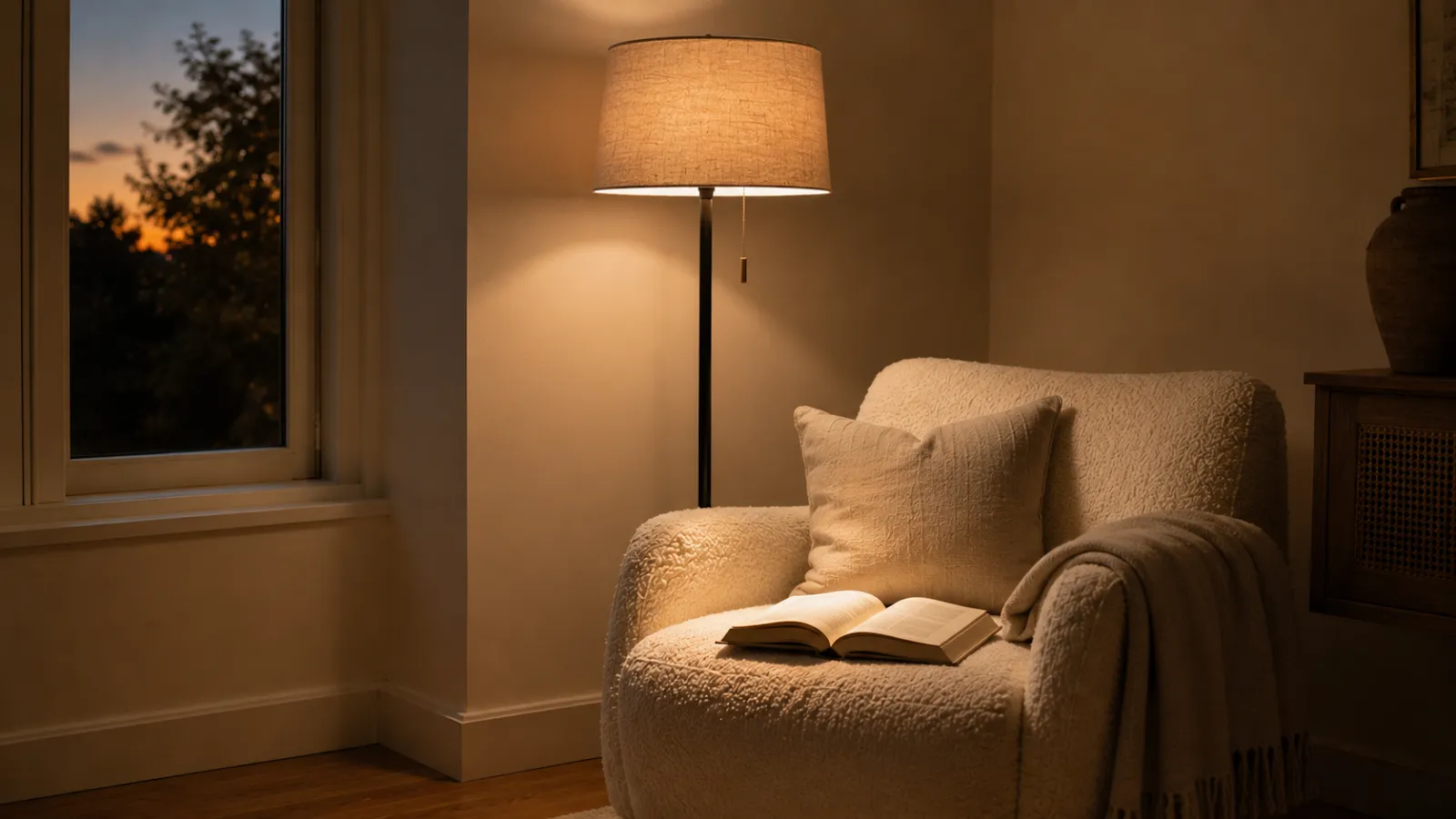
6. Keep the Palette to Three Quiet Colors
A calm corner is usually one your eyes don’t have to work in. The fastest way to get there is just limiting how many colors are competing for attention.
Pick three and leave it alone. Something like cream, warm tan, and soft wood. Or maybe oatmeal, clay, and a bit of black for contrast. Let the book covers be the only genuinely bright thing in the frame.
It’s also why a neutral lampshade earns its spot. It just disappears into the palette instead of announcing itself.
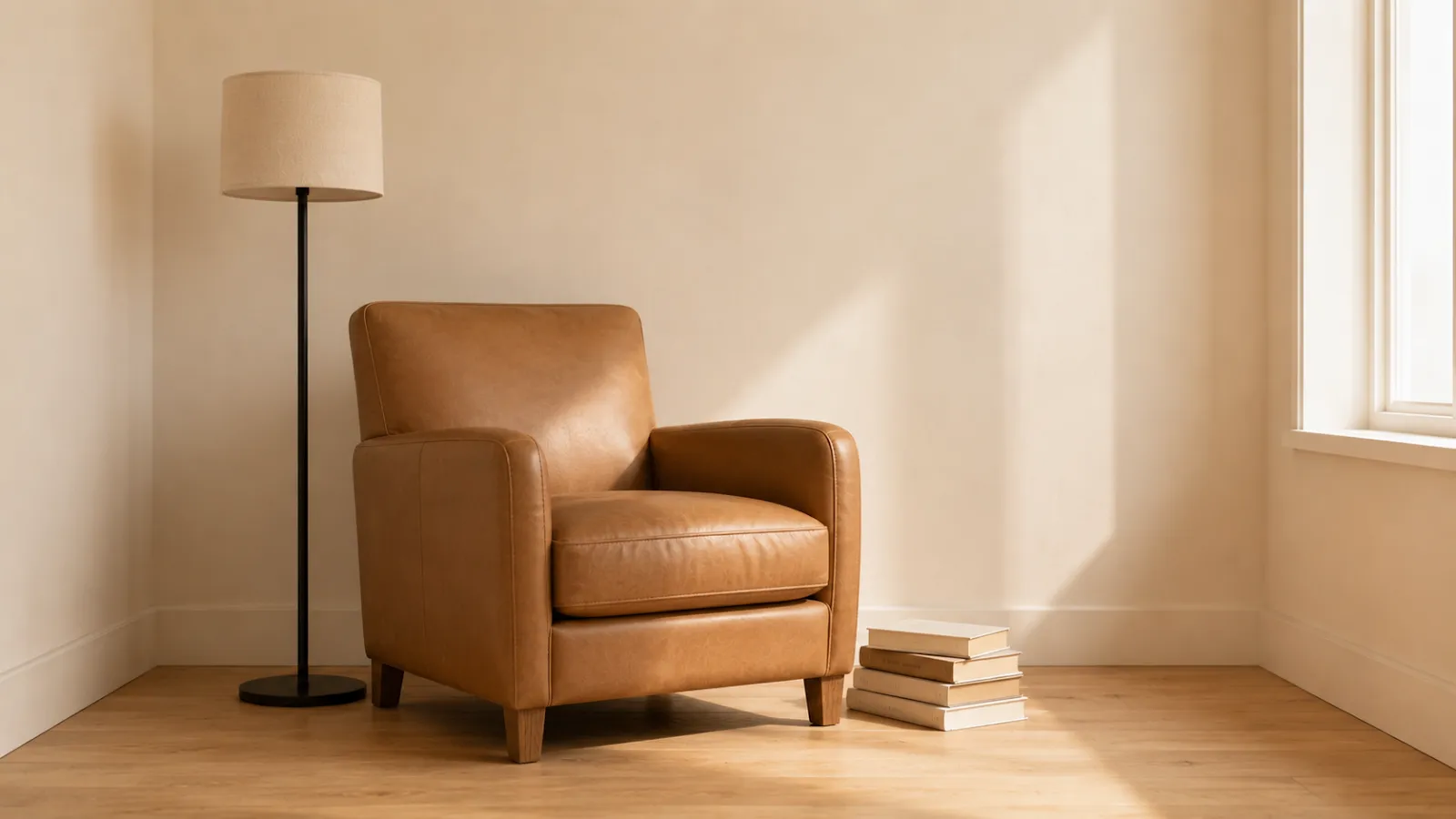
7. Shelve Only the Books You’re Actually Reading
A tall bookshelf next to a reading chair sounds right on paper, but in a small space it can end up making the corner feel like storage instead of somewhere to rest.
Keep three to five books within reach: the one you’re reading, the one you’re about to start, maybe a couple you dip in and out of. Everything else can live somewhere else in the house.
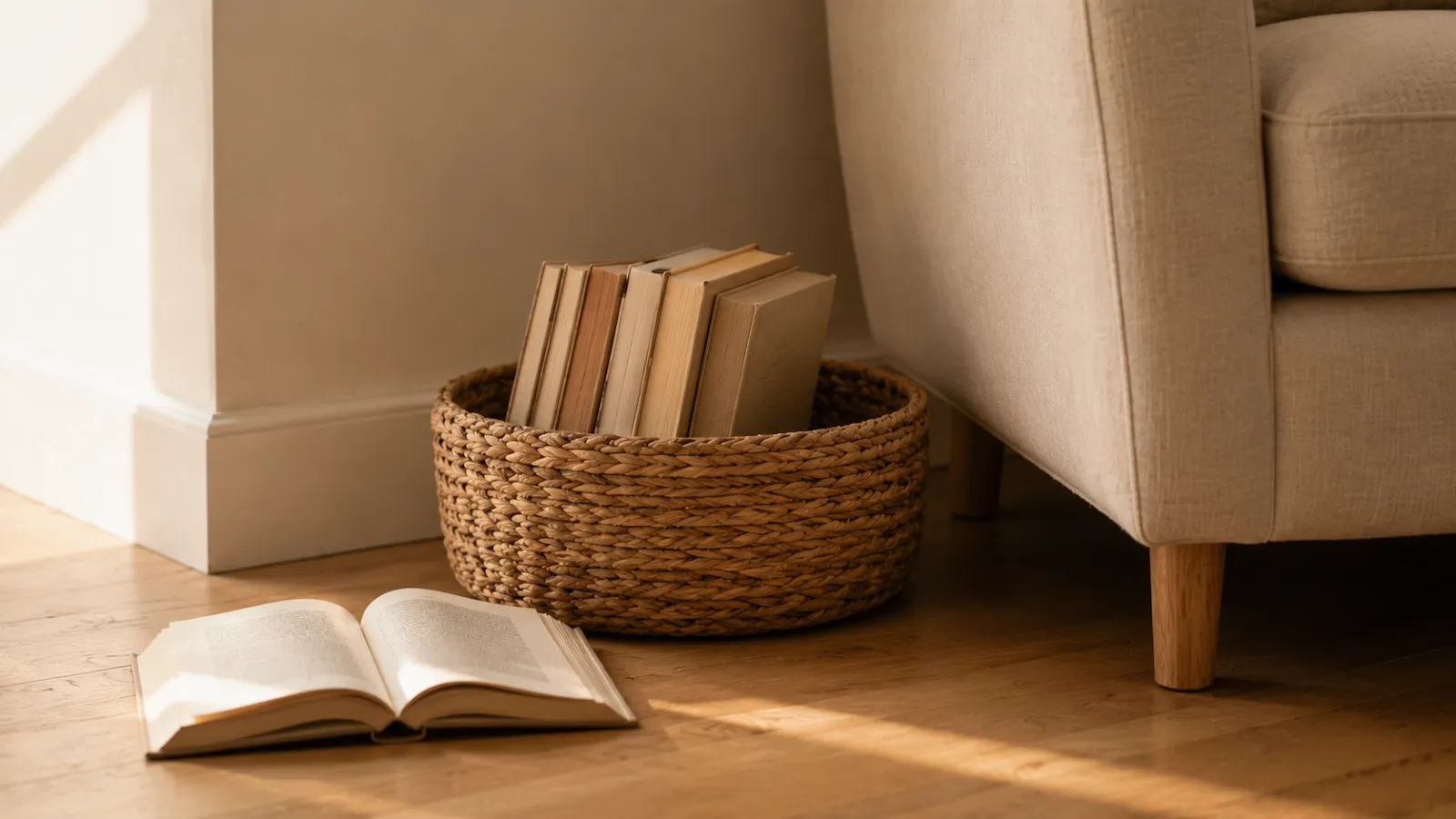
A small basket on the floor, one floating shelf, or a short stack on the side table can all handle this without needing an actual piece of furniture.
💡 Product idea: a round seagrass basket next to the chair holds your five books without looking like storage. The DOKOT Seagrass Plant Basket (affiliate link) on Amazon runs around $25 and comes in a few sizes, so you can pick one that actually fits the gap you have.
8. Soften the Sound the Room Makes
Hard rooms echo. Bare floors, bare walls, a hard chair, even a quiet room can end up feeling a little sharp and hard to settle into when there’s nothing to absorb the sound.
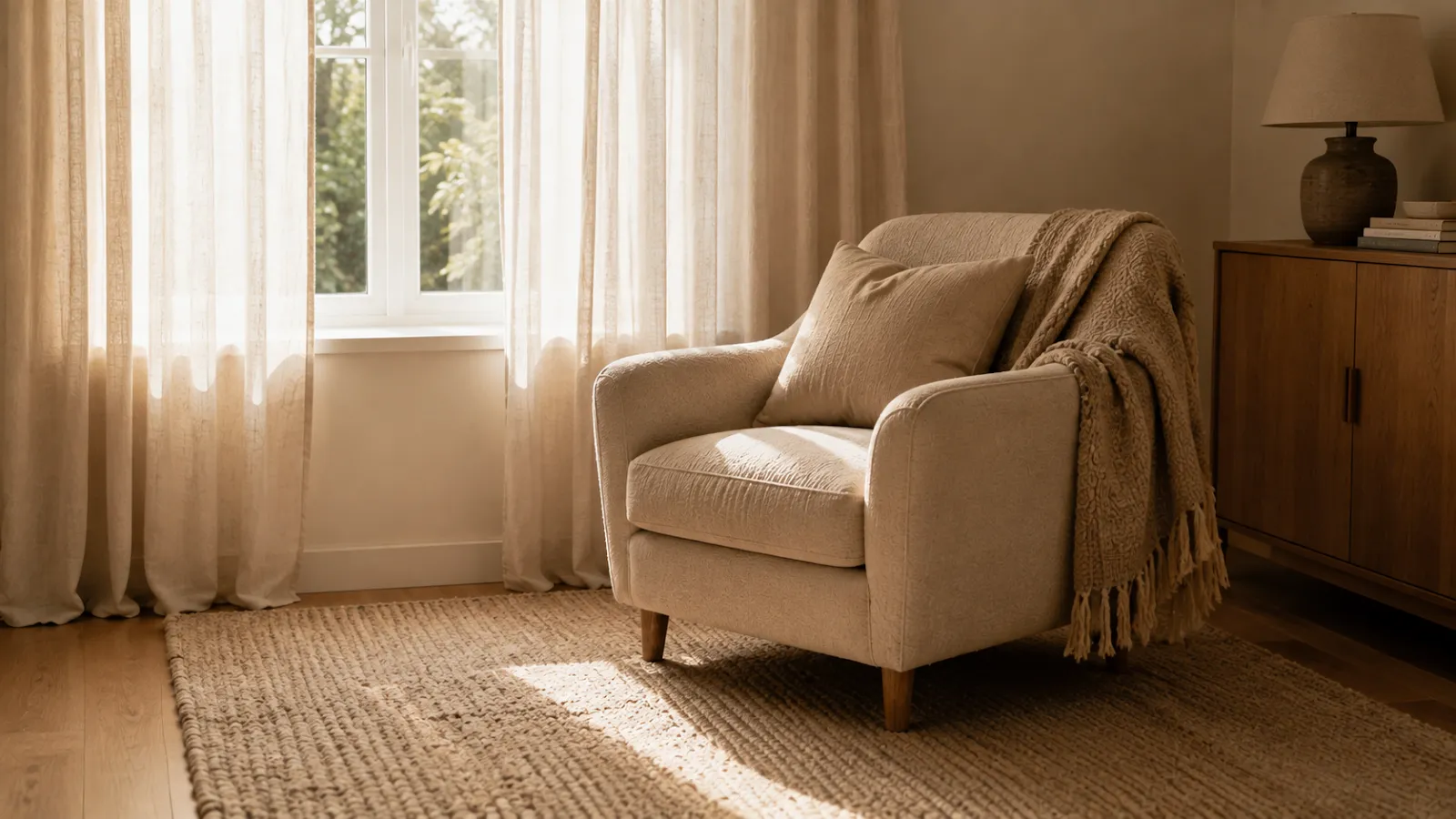
Soft materials fix that. A small rug under the chair, a curtain over the window, a throw across the back, each one takes a bit of the edge off. It’s the same reason sensory-friendly rooms tend to lean so heavily on textiles.
You’ll probably notice it more than you’ll see it. The corner just feels a bit more hushed than it did before.
💡 Product idea: you don’t need a huge rug, just enough to sit under the chair and soak up some sound. The OLANLY Beige Area Rug (affiliate link) on Amazon is a small 4×5.9 ft size that fits a corner without swallowing the room, and it’s machine washable, which matters more than you’d think once it lives under a reading chair.
9. Add One Living Thing
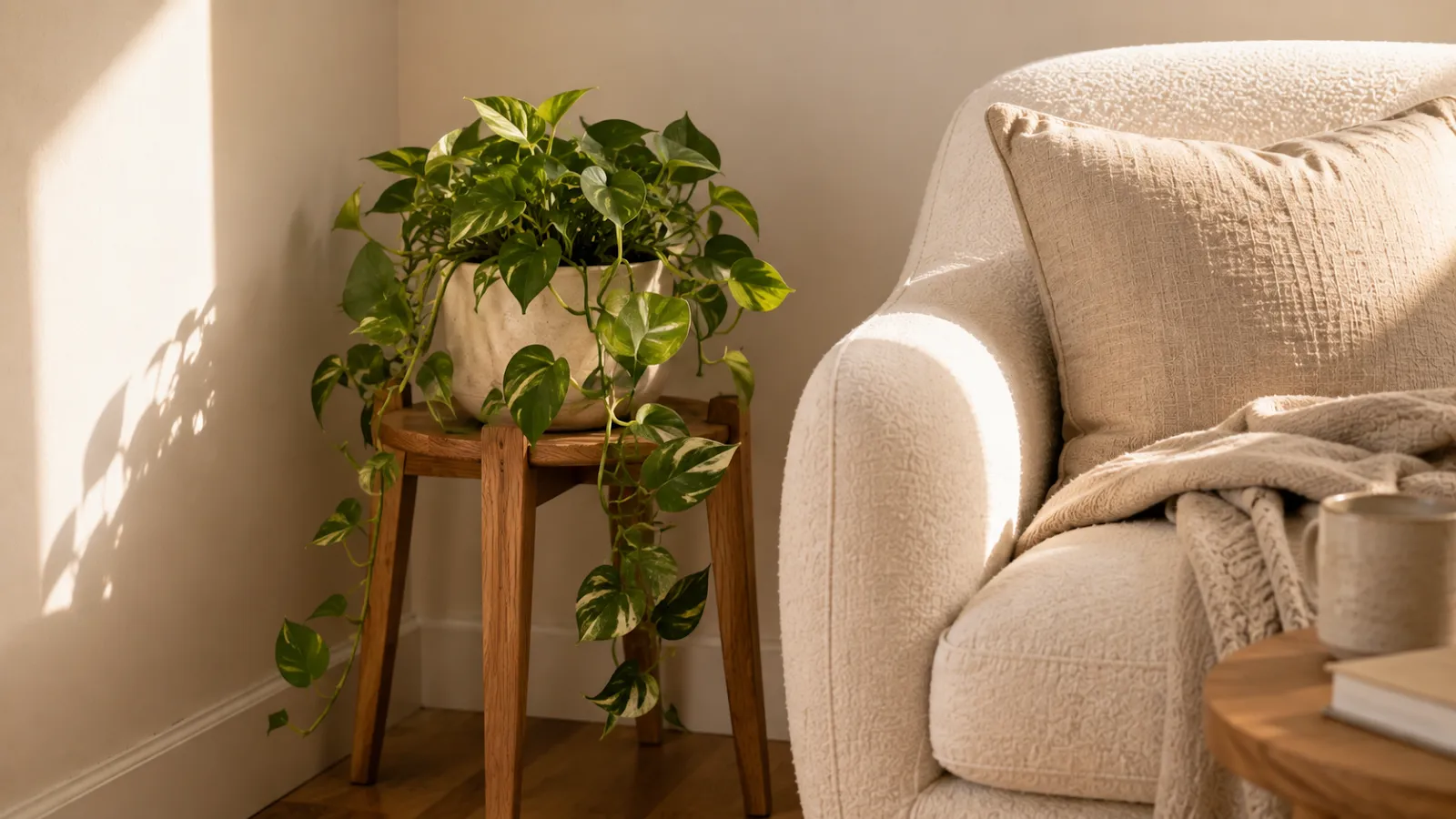
A single plant does something a hundred styled objects can’t: it makes the corner feel tended, not just arranged.
Pick it based on the light you actually have, not the plant you like the look of. A pothos or a ZZ plant works well in a dim corner, while a small olive tree or rubber plant is better if there’s a window nearby. One is genuinely enough.
Set it slightly behind or beside the chair rather than on the side table, so it isn’t stealing the surface you actually need.
10. Leave One Thing Out
When the corner feels nearly finished, try taking one thing away. The extra cushion. The second candle. That frame you were never quite sure about anyway.
Small nooks feel calm because of what’s missing, not what’s been added. Empty floor beside the chair, a bare stretch of wall, a table with room left on it, that space is doing more work than it looks like.
If you can’t decide what to remove, get rid of whatever you’d have to move just to sit down.
Frequently Asked Questions
How much space do I actually need for a reading nook?
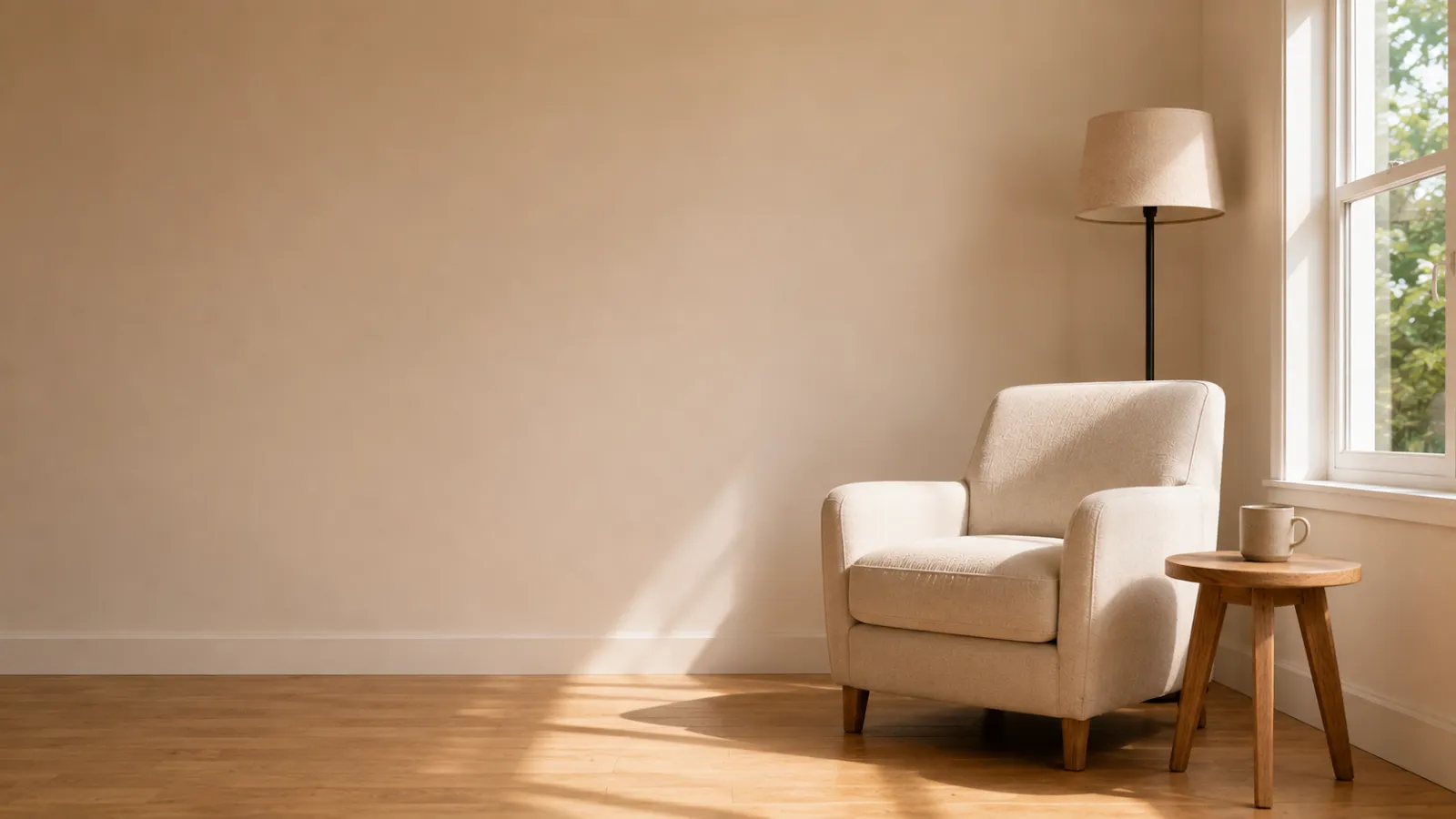
Roughly the footprint of the chair, plus about a foot on either side. A corner around four feet by four feet is comfortable, and plenty of people make it work in less. Wall space actually matters more than floor space here, having something solid behind you is what makes a small corner feel enclosed instead of exposed.
Can I make a reading nook in a rental?
Yes, this whole list is rental-friendly by design. Nothing here needs drilling. A floor lamp does the job a wall sconce would, a leaning basket stands in for shelving, and a small rug can define the space without ever touching what’s underneath.
What kind of light is best for reading at night?
A warm bulb, somewhere around 2700K to 3000K, in a shade that diffuses the light rather than exposing the bulb directly, positioned behind your shoulder. Warm light is just easier to sit with in the evening, and it skips the hard glare you get from an overhead fixture bouncing straight off the page.
How do I keep the nook from collecting clutter?
Give it a hard limit: one surface, three objects, five books. Clutter usually shows up because there was never a rule about what belongs there in the first place. Once the corner has a stated capacity, the extra stuff naturally ends up somewhere else.
Final Thoughts
A reading nook isn’t really a decorating project, not at its core. It’s more of a small promise to yourself that there’s a place in your home for doing nothing in particular.
Start with just one thing this week. Pull a chair into the corner you already like, or add a lamp beside the seat you already use anyway. The rest can arrive slowly, whenever it arrives. The corner works long before it’s actually finished.