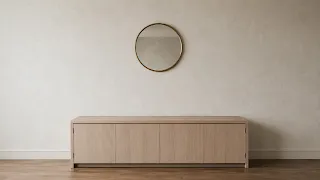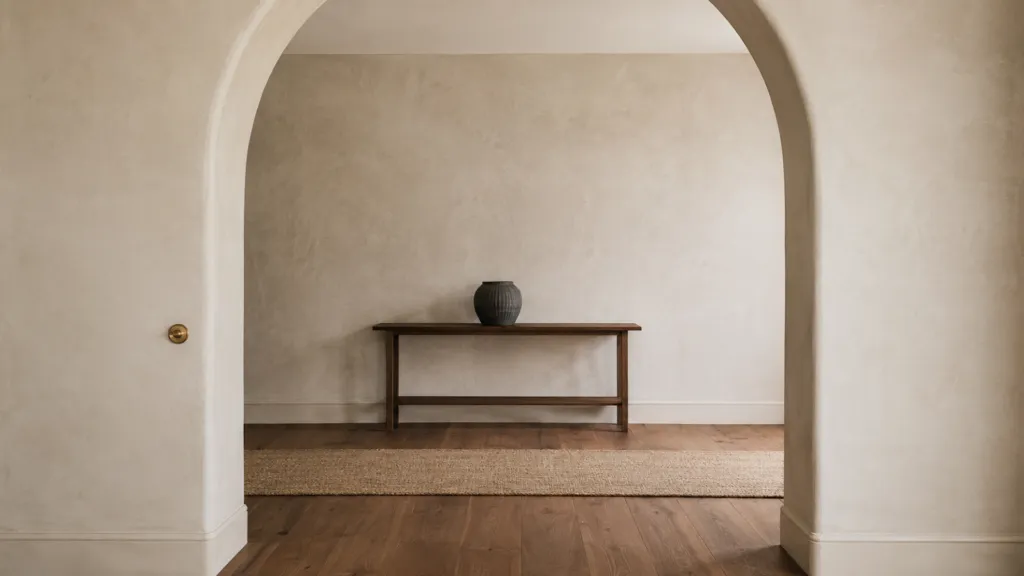
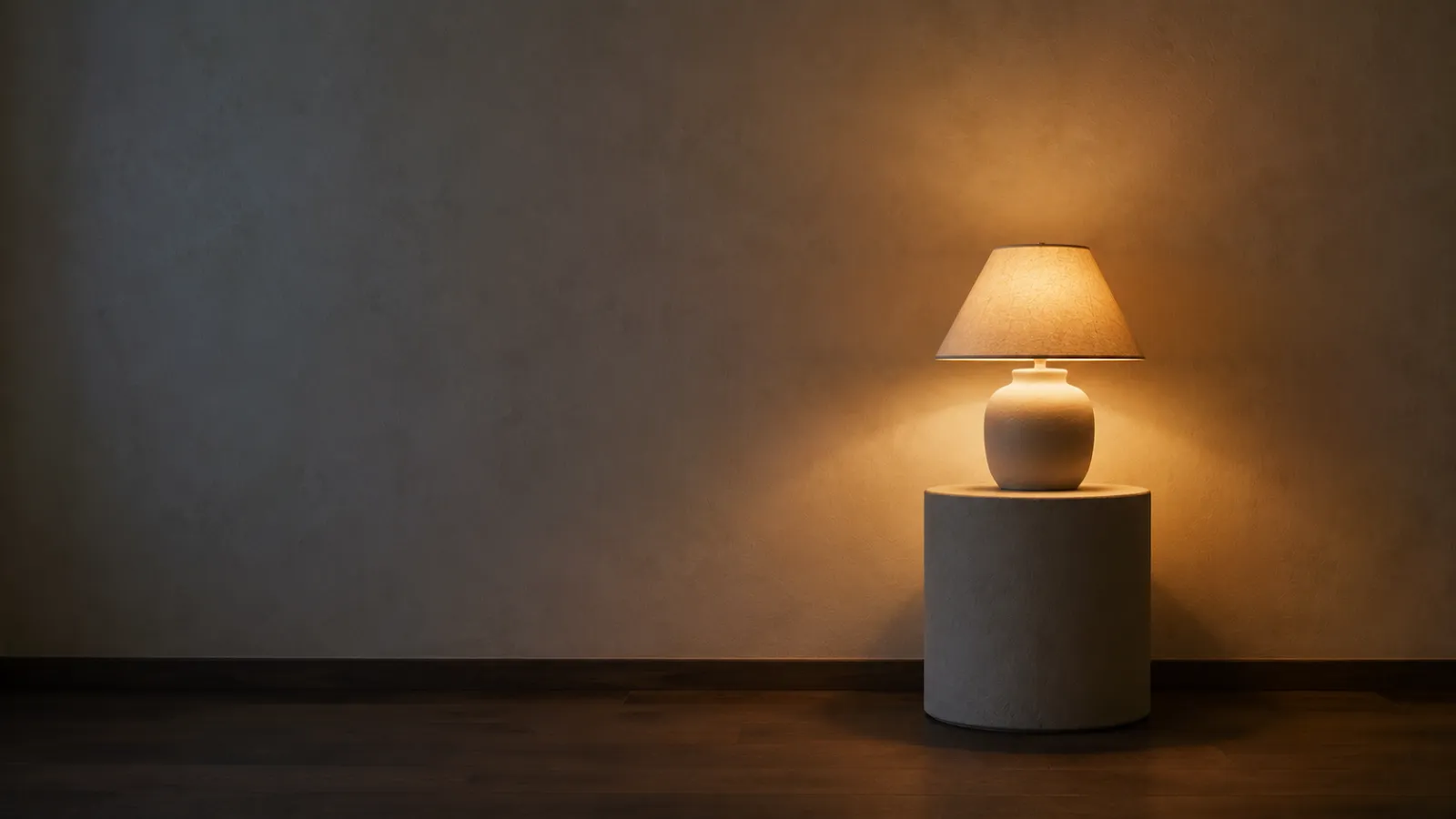
You have probably walked into a room that felt calm right away and not been able to say why. Nothing was missing. Nothing was especially expensive. It just felt easy to be in. Very often the thing doing that work is not what was added to the room. It is what was left out.
Designers call it negative space. I think of it as visual rest: the quiet parts of a room that give your eyes somewhere to land between one lovely thing and the next. Here are ten ways to build more of it into a home you already have, without stripping it bare.
1. Visual rest is a real ingredient, not leftover space
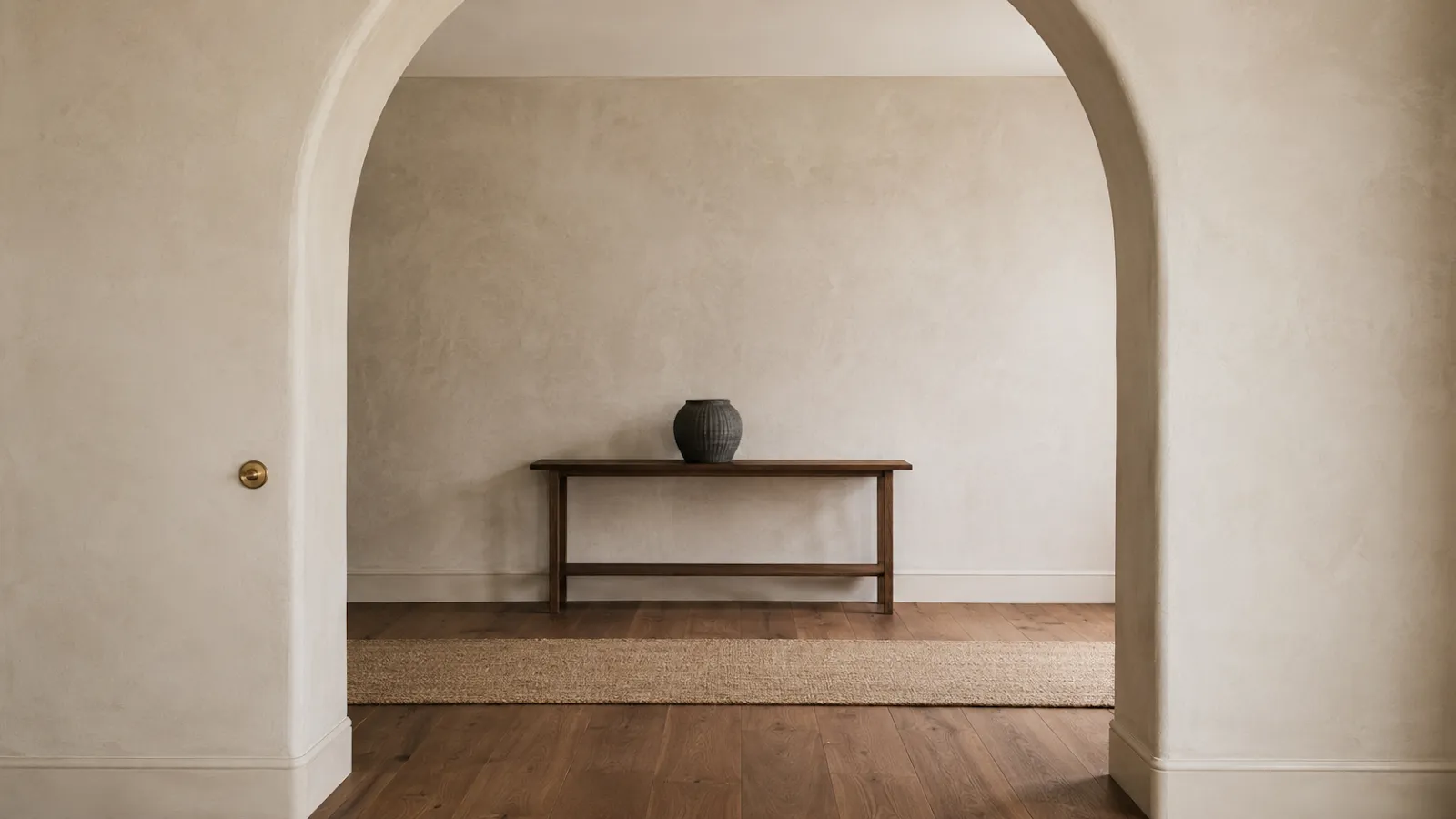
The empty parts of a room are not the parts you have not gotten to yet. They are doing a job. When every wall, shelf, and tabletop is holding something, your eyes never get a pause, and a room with no pause reads as busy even when it is perfectly tidy.
Try looking at your main room and asking a slightly odd question: where do my eyes rest? If the honest answer is nowhere, you do not need more storage. You need a gap.
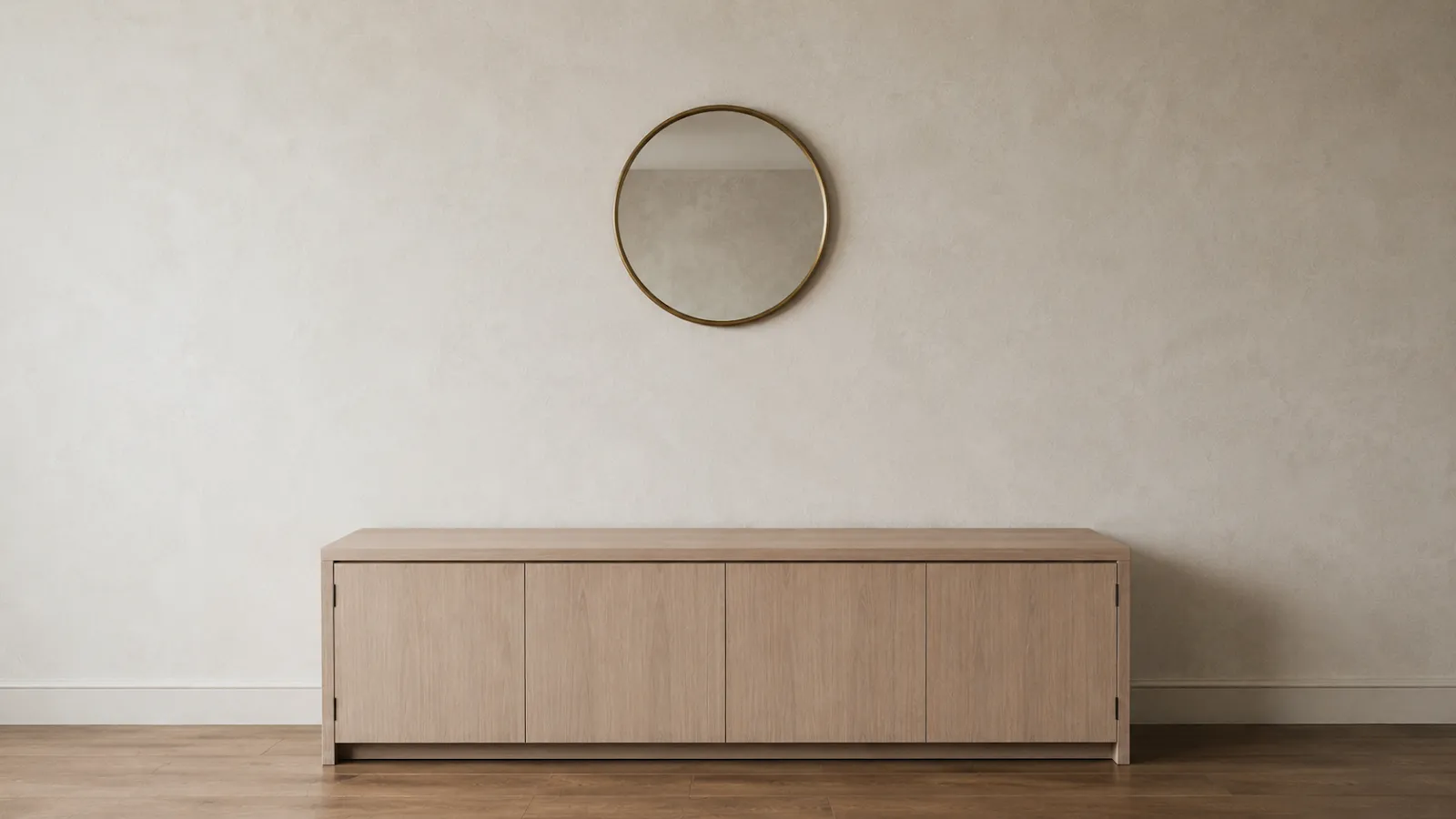
2. Keep one surface in every room completely clear
Not mostly clear. Completely. One sideboard, one end of the counter, one half of a desk, holding nothing at all.
This is the fastest version of this whole idea, and it is the one people feel immediately. A single empty surface gives the room a reference point for calm, and it quietly sets the standard for the surfaces around it. It also gives you somewhere to put the groceries down, which is its own kind of peace.
3. Leave space around your art, not just on it
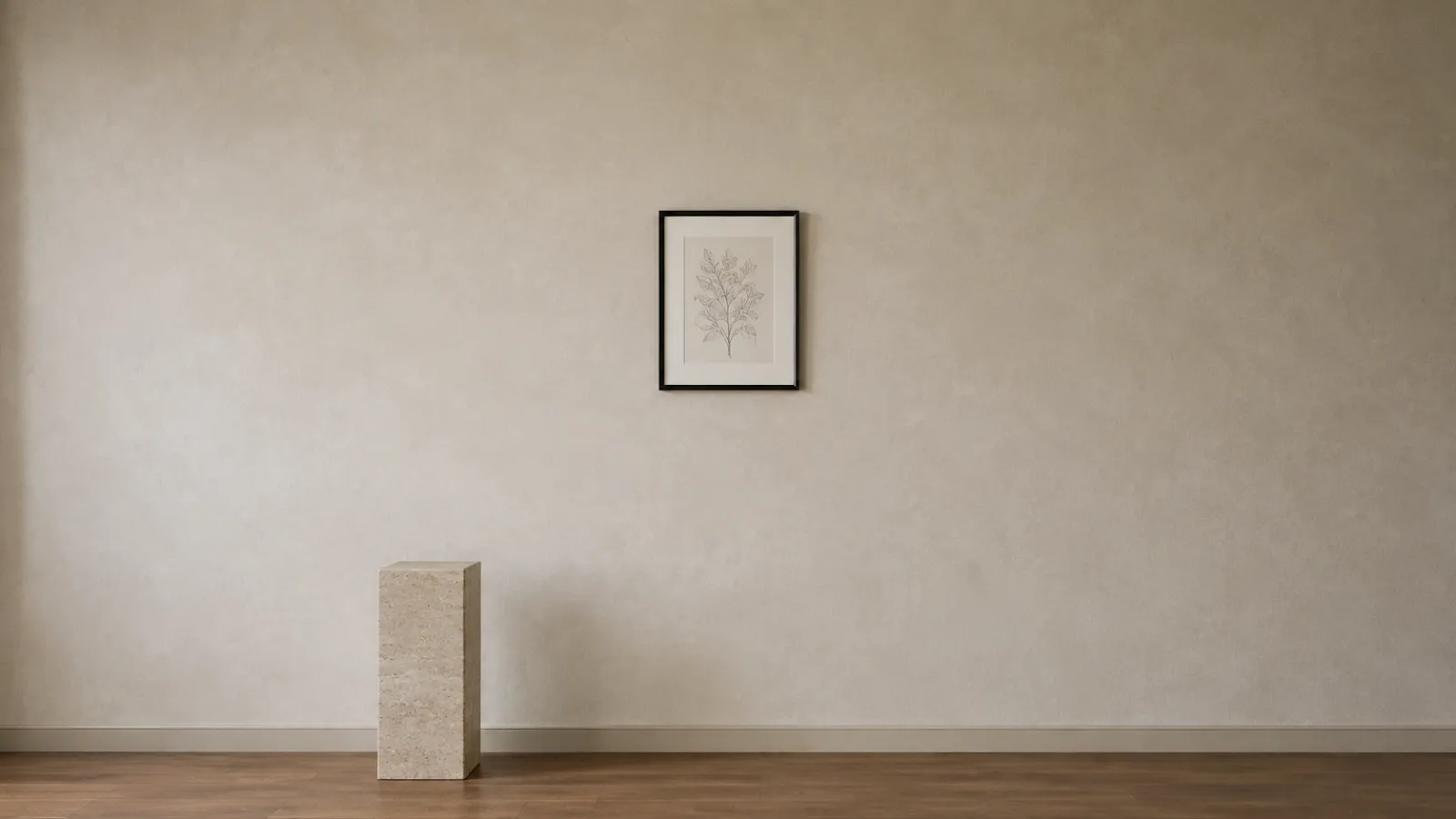
A framed print needs a margin of plain wall around it the same way a sentence needs space around the words. When art is crowded up against a shelf edge, a curtain rod, or a second frame, the eye reads the whole wall as one cluttered block instead of one piece worth looking at.
If a wall feels off and you cannot say why, it is usually not the art. It is the breathing room the art never got.
4. Let some floor show
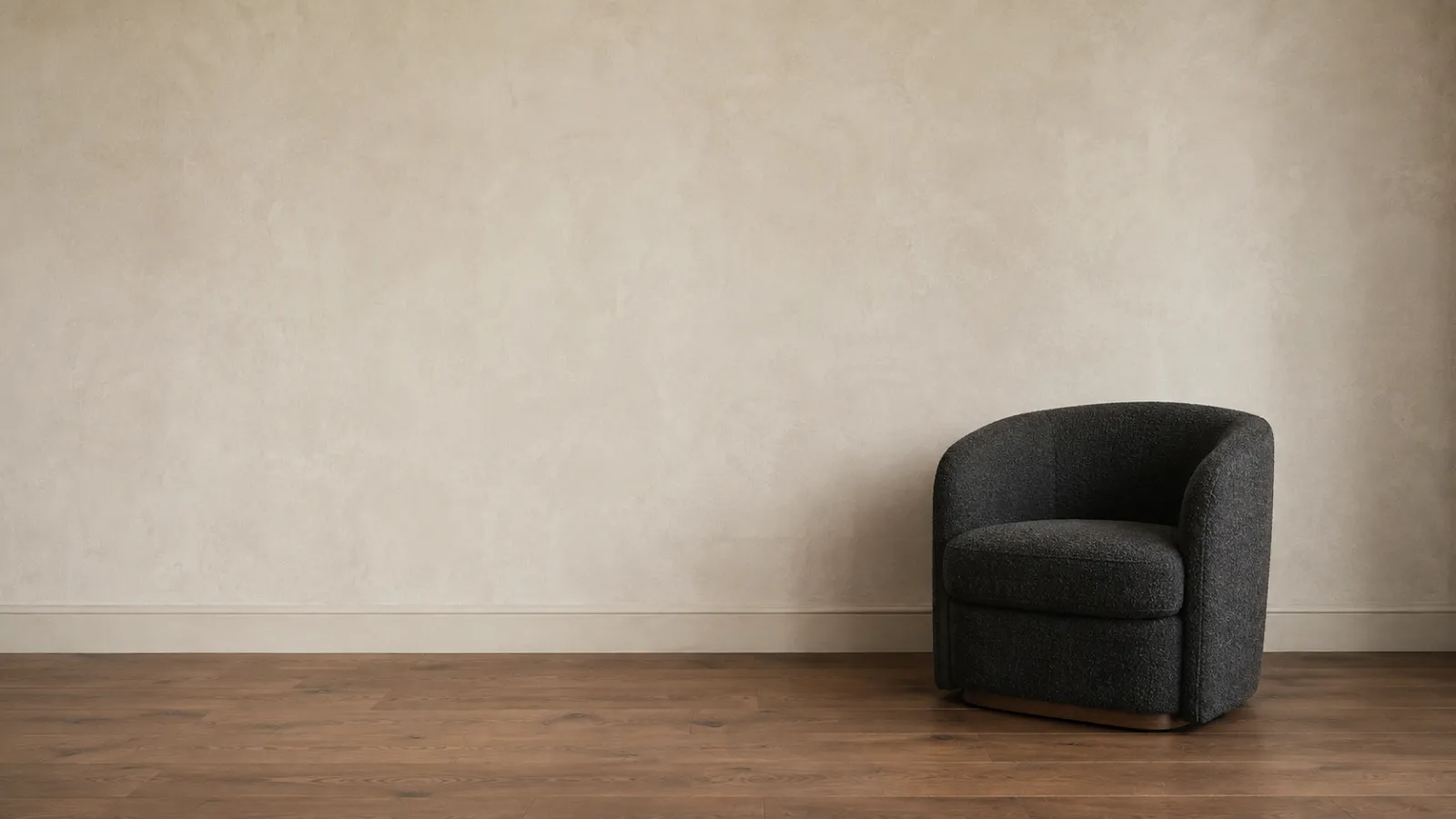
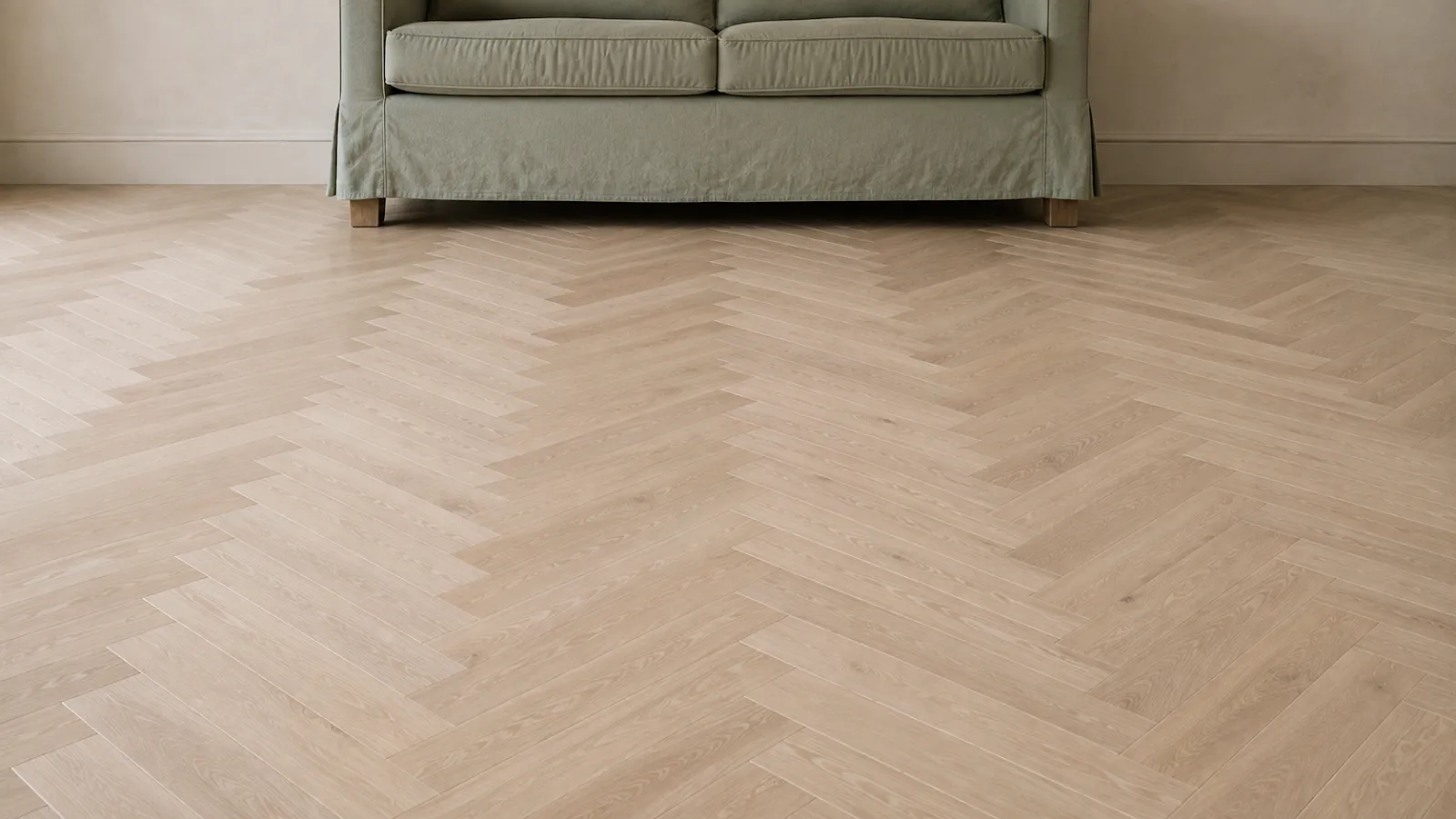
Floor is the largest uninterrupted surface most rooms have, and it is the easiest one to lose. A basket here, a stack of books there, a spare chair that nobody sits in, and suddenly there is no clear path for your eye or your feet.
Pull furniture a few inches off the walls if the room allows it, and protect one open stretch of floor as if it were a piece of furniture. In a small apartment this matters more, not less. Visible floor is what tells you the room has room.
5. Group your things, then leave a real gap
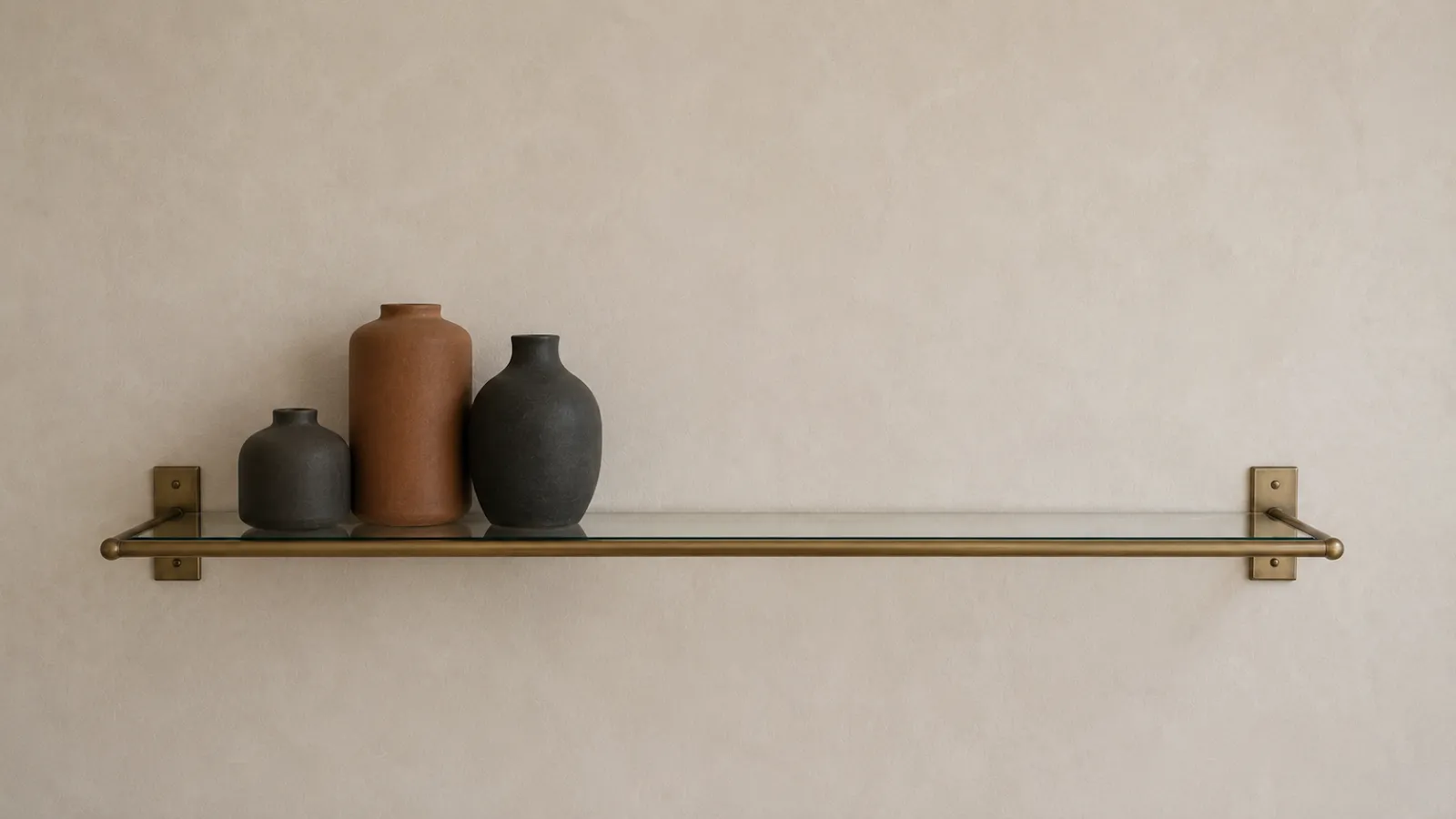
Scattering five objects evenly across a shelf gives you five small pieces of clutter. Gathering the same five into one tight group, then leaving the rest of the shelf genuinely empty, gives you one considered arrangement and a stretch of calm.
The trick is that the gap has to be big enough to look deliberate. A polite two inches reads as an accident. A third of the shelf reads as a choice.
6. Give each zone one thing to look at
Pick the one object in each part of the room that earns the attention: the window, a bowl you love, one tall vase. Then let everything nearby be quieter than it. Two objects competing at the same volume cancel each other out and the eye just bounces between them.
This is why a single striking piece on an otherwise plain console tends to look expensive, and why three striking pieces on the same console rarely do.
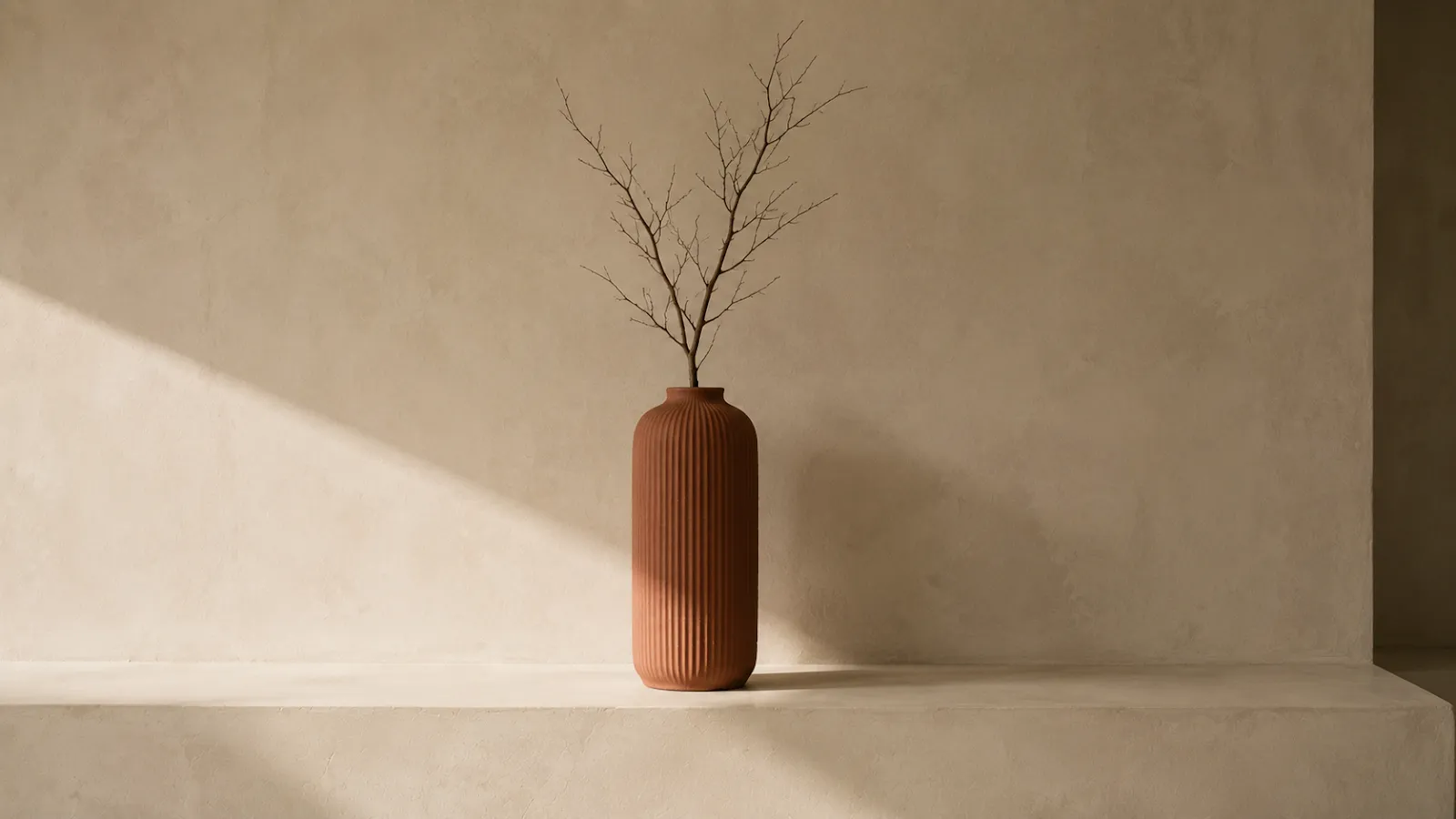
7. Let the wall above eye level stay quiet
Upper walls get filled almost by reflex, with high shelves, tall art, hooks, and hanging things. But the top third of a room is where a space gets its sense of air. Leaving it mostly bare is a large amount of calm for zero effort and zero cost.
If you want something up there, keep it to one element and let it be plain. High and quiet works. High and busy makes a ceiling feel lower than it is.
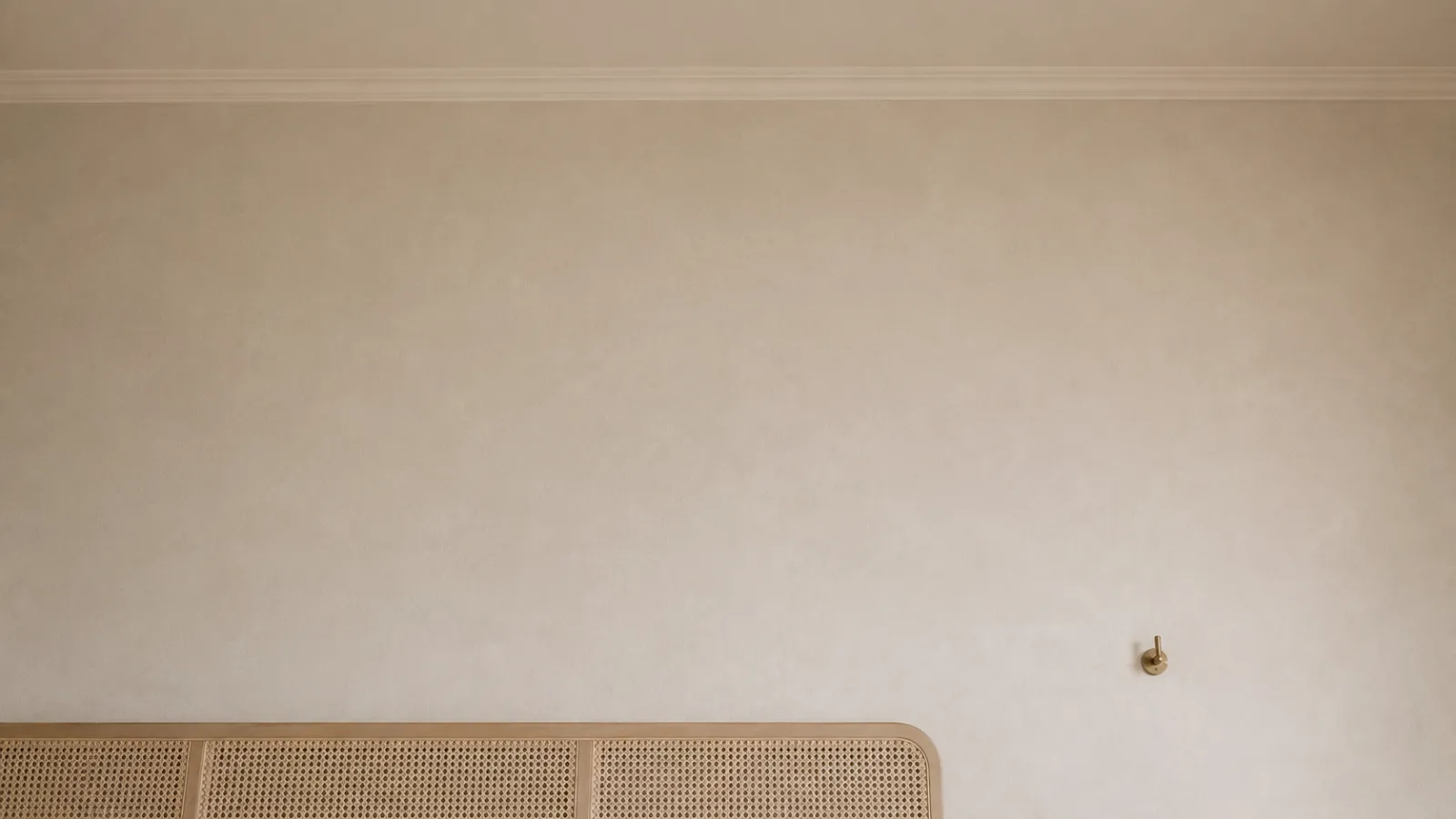
8. Repeat a material instead of introducing a new one
When a corner feels unfinished, the instinct is to add something different. Usually the calmer answer is to echo something already in the room: the same wood tone, the same weave, the same warm off-white.
Repetition reads as intentional and lets the eye move without stopping to process a new texture every few feet. This is also the least expensive styling move there is, because the material is already in your house.
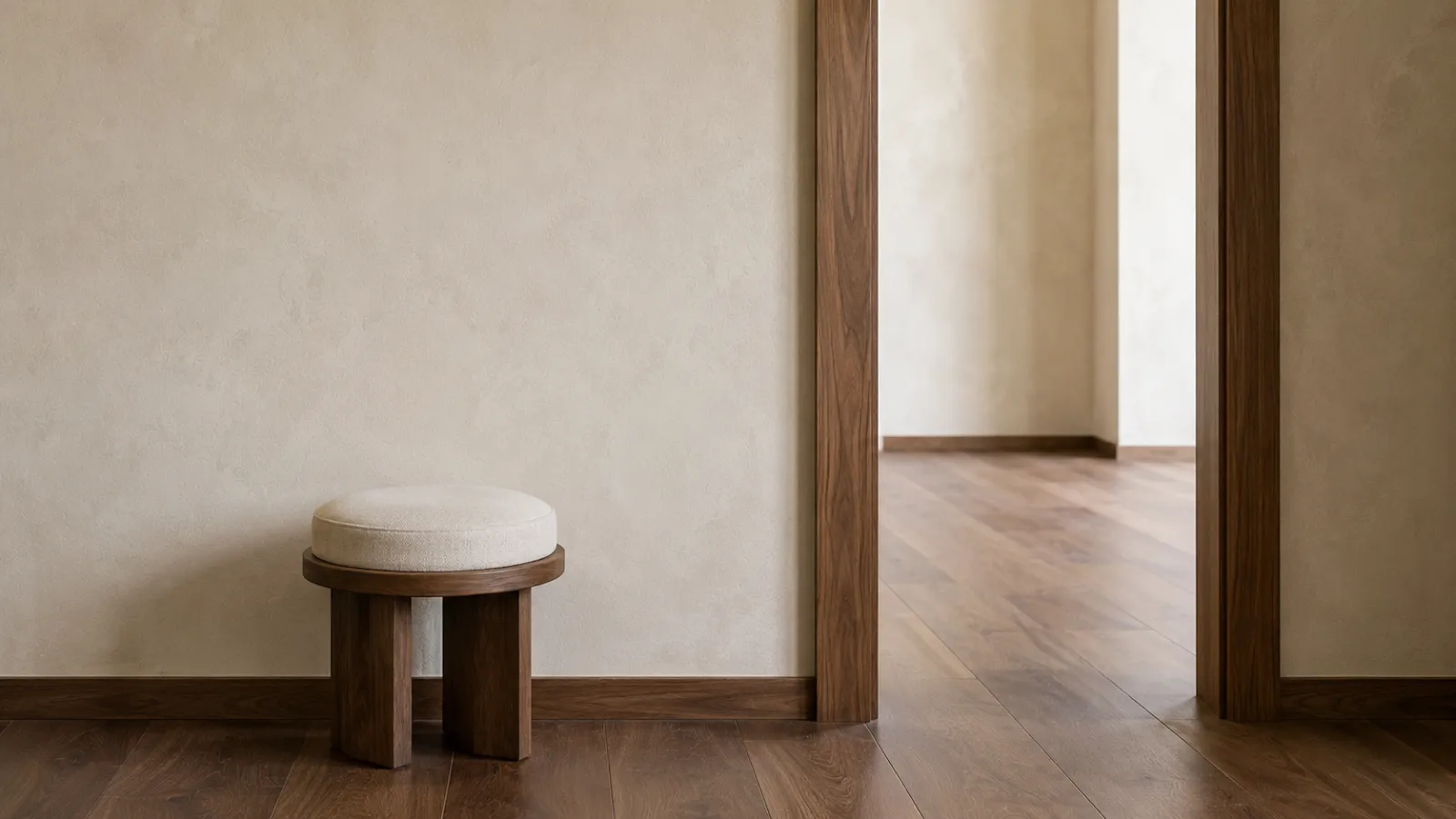
9. Keep entries and doorways lightly styled
Thresholds are where a room announces itself. An entry stacked with shoes, mail, bags, and a full gallery wall sets a hurried tone for everything past it, no matter how settled the next room is.
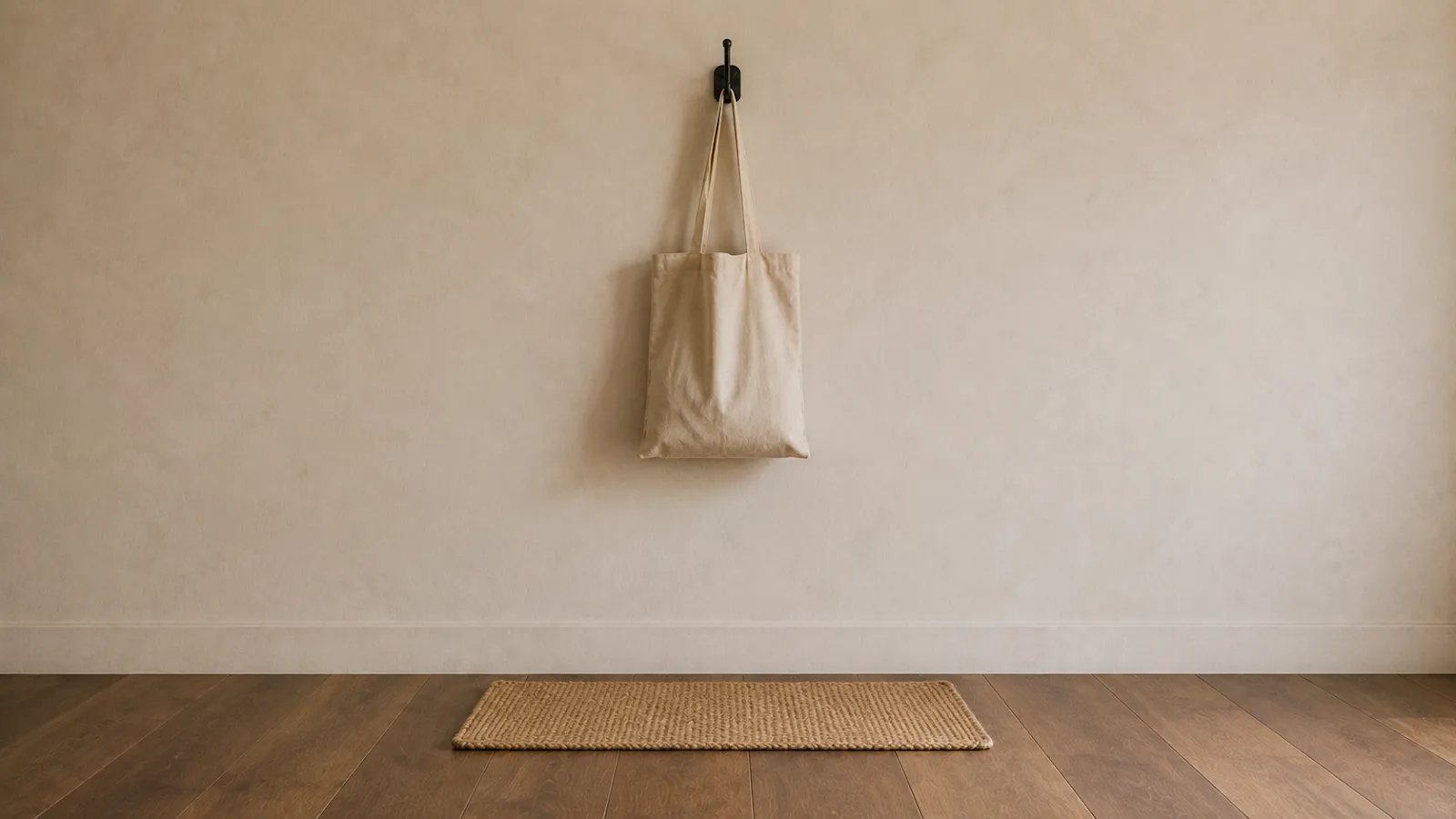
Give a doorway or entry one hook, one surface, one soft thing underfoot, and stop there. It is a small area, so restraint costs you very little, and it is the first thing you see every time you come home.
10. Learn what a full room feels like for you
The right amount of empty space is personal. Some people feel unmoored in a spare room, and a bare shelf reads as cold rather than calm. Others feel the opposite. Neither is wrong.
A simple way to find your own line: take one thing out of a room and live with it for a few days. If you never think about it again, the room was full. If you keep noticing the gap, put it back, and now you know. Do this a few times and you stop needing rules at all.
Frequently Asked Questions
Is this just minimalism with a nicer name?
Not quite. Minimalism is usually about owning less overall. Visual rest is about how the things you already own are spaced, so a full bookshelf and a well-loved sofa can absolutely be part of a calm room. What changes is the gaps between them.
Will empty space make my home feel cold or unfinished?
It can, if the space is empty and hard at the same time. Pair open space with soft materials and warm tones, and it reads as restful instead of stark. Texture is what keeps negative space from feeling like an unfurnished apartment.
Does this work in a small apartment?
Yes, and it tends to matter more there. Small rooms have less room for visual noise before they tip over into feeling crowded. One clear surface and one open stretch of floor will do more for a studio than another storage unit will.
Where should I start if I only do one thing?
Clear one surface completely, in the room you sit in most. It takes ten minutes, costs nothing, and it is usually the change people notice from the doorway.
Final Thoughts
Almost every decorating instinct we have points toward adding. Empty space asks for the opposite, which is why it is the last thing most of us try and often the thing that finally works. You do not need a new palette or a new sofa. You need a few places where nothing is happening.
If you want to keep going from here, our post on cozy, sensory-friendly decor ideas covers the warmth side of this balance, and how calm living rooms handle lighting is worth a read once your surfaces are clear, since light is what fills the space you just made.