Disclosure:This post contains affiliate links, including Amazon Associate links. As an Amazon Associate, I earn from qualifying purchases. If you make a purchase through one of these links, I may earn a small commission at no extra cost to you. Thank you for supporting Calm Home! See ourAffiliate Disclosurefor details.
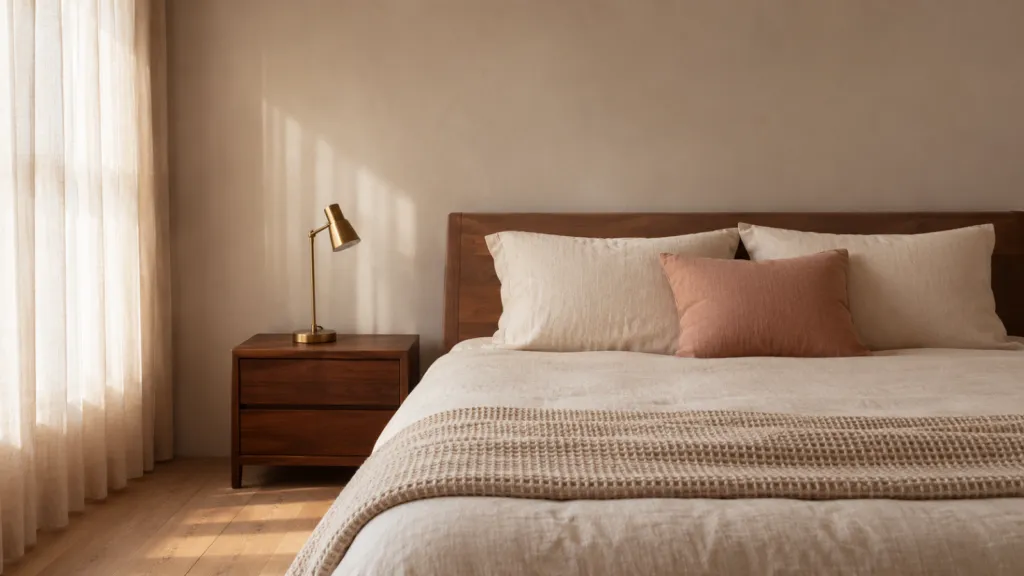
A bed can look perfectly nice and still feel busy. Too many pillows, three patterns fighting each other, a blanket that stops short of the mattress edge. Nothing’s wrong, exactly. It just doesn’t invite you in.
Bed layering is the fix, and it’s simpler than it sounds. You’re not building a hotel display. You’re stacking a few soft things in an order that makes sense, so the bed reads calm from the doorway and feels good at eleven at night. Here are ten easy ways to get there.
1. Start With a Quiet Base Layer
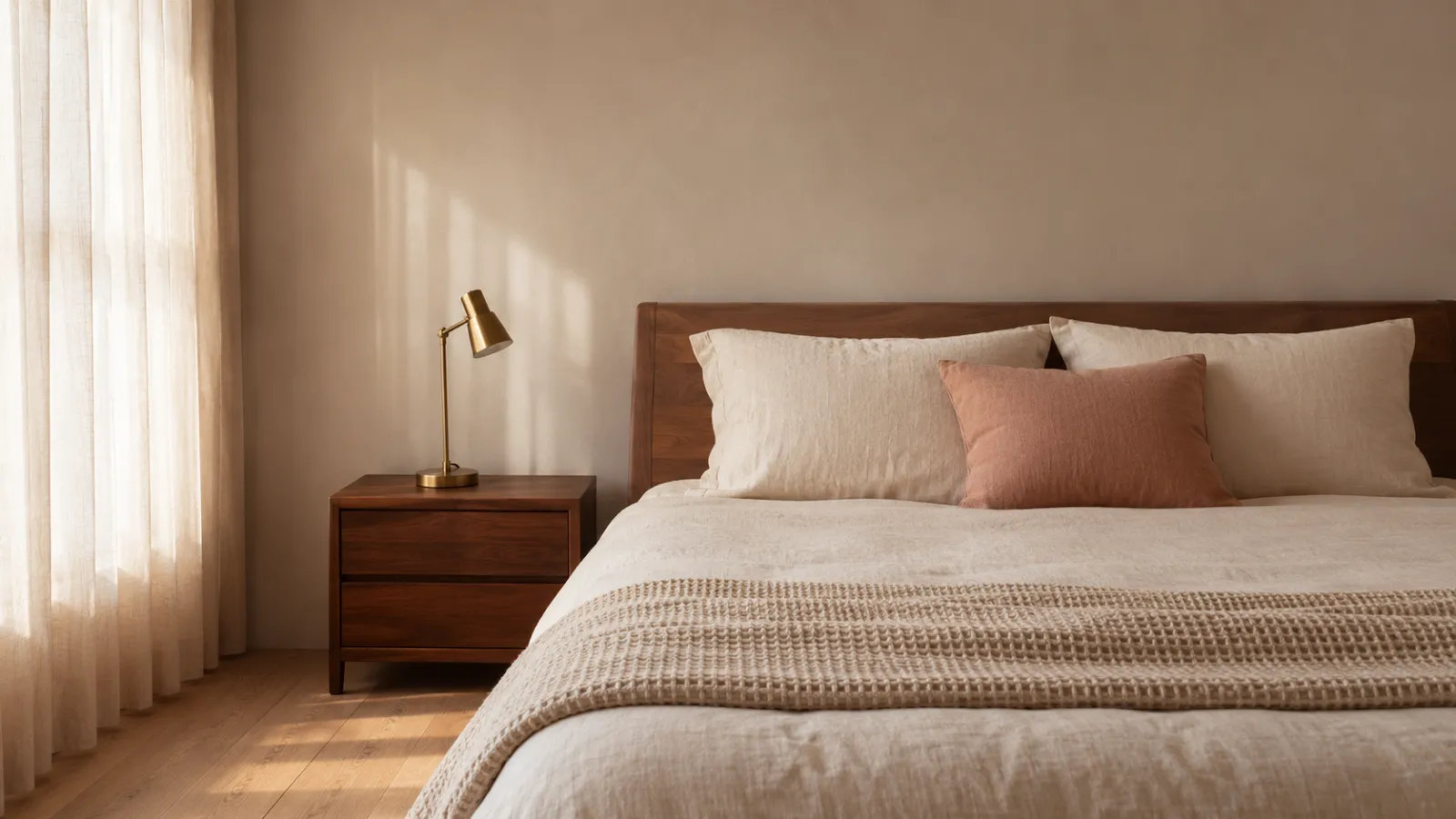
Bed layering works best when the bottom of the stack stays out of the way. Pick one calm color for your sheets and let it repeat: pillowcases, fitted sheet, flat sheet, all the same. Oatmeal, warm white, soft clay, whatever you actually like waking up to.
This is the layer you see least and touch most, so buy for feel rather than for looks. Once the base is quiet, every layer above it has room to be interesting.
2. Mix Weights, Not Patterns
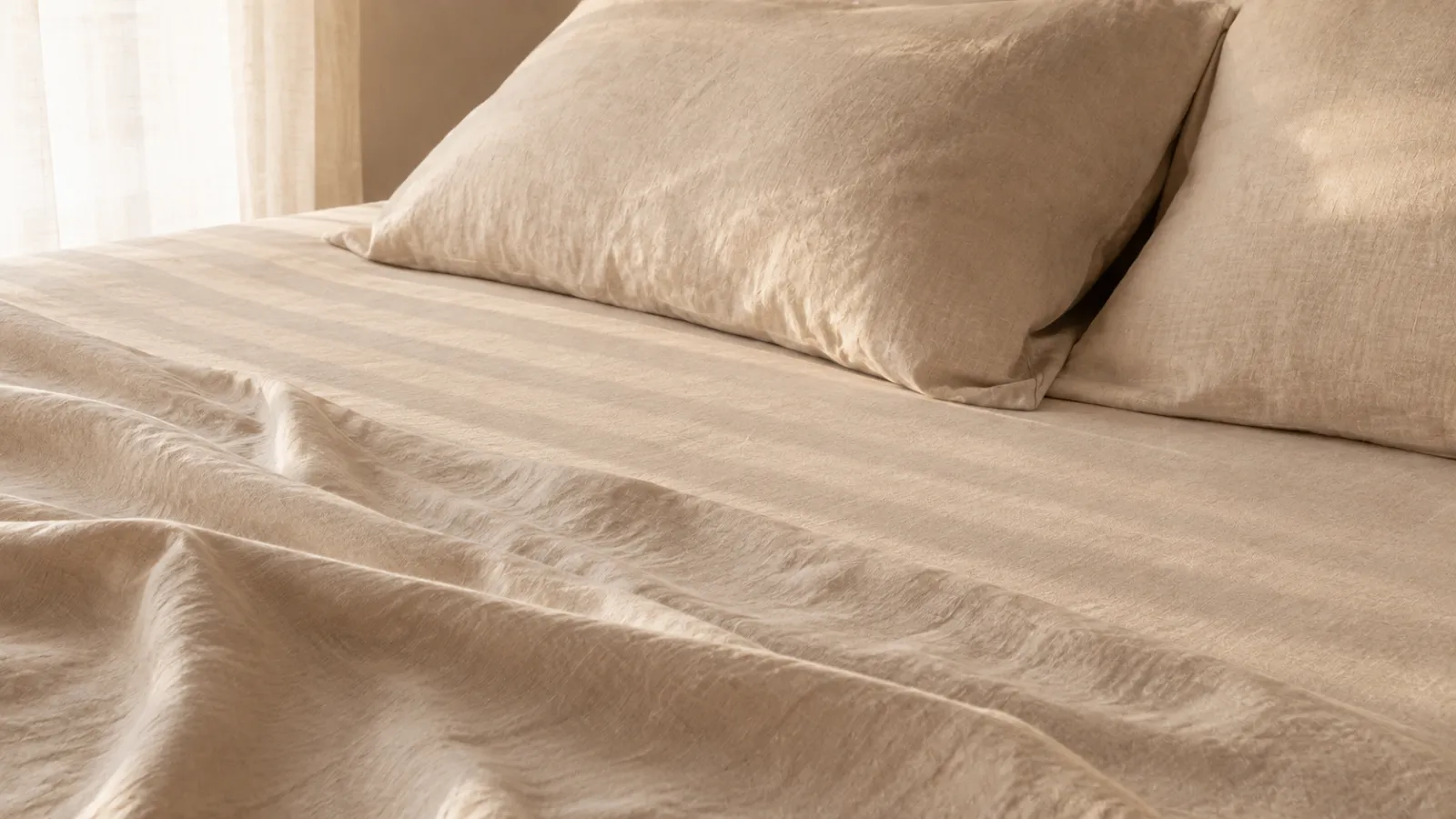
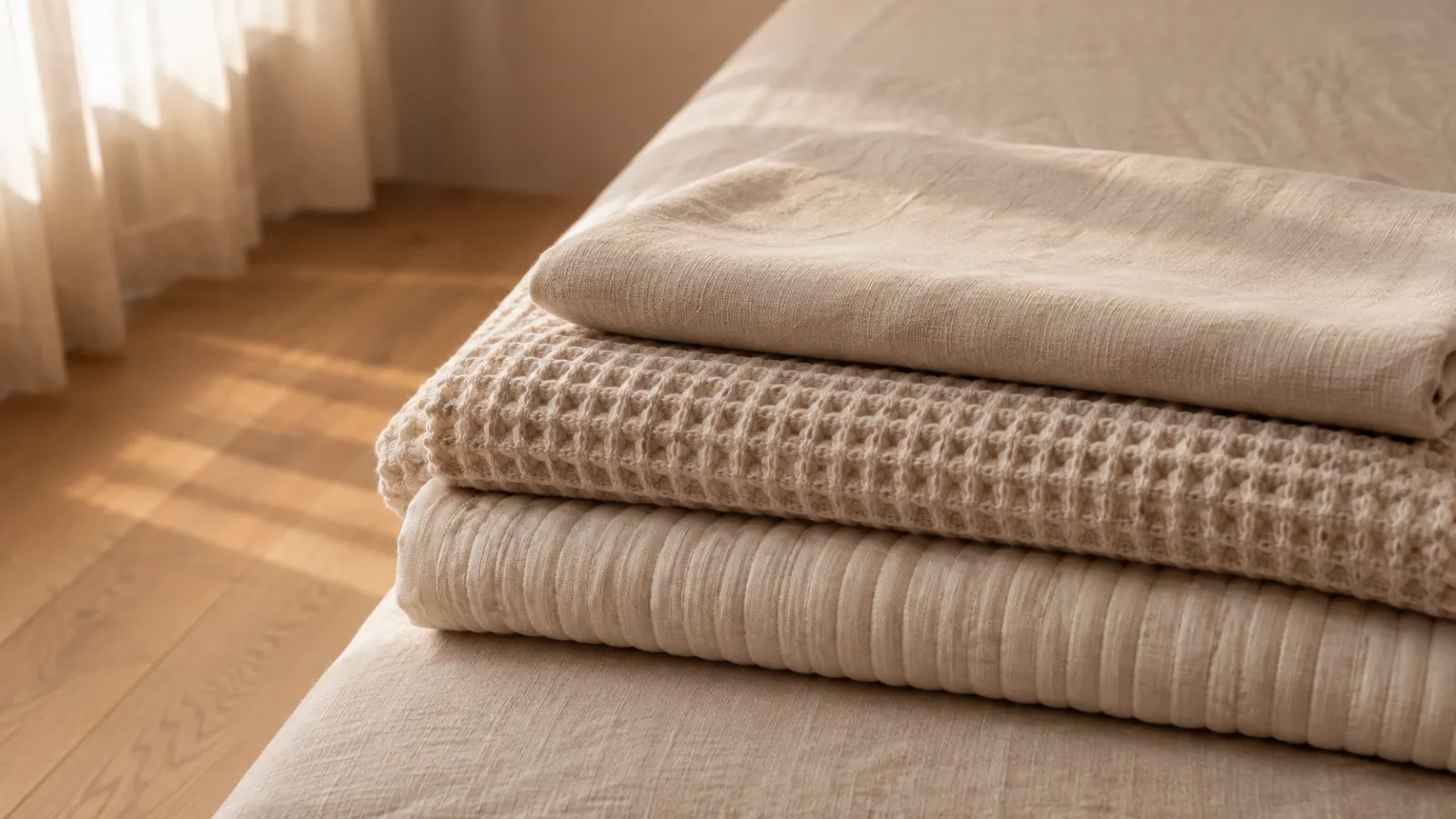
Here’s the shift that makes a neutral bed look intentional instead of plain. Instead of adding color or print to create interest, add weight. A crisp lightweight sheet, then something mid-weight with texture, then one heavier quilt or comforter folded across the end.
Three different weights in one color family gives your eye plenty to land on. It also means you can peel back one layer on a warm night instead of kicking the whole thing off.
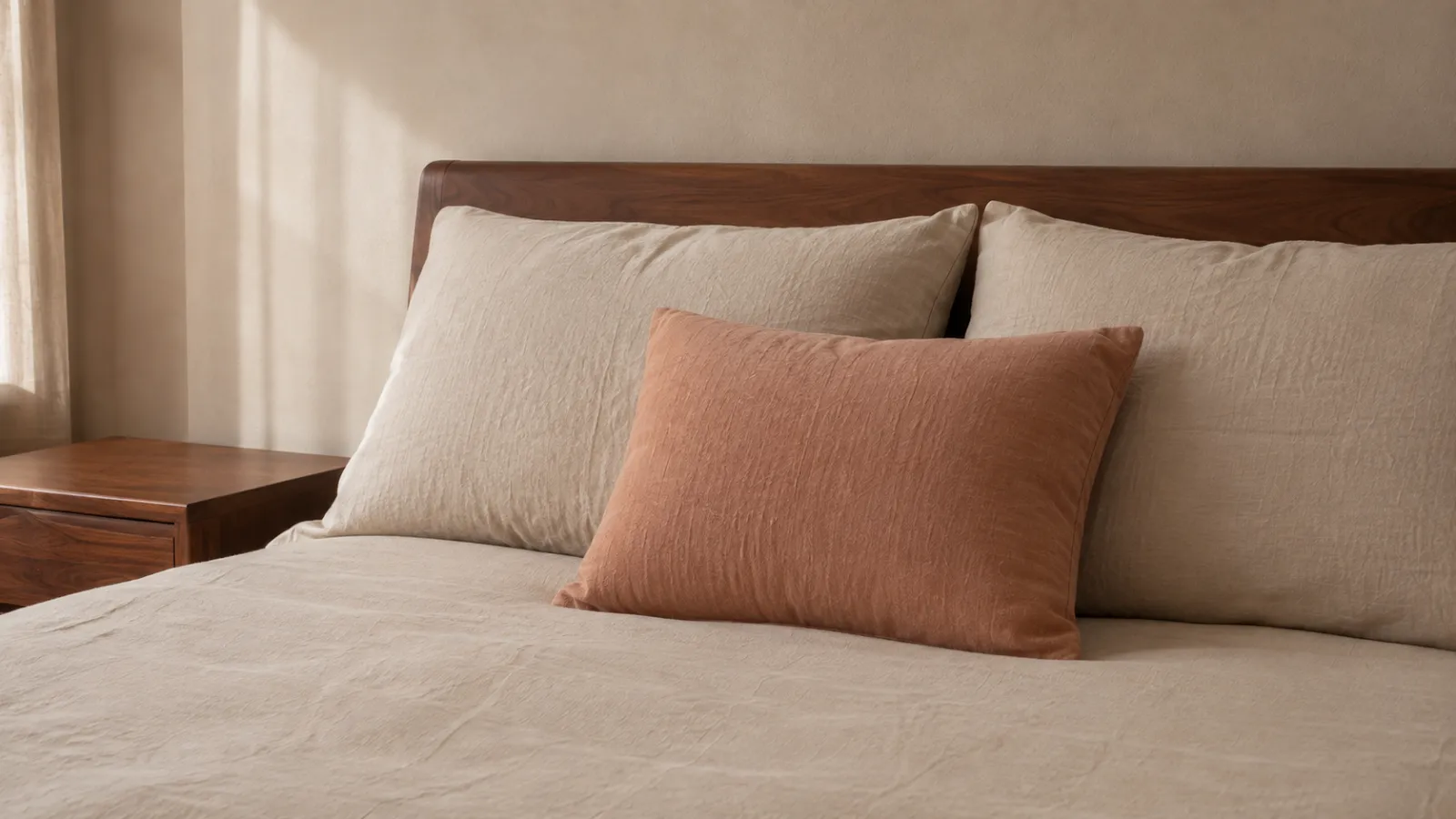
3. Keep the Pillow Count Honest
Two sleeping pillows. One accent pillow, maybe two if the bed is king-sized. That’s genuinely it.
The reason isn’t strictly visual. Every extra pillow is a decision you have to make twice a day, once when you take it off and once when you put it back. Beds that stay calm are usually beds that are easy to remake. If a pillow lives on the floor most nights, it isn’t part of your bed.
4. Fold the Second Layer Instead of Draping It
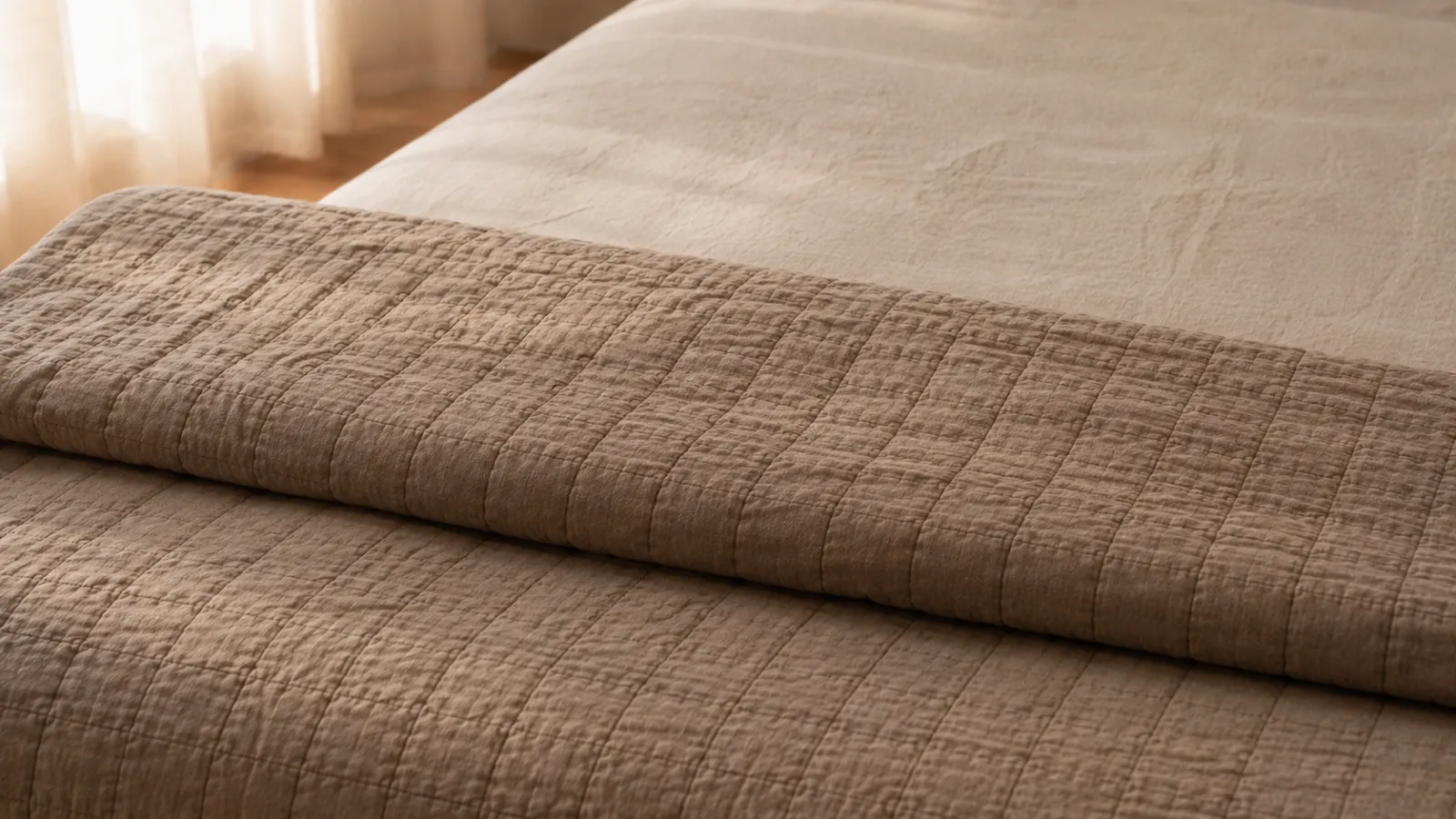
Draping everything full-length flattens a bed out. Try this instead: keep one layer pulled all the way up, and fold the next one back across the lower third or half of the mattress.
That single fold creates a soft horizontal line and shows off two textures at once. It’s the difference between a made bed and a styled one, and it takes about four seconds.
5. Add One Textured Layer You Can See and Feel
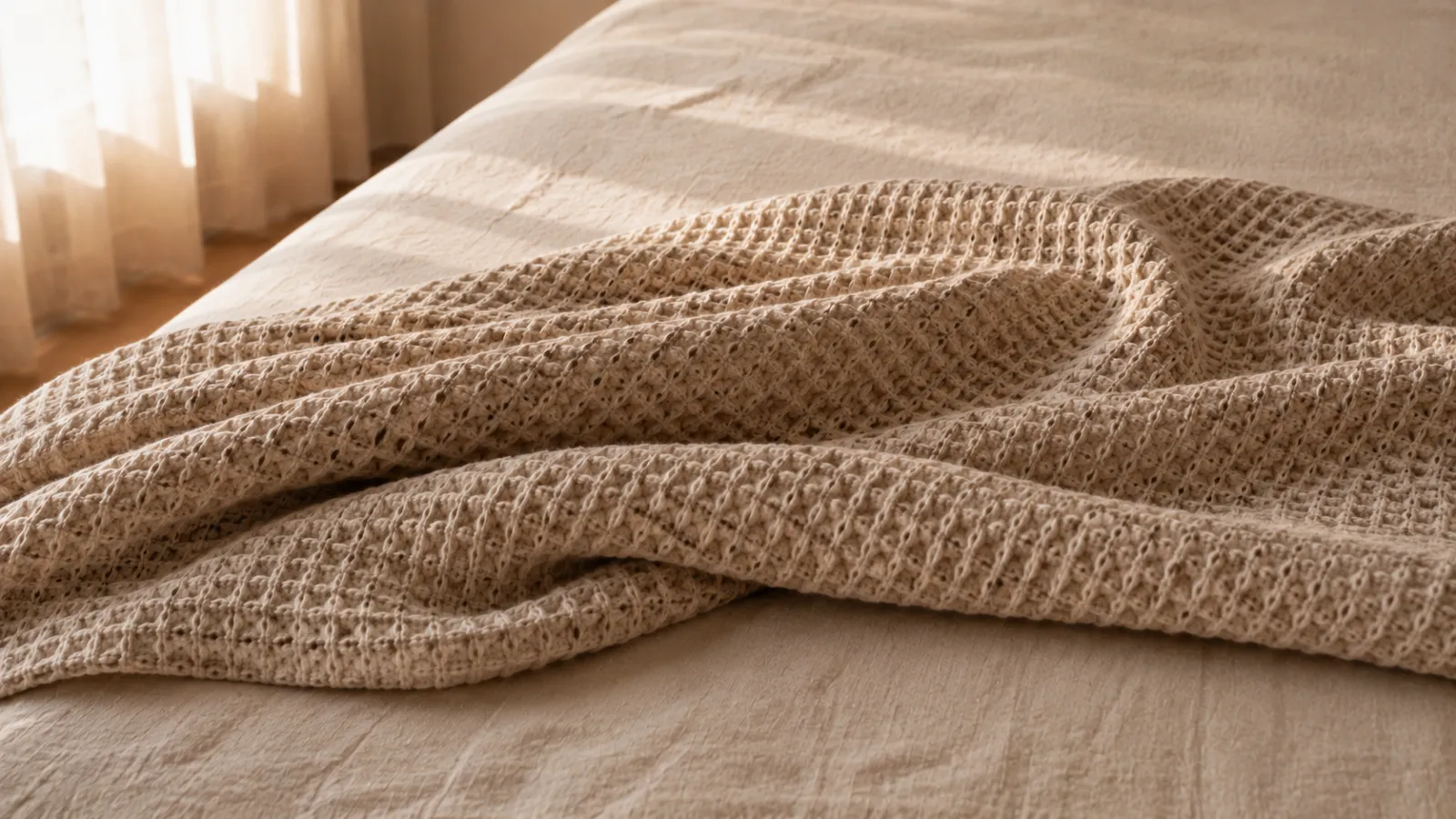
If your bed feels flat, it’s usually missing texture, not color. One waffle-weave or chunky cotton blanket across the middle of the bed does more for a neutral room than any amount of extra styling, because the texture catches light and casts its own tiny shadows.
Go for something washable and breathable. Cotton is the safe pick here, since it works in July and layers under a quilt in January.
💡 Product idea: A cotton waffle-weave blanket is the easiest way to add this layer. The Bedsure 100% Cotton Waffle Weave Blanket (affiliate link) is soft, breathable, and washes well.
6. Size That Layer Up, Not Down
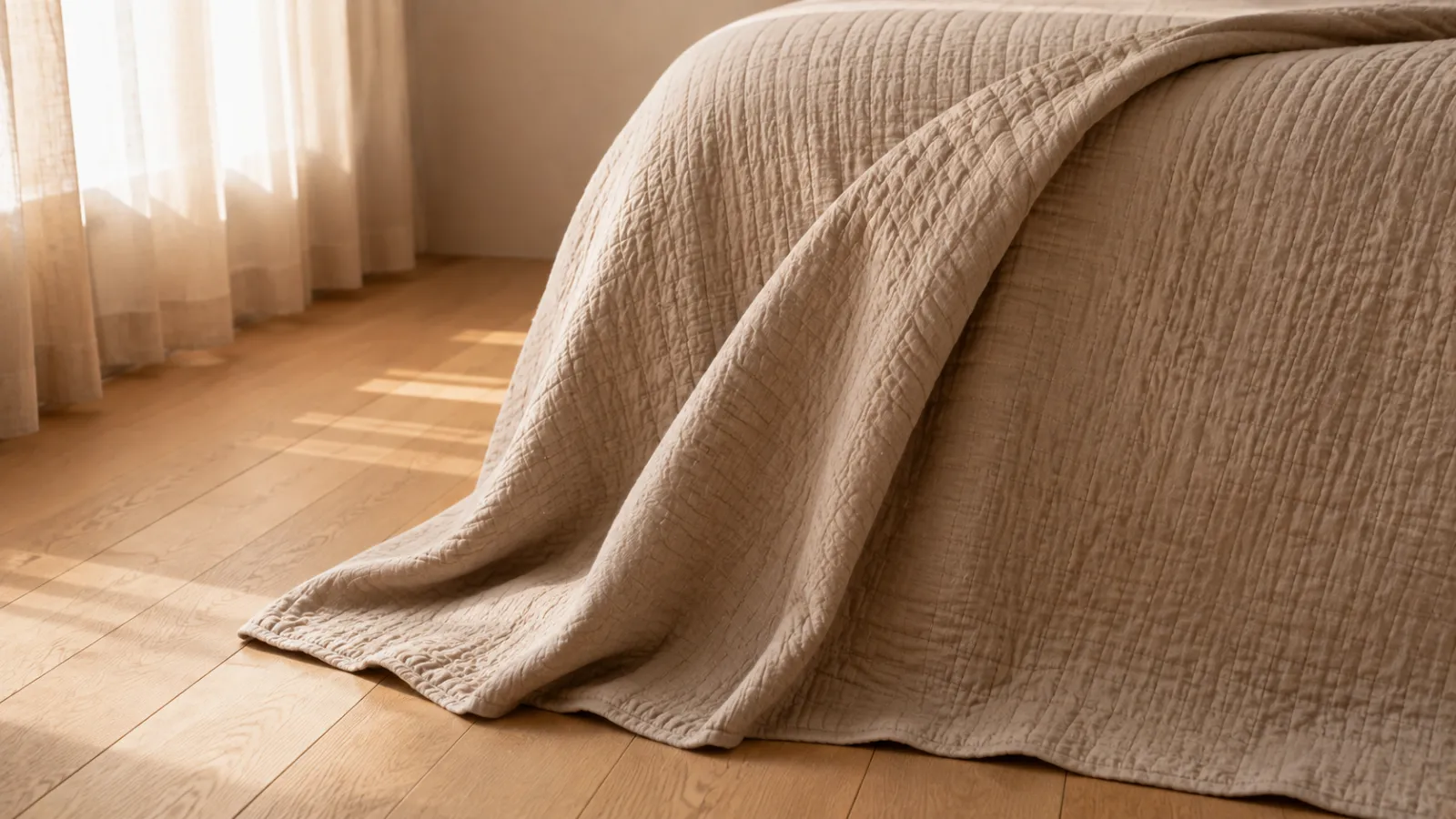
A blanket that ends right at the mattress edge makes a bed look cropped. Size up one step where you can. A queen blanket on a full bed, a king on a queen.
The extra drape softens the hard line of the mattress and makes the whole bed look like it settled there rather than being measured onto it. It also means whoever pulls harder in the night still has something left.
7. Soften What’s Behind Your Head
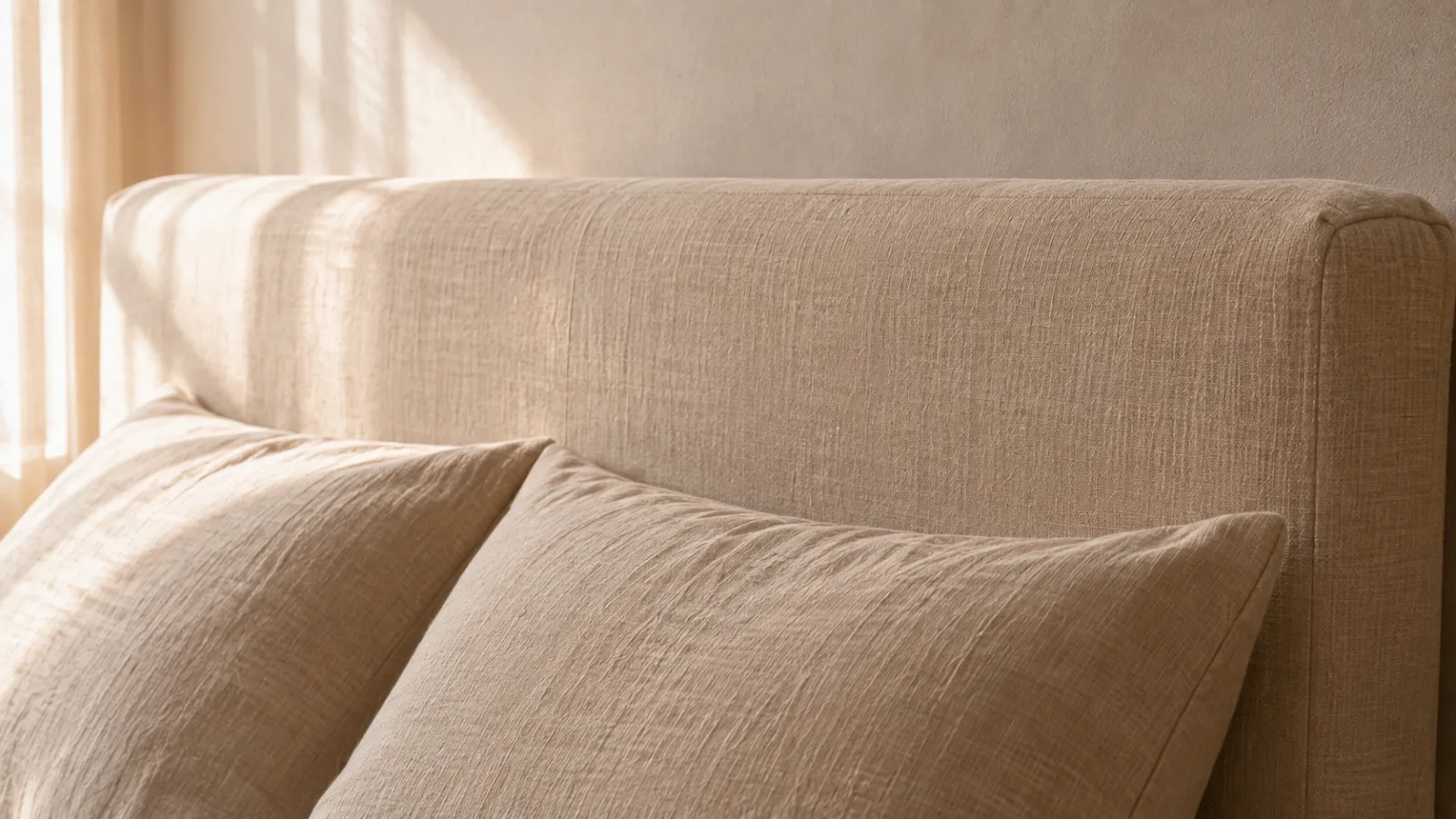
Most bedrooms put something hard right where your head goes. A wooden headboard, a metal frame, or a bare painted wall. Softening that one surface changes how the whole bed feels to sit up in.
An upholstered headboard is the obvious answer. A hung textile, a long bolster, or even a slipcover over an existing frame will do the same job for less. Sit up in bed and lean back before you decide. That’s the test.
💡 Product idea: The Liiwepo Upholstered Queen Headboard (affiliate link) is an easy swap-in if your current headboard is doing more harm than good. A simple flat linen panel, no assembly, sits right against an existing frame.
8. Give the Foot of the Bed One Job
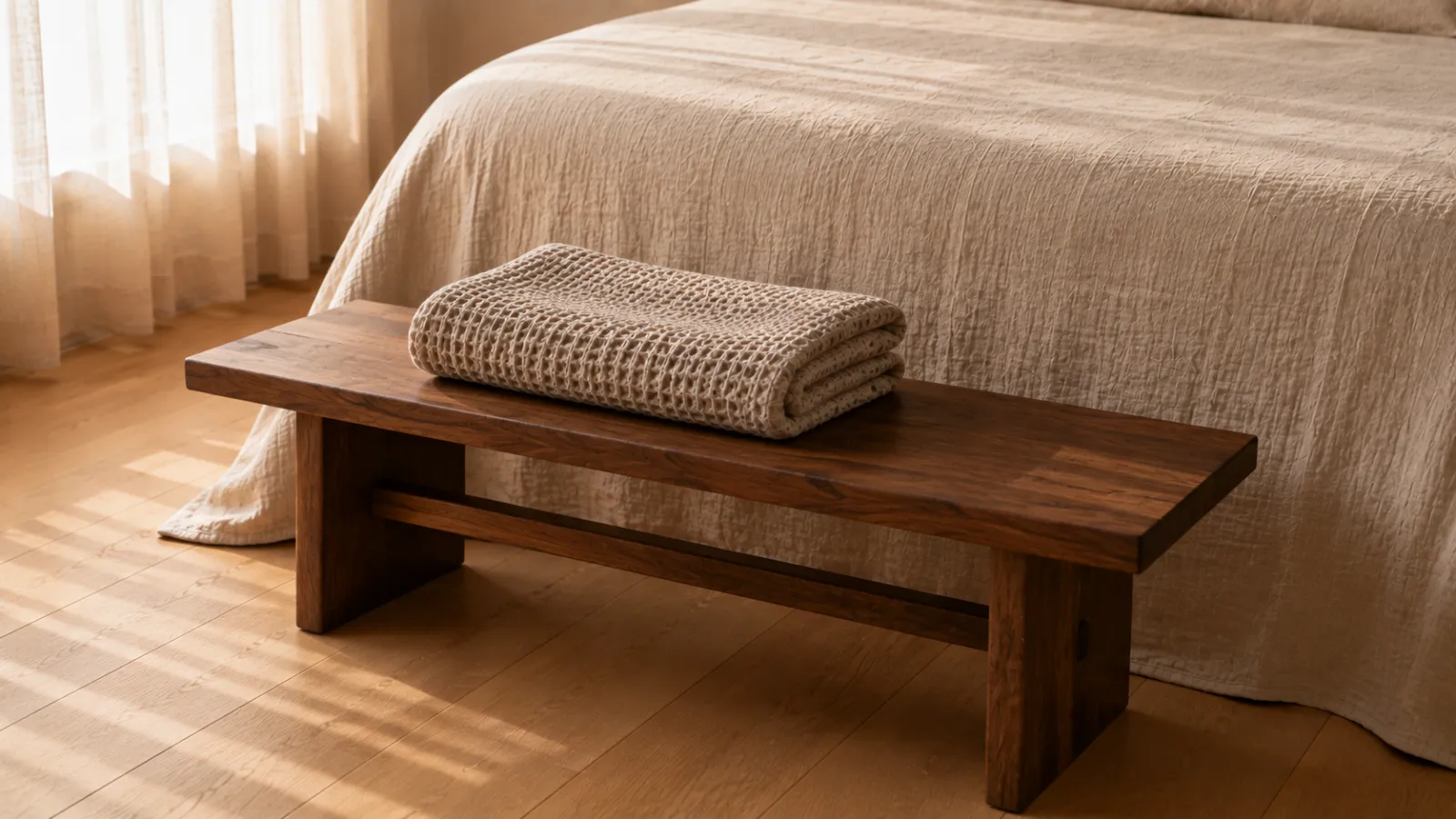
The foot of the bed is where layering usually collapses. It’s where the throw lands when you’re tired and where laundry stops on its way to somewhere else.
Give that space a single job and it stays tidy on its own. A low bench, a lidded basket, or a folded throw and nothing else. One job, not three.
9. Swap One Layer When the Season Turns
You don’t need summer bedding and winter bedding. You need one layer that changes.
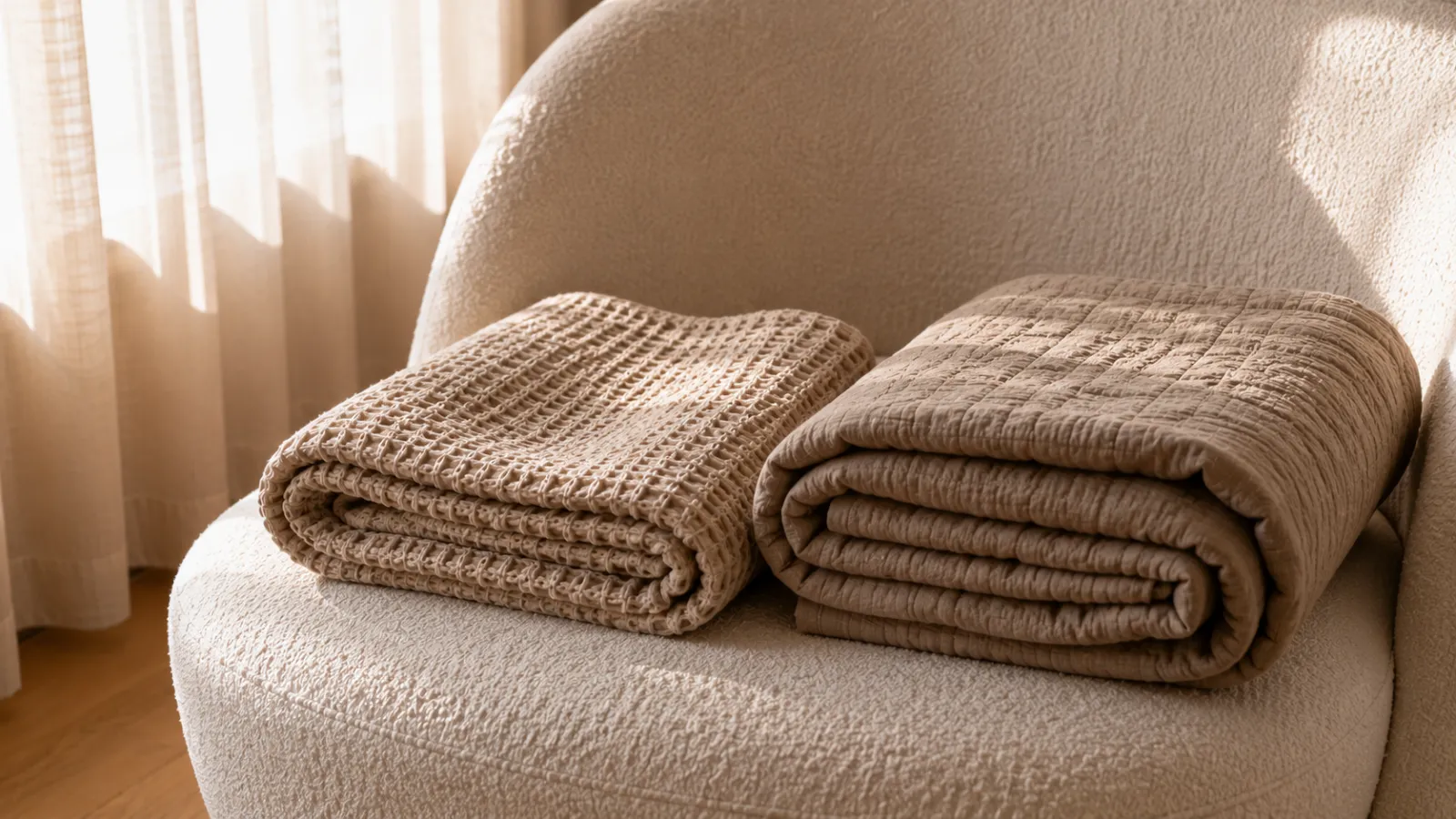
Keep the base and the accents the same all year, and swap only the middle: waffle cotton when it’s warm, a heavier quilt when it isn’t. It’s one thing to store, one thing to wash, and the room still feels different when the weather does.
💡 Product idea: The Linen Market Diamond Stitch Quilt Coverlet, Latte (affiliate link) is the heavier layer to swap in once it’s cold, warm taupe tone, quilted for weight without bulk.
10. Keep It to a Two-Minute Morning
A layered bed only stays calm if remaking it is quick. Time yourself once. If it takes more than about two minutes, something in the stack is fighting you, and it’s usually pillow count or a comforter that won’t sit straight.
Pull the base up, smooth the middle layer, fold the top one back, drop the pillows on. In a rush, just pull everything up flat and go. A slightly imperfect made bed still reads as calm. An unmade one doesn’t, and honestly, that’s the whole point of keeping the stack short.

Bed Layering FAQ
How many layers does a bed actually need?
Three is a good working number: a fitted base, one textured middle layer, and one heavier top layer. Add a fourth only if your room genuinely gets cold, not because the bed looks empty without it.
What order do the layers go in?
Fitted sheet, flat sheet, then your textured blanket, then the quilt or comforter folded across the lower third. Accent pillows go on last, in front of your sleeping pillows.
Can I layer a small bed without it looking bulky?
Yes. Keep the layers thin and the palette tight, and skip the extra euro pillows. On a twin or full, two layers plus one accent pillow is usually the sweet spot.
Do the layers have to match?
No, and it’s better when they don’t quite. Staying in one color family while varying the weave (smooth cotton, waffle, quilted) gives a neutral bed depth without introducing pattern.
Final Thoughts
Bed layering isn’t about buying more. Most calm beds are three or four thoughtful layers in one quiet palette, sized generously and folded once. If you only change one thing this week, make it the textured middle layer. It’s the one people notice.
If you’re pulling the rest of the room together too, our guide to building a calm reading nook in a small space covers the chair-side version of this idea, and our roundup of cozy living room finds is a good next stop if the living room is your other soft spot.